
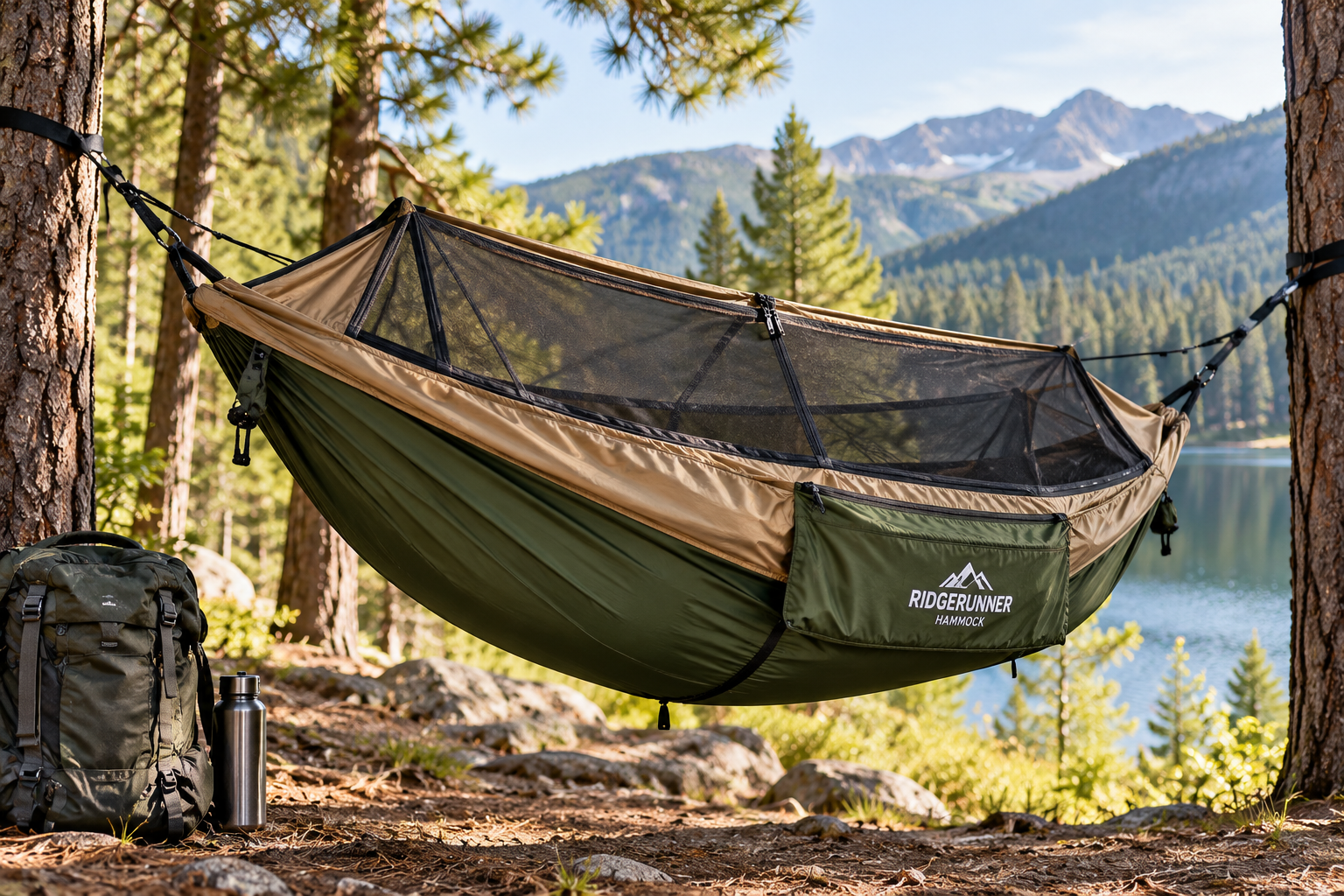
Ridgerunner Hammock: Why Flat-Lay Sleepers Keep Coming Back to It
If you’ve ever woken up in a regular camping hammock feeling like a folded taco, you already understand why the ridgerunner hammock has such a loyal following. Hammocks promise floating, rock-free sleep. Then night one arrives, your calves rest on a tight ridge of fabric, your shoulders squeeze inward, and side sleeping feels like a yoga pose nobody asked for.
The ridgerunner hammock, made by Colorado-based Warbonnet Outdoors, takes a different route. Instead of gathering the fabric at each end, it uses aluminum spreader bars at the head and foot to stretch the bed into a wide, shallow, cot-like surface. Warbonnet describes the design as being based on the mechanics of a suspension bridge, which is why this style is called a “bridge hammock.” The practical result: a flatter lay that back, side, and even stomach sleepers can actually use.
That reputation isn’t just marketing. The OutdoorGearLab review of the Warbonnet Ridgerunner gave it top marks for comfort, noting it eliminates the calf ridge most hammock campers simply learn to tolerate. GearJunkie also named it its best overall camping hammock in its 2026 roundup.
But a bridge hammock isn’t automatically right for everyone. It’s heavier than ultralight gathered-end models, it can feel tippy if you hang it wrong, and it’s sold mainly through Warbonnet’s own website rather than as a standard Amazon listing. So this guide does two jobs: it breaks down what makes the Warbonnet Ridgerunner special, and it compares six real alternatives you can find on amazon.com, including lay-flat hammock tents, spreader-bar loungers, and a classic asymmetric option. By the end, you’ll know exactly which one matches your body, your budget, and your trips.
What Is a Ridgerunner Hammock?
A ridgerunner hammock is Warbonnet Outdoors’ bridge-style camping hammock. It uses two short aluminum spreader bars and a suspension-bridge design to hold the fabric in a wide, shallow shape, producing a flatter, cot-like lay that suits side and back sleepers far better than a traditional gathered-end hammock.
How the bridge design changes your sleep
In a gathered-end hammock, the fabric pulls together at each end, so you lie diagonally to flatten out. In a bridge hammock, the spreader bars keep the ends open. Per Warbonnet’s spec sheet, the Ridgerunner measures about 44 inches wide at the head and foot and about 32 inches in the middle, with a 7-foot length and room for users up to 6’6″. That hourglass shape cradles your shoulders and hips while keeping your spine much straighter.
Single layer vs. double layer
Warbonnet offers single-layer and double-layer versions. The single layer is rated for 200 pounds; the double layer is rated for 250 pounds and creates a sleeve where you can slide in a sleeping pad. Warbonnet itself notes that these ratings reflect comfort, not just fabric strength, and that users over 250 pounds often find the Ridgerunner too narrow.
Ridgerunner Hammock Quick Comparison
Before the deep dive, here’s a scannable snapshot of all seven picks.
| Product | Style | Max Capacity | Approx. Weight | Price Range | Best for |
|---|---|---|---|---|---|
| Warbonnet Ridgerunner | Bridge hammock | 200–250 lbs | ~1 lb + 12 oz bars (body) | ~$150–$250 | Side sleepers who backpack |
| ENO SkyLite | Spreader-bar w/ bug net | 250 lbs | 2 lbs | ~$150–$200 | Easy all-in-one flat lay |
| Lawson Blue Ridge | Hybrid hammock/tent | 275 lbs | ~4.25 lbs | ~$200–$230 | Tree or ground flexibility |
| Haven Tent XL | Lay-flat hammock tent | 285 lbs (body) | ~7.2 lbs (kit) | ~$350–$400 | Maximum flat comfort |
| ENO SkyLoft | Spreader-bar lounger | 250 lbs | 2 lbs 14 oz | Check current price | Camp lounging + naps |
| Hennessy Expedition Asym Zip | Asymmetric gathered-end | 250 lbs | ~2 lbs 13 oz | ~$150–$180 | Budget all-in-one kit |
| Night Cat Flat Lay Hammock Tent | Pole-tensioned flat lay | 440 lbs (listed) | Varies by kit | Check current price | Entry-level lay-flat |
Looking at this table, the Warbonnet Ridgerunner is the lightest true bridge hammock here, which is why backpackers gravitate toward it. The Haven Tent XL offers the most bed-like experience but costs roughly twice as much and weighs several times more. If you want an all-in-one kit with no extra shopping, the ENO SkyLite and Hennessy Expedition Asym Zip are the simplest starting points.
💬 One click helps other shoppers make an informed choice too! 😊
Top 7 Ridgerunner Hammock Picks and Alternatives: Expert Analysis
1. Warbonnet Ridgerunner — the original flat-lay benchmark
The Warbonnet Ridgerunner is the reference point every other bridge hammock gets measured against, and for good reason. Its spreader bars create a wide, shallow bed that lets you roll from back to side without fighting the fabric.
Key features translate directly into comfort. The 44-inch head and foot width gives your shoulders room, while the narrower 32-inch middle keeps you centered and stable. You can enter from either side, choose 30-denier or 40-denier fabric, and add an integrated bug net. It’s also designed to work with Warbonnet’s Lynx underquilts, which matters because insulation is the hardest part of cold-weather hammocking.
Based on comparing specs and published reviews, this is the pick for side sleepers and people with back issues who still care about pack weight. The spreader bars add about 12 ounces, but the body itself stays light. Reviewers at CleverHiker and GearJunkie both singled it out as the most comfortable hammock they tested.
Reviews consistently report two caveats: bridge hammocks feel tippier than gathered-end designs, especially when sitting up, and the bug net can be fiddly without a ridgeline. Many owners with chronic back pain describe the lay as a genuine upgrade over gathered-end hammocks.
Pros:
- ✅ Truly flat lay that supports side and stomach sleeping
- ✅ Light for a bridge hammock, with fabric options
- ✅ Made in the USA with highly praised craftsmanship
Cons:
- ❌ Feels tippy if hung too tight
- ❌ Sold mainly direct, so Amazon listings are limited
Expect roughly $150 to $250 depending on layers, fabric, net, and suspension, which is strong value if comfort is your top priority.
2. ENO SkyLite — easiest all-in-one spreader-bar setup
The ENO SkyLite is the most plug-and-play flat-lay hammock in this lineup, built for people who want comfort without learning a new suspension system.
ENO lists it at 250 pounds capacity, 2 pounds total weight, and a 7-by-3-foot body made from 40D NewWave ripstop nylon. The removable DAC aluminum spreader bars flatten the bed, and the integrated bug net with a J-shaped zippered door turns it into a tent-like canopy. Practically, that means you get a bug-proof, flat sleeping space in one bag, with an 11.5-foot hanging distance that works between typical campground trees.
This is a great match for car campers, festival-goers, and casual backpackers who want a flatter lay than a standard ENO but don’t want to piece together a modular kit. Compared with the Warbonnet Ridgerunner, it’s less customizable but more approachable.
Aggregated Amazon feedback skews positive among side sleepers, though a recurring complaint is that tree straps are not included at this price. Some owners also mention stress on the bug net zipper over time.
Pros:
- ✅ Integrated bug net with easy zippered door
- ✅ Quick toggle connection to ENO straps
- ✅ Spreader bars collapse for flexible packing
Cons:
- ❌ Tree straps must be purchased separately
- ❌ Some owners report zipper strain over time
At roughly $150 to $200, it’s fair value if you want convenience, though budget for straps.
3. Lawson Blue Ridge — hammock and tent in one shelter
The Lawson Blue Ridge stands out because it doesn’t just hang between trees; it can also pitch on the ground like a small tent when trees run out.
Per Lawson’s specs, it offers a 90-by-42-inch bed, a 275-pound capacity, and weighs about 4.25 pounds with a ripstop nylon upper, polyester base, no-see-um mesh canopy, and included waterproof rain tarp. Its patented arch pole and spreader system tension the bed wide and flat, which means less shoulder squeeze and more room to shift positions.
From an analytical standpoint, this is the right buy for hunters, paddlers, and campers heading into mixed terrain like desert edges or alpine zones where trees are unreliable. It costs about the same as some bridge hammocks but solves a problem none of them can: no trees, no problem.
Review sentiment consistently praises its width and flat feel, and GearJunkie once named it the winner in a head-to-head camping hammock test. Common complaints include thin suspension cords and a rain fly that offers limited coverage in wind-driven rain.
Pros:
- ✅ Converts into a ground tent when needed
- ✅ Wide 42-inch bed for roomy sleeping
- ✅ Rain tarp and bug netting included
Cons:
- ❌ Heavier than dedicated bridge hammocks
- ❌ Rain fly coverage feels minimal in storms
Hammock-only pricing was around $199 at the time of writing, roughly $230 bundled with suspension, a solid deal for versatility.
4. Haven Tent XL — the most bed-like experience available
The Haven Tent XL chases one goal: making hammock sleep feel as close to your mattress as possible.
It uses aluminum spreader bars and a 210T polyester body with a 4,000mm waterproof rating, plus an included insulated pad, rainfly, bug net, straps, stakes, and guylines. The XL version widens the bed to about 30 by 80 inches. In practice, the rigid frame and fitted pad mean the pad stays put, which solves the classic “my sleeping pad slid out from under me at 2 a.m.” problem.
This one is for comfort-first campers, car campers, and people who have tried regular hammocks and simply couldn’t sleep. The trade-off is weight: full-kit figures land around 7 pounds, which few thru-hikers will accept.
Review sites describe a true flat lay and quick setup, and owners often mention that it doubles as a ground bivy. Recurring complaints focus on the heavy total weight and the lack of a vestibule for wet gear.
Pros:
- ✅ Insulated pad included and stays in place
- ✅ Strong 4,000mm waterproof rainfly
- ✅ Lifetime warranty adds long-term peace of mind
Cons:
- ❌ Heavy for backpacking at around 7 pounds
- ❌ No vestibule for storing wet gear
Pricing sits roughly in the $350 to $400 range, worthwhile only if comfort outweighs weight for you.
5. ENO SkyLoft — best lounger that can also sleep flat
The ENO SkyLoft is ENO’s dual-mode spreader-bar hammock, built for people who split time between lounging at camp and napping flat.
ENO lists a 250-pound capacity, 7-by-3-foot dimensions, NewWave nylon fabric, and a weight of 2 pounds 14 ounces. Its toggle system lets you switch between a reclined “Relax” mode and a flatter “Sleep” mode, and it includes an integrated pillow. That means you get a camp chair and a nap spot in one piece of gear, without hauling a separate seat.
This makes the most sense for car campers, beach days, and backyard use, rather than overnight backcountry trips. Unlike the ENO SkyLite, it has no integrated bug net, so buggy summer nights require extra gear. OutdoorGearLab included it in its comparison lineup against the Warbonnet Ridgerunner.
Retailer reviews generally praise its stability and comfort for lounging. Some campers report it feels heavier than they expected for backpacking, which tracks with the spec sheet.
Pros:
- ✅ Two modes for reclining or sleeping flat
- ✅ Integrated pillow adds lounging comfort
- ✅ Stable spreader-bar platform for daytime use
Cons:
- ❌ No built-in bug net for summer nights
- ❌ Heavier than the ENO SkyLite
Check the current price on Amazon, as listings vary; it’s best value for frequent car campers.
6. Hennessy Expedition Asym Zip — budget all-in-one asymmetric kit
The Hennessy Expedition Asym Zip isn’t a bridge hammock, but it’s the most common alternative shoppers weigh against one, and it’s a complete kit out of the box.
It uses Hennessy’s patented asymmetric shape, which angles the bed so you lie flatter on a diagonal. According to REI’s listing, it’s rated for 250 pounds and users up to 6 feet tall, with a packed weight of about 2 pounds 13 ounces. The integrated rainfly, bug net, side zipper, and suspension all come together, so the rainfly can’t be pitched incorrectly.
On paper, this is the smart pick for beginners on a budget who want to test hammock camping before investing in a premium bridge hammock. Its 70-denier Oxford nylon body is more durable than many ultralight fabrics.
OutdoorGearLab rated it one of the harder hammocks to pitch, and CleverHiker suggested taller users (above about 5’9″) consider Hennessy’s larger XL model. The small diamond-shaped tarp also covers the hammock but not much else.
Pros:
- ✅ Complete kit with rainfly and suspension
- ✅ Durable 70-denier Oxford nylon body
- ✅ Asymmetric shape flattens your lay
Cons:
- ❌ Setup takes practice to master
- ❌ Tight fit for users over about 5’9″
Expect around $150 to $180, excellent value for a complete starter shelter.
7. Night Cat Flat Lay Hammock Tent — entry-level flat lay on a budget
The Night Cat Flat Lay Hammock Tent is the lesser-known option here, aimed at shoppers curious about flat-lay sleeping who don’t want to spend premium money.
Its Amazon listing describes an 87-by-28-by-19-inch setup, foldable aluminum alloy poles to keep the body flat, a bug net, waterproof rainfly, tree straps, and carabiners. The listing’s capacity figure is high at 440 pounds, though that number likely reflects strength rather than sleep comfort. The kit can also convert into a ground bivy, which adds flexibility at campgrounds with few trees.
This fits first-time hammock campers and occasional weekend users. The 28-inch width is narrower than the Lawson Blue Ridge or Warbonnet Ridgerunner, so broad-shouldered sleepers may feel cramped.
Customer feedback across marketplaces mentions comfortable flat sleeping and easy setup. However, a minority of reviewers report components breaking after limited use, and some note it’s narrower than they expected. Inspect everything before your first trip.
Pros:
- ✅ Budget-friendly entry into flat-lay sleeping
- ✅ Complete kit with rainfly and straps
- ✅ Converts into a ground bivy option
Cons:
- ❌ Some reports of parts failing early
- ❌ Narrow width for broad-shouldered campers
Check the current price on Amazon; it’s sensible value for testing flat-lay camping cheaply.
✨ Don’t miss these top flat-lay picks!
🔍 Take your hammock camping to the next level with this carefully curated lineup. Click a highlighted item to check current pricing and availability. These picks will help you get the restful, flat-lay sleep the whole family will enjoy! 🏕️
Ridgerunner Hammock vs. the Field: Spec-by-Spec Breakdown
| Feature | Warbonnet Ridgerunner | ENO SkyLite | Lawson Blue Ridge | Haven Tent XL |
|---|---|---|---|---|
| Bed shape | Hourglass bridge | Flat spreader-bar | Arch pole, wide | Rigid flat frame |
| Bug net | Optional, integrated | Integrated | Integrated | Included |
| Rain protection | Buy separately | Buy separately | Tarp included | Rainfly included |
| Ground use | No | No | Yes | Yes |
| Insulation path | Underquilt or pad | Pad or underquilt | Built-in base + pad | Included pad |
| Best for | Warbonnet Ridgerunner for backpackers | ENO SkyLite for convenience | Lawson Blue Ridge for mixed terrain | Haven Tent XL for comfort-first |
The biggest takeaway is that the Warbonnet Ridgerunner is a modular hammock: lighter and more refined, but you’ll still buy a tarp and possibly an underquilt. The Lawson Blue Ridge and Haven Tent XL include rain protection, which closes the price gap more than the sticker suggests. The ENO SkyLite sits in the middle, offering bug protection but leaving rain gear to you.
How to Set Up Your Warbonnet Ridgerunner: A First-Night Guide
Bridge hammocks hang differently than gathered-end ones, and most first-night frustration comes from hanging them like a regular hammock. Here’s how to get it right.
Step 1: Pick trees and hang lower than you think
Choose healthy trees, ideally 6 inches or wider in diameter, spaced so your suspension can reach comfortably. Hammock reviewer Derek Hansen of The Ultimate Hang notes that the Ridgerunner hangs about a foot shorter before the spreader bars go in, and it sags nearly to the ground until the bars lift it into position.
Step 2: Keep a 30-degree hang angle
Because the Warbonnet Ridgerunner has no structural ridgeline, cranking it tight is the number one mistake. Over-tensioning can make the bed bow backward and feel tippy. Aim for roughly a 30-degree angle from your suspension down to the hammock.
Step 3: Insert the spreader bars
Seat the head-end and foot-end bars carefully. A simple tip from experienced owners: wrap a few thick rubber bands around the bars to keep them bundled in your pack.
Step 4: Add insulation before you get cold
Below roughly 70°F, the air underneath you steals body heat. Use an underquilt, like Warbonnet’s compatible Lynx models, or a pad in the double-layer sleeve.
Step 5: Pitch a wide tarp
Rectangular or hex tarps with wide panels cover a bridge hammock best, because the spreader bars make the footprint wider than a gathered-end hammock.
Common first-30-day mistakes
- ❌ Hanging too tight and fighting a tippy bed
- ❌ Skipping underside insulation on cool nights
- ✅ Practice one backyard setup before your first trip
Real-World Scenarios: Which Bridge Hammock Fits Your Trip?
Specs only tell half the story. Here’s how these picks map to real people and real trips.
Scenario 1: The side-sleeping weekend backpacker
Meet a 5’10” hiker with a cranky lower back who hits the trail two weekends a month, carrying a pack of around 25 pounds. A gathered-end hammock leaves them sore; a tent means hunting for flat ground. The Warbonnet Ridgerunner is the strongest fit here. It delivers the flattest lay at a reasonable carry weight, and its compatibility with fitted underquilts simplifies shoulder-season trips. Budget roughly $150 to $250 for the hammock, plus a tarp.
Scenario 2: The car camper who hates sleeping on the ground
A family camper who drives to state park campgrounds six to eight times a year doesn’t care about ounces. They want deep, consistent sleep and simple setup. The Haven Tent XL makes the most sense because the included insulated pad, rainfly, and bug net remove all guesswork, and its ground-bivy mode handles campgrounds with poor tree spacing. The roughly 7-pound kit weight is irrelevant when the trunk carries it.
Scenario 3: The hunter or paddler in unpredictable terrain
Someone exploring river corridors, desert edges, or open ridgelines can’t count on two perfectly spaced trees every night. The Lawson Blue Ridge wins here because it works as a hammock or a ground tent and includes a rain tarp. For tighter budgets and occasional use, the Night Cat Flat Lay Hammock Tent offers a similar dual-use idea at a lower price point, though with a narrower bed.
Scenario 4: The curious beginner
If you’ve never slept in a hammock and want to test the waters, the Hennessy Expedition Asym Zip gets you a complete system immediately. If you love it but crave a flatter lay, upgrade to a bridge hammock later.
Problem → Solution: Fixing Common Bridge Hammock Headaches
Even the best ridgerunner hammock setup can go sideways. Here are the most common problems and their fixes.
Problem 1: The hammock feels tippy
Solution: Loosen the suspension. Reviews of the Warbonnet Ridgerunner consistently tie tippiness to over-tensioning. A softer hang with a 30-degree angle lowers your center of gravity. Hansen also notes you can remove the small head-end connector bar to deepen the bed for stability, at the cost of slightly more shoulder squeeze.
Problem 2: Cold back, even in a warm sleeping bag
Solution: Your bag’s insulation compresses under your body, so it does almost nothing beneath you. Add an underquilt or a closed-cell pad. Bridge hammocks are actually easier to insulate than gathered-end ones because their flatter shape keeps pads in place better.
Problem 3: The bug net sags onto your face
Solution: GearJunkie noted the Ridgerunner’s netting can be tricky without a ridgeline. Rig a lightweight cord between your trees above the hammock and clip the net to it. The ENO SkyLite avoids this issue with its tensioned integrated net.
Problem 4: Your sleeping pad keeps sliding out
Solution: Use the double-layer pad sleeve on the Warbonnet Ridgerunner, or choose the Haven Tent XL, whose rigid frame and fitted pad stop migration.
Problem 5: Rain soaks the hammock ends
Solution: Spreader bars widen the footprint, so a small diamond tarp often won’t cover the ends. Use a larger rectangular or hex tarp and pitch it a bit lower in wind.
How to Choose a Ridgerunner Hammock (or the Right Alternative)
- Identify your sleep position. Side and stomach sleepers benefit most from a bridge design like the Warbonnet Ridgerunner; back sleepers can do well in an asymmetric hammock.
- Check your height and weight. The Ridgerunner fits users up to 6’6″, but Warbonnet says those over 250 pounds often find it narrow. Heavier users should look at the 275-pound Lawson Blue Ridge or the Haven Tent XL.
- Decide how much weight you’ll carry. Backpackers should prioritize bridge hammocks with light bodies; car campers can accept 7-pound kits.
- Count the extras. Factor in tarp, straps, and underquilt costs. All-in-one kits reduce surprises.
- Consider your terrain. If trees are unreliable, choose a ground-convertible model.
- Think about insulation. Make sure your hammock works with an underquilt or pad you’ll actually use.
- Compare expert testing. Resources like GearJunkie’s best camping hammocks guide help you see how models perform side by side over real nights.
Bridge Hammock vs. Gathered-End Hammock: Which Is Better?
This is the core decision behind any ridgerunner hammock purchase, so it deserves more than a table.
| Factor | Bridge Hammock | Gathered-End Hammock |
|---|---|---|
| Lay | Flat, cot-like | Diagonal, slight curve |
| Side sleeping | Excellent | Fair to good |
| Weight | Heavier (spreader bars) | Lighter |
| Stability | Can feel tippy | More cocooned and stable |
| Setup learning curve | Moderate | Easy |
| Best for | Warbonnet Ridgerunner fans, side sleepers | Hennessy Expedition Asym Zip buyers, ultralight hikers |
Gathered-end hammocks remain the most popular camping style because they’re lighter, simpler, and very comfortable when you lie on a diagonal. Many experienced hangers swear by them and argue that a long, properly hung gathered-end hammock already sleeps flat enough.
Bridge hammocks win when your body won’t cooperate with a diagonal lay. Calf pressure, hyperextended knees, and shoulder squeeze disappear in a well-hung bridge. The cost is weight, roughly 12 ounces of spreader bars in the Ridgerunner’s case, plus a stability adjustment period.
Here’s the honest bottom line: if you sleep well in a regular hammock, a bridge may be a luxury. If you consistently wake up sore, a bridge hammock like the Warbonnet Ridgerunner is often the fix. CleverHiker suggested many newcomers try a simpler hammock first and upgrade once they know what they want, which is sensible advice for uncertain buyers.
Ridgerunner Hammock for Side Sleepers and Bad Backs
For people with back or hip issues, sleep position isn’t a preference; it’s a necessity. That’s exactly where the ridgerunner hammock earns its reputation.
Why side sleepers struggle in standard hammocks
In a gathered-end hammock, rolling onto your side tends to curl your spine and press your knees together. Many side sleepers end up waking every couple of hours to shift positions.
What owners with back problems report
Among verified Warbonnet and Drop reviews, a common theme is that the flat lay feels like a significant improvement over gathered-end designs, including from owners describing prior back surgeries. Trailspace reviewers summed up the appeal as side sleeper–friendly and close to a bed-at-home experience. Of course, aggregated reviews aren’t medical advice, so anyone with serious back conditions should consult a physician.
Picking between the top flat-lay options
- Warbonnet Ridgerunner: Best balance of flat lay and carry weight.
- Haven Tent XL: Flattest, most supportive, but heavy.
- ENO SkyLite: Simpler setup for occasional campers.
A tip for side sleepers
Bring a small inflatable pillow and place a thin pad under your hips. In a bridge hammock, this subtle support helps keep your spine neutral through the night.
Long-Term Cost and Maintenance
The sticker price is only part of what you’ll spend. A realistic total cost of ownership looks different for each pick.
| Setup | Hammock | Typical Extras Needed | Realistic Total Range | Best for |
|---|---|---|---|---|
| Warbonnet Ridgerunner | ~$150–$250 | Tarp, maybe underquilt | ~$300–$500+ | Long-term backpackers |
| ENO SkyLite | ~$150–$200 | Straps, tarp | ~$250–$350 | Casual campers |
| Lawson Blue Ridge | ~$200–$230 | Straps (if not bundled) | ~$230–$280 | Versatile shelter seekers |
| Haven Tent XL | ~$350–$400 | Minimal | ~$350–$400 | Comfort-first car campers |
| Hennessy Expedition Asym Zip | ~$150–$180 | Optional larger tarp | ~$170–$260 | Budget beginners |
Prices may vary; check current pricing. The table reveals an interesting twist: the Haven Tent XL looks expensive, but its all-included kit means its total cost can land close to a fully kitted Warbonnet Ridgerunner. Meanwhile, the Lawson Blue Ridge often offers the lowest complete-shelter cost for a flat lay.
Maintenance tips
- Air out the hammock after every trip to prevent mildew.
- Hand-wash nylon bodies with mild soap and air dry away from direct sun.
- Inspect suspension and stitching each season.
- Check spreader bars for bends or cracks; aftermarket carbon bars exist for the Ridgerunner if you want to shed weight.
Features That Actually Matter (and Ones That Don’t)
Marketing language can make every hammock sound revolutionary. Here’s what genuinely affects your sleep.
Features that matter
- Bed width and shape: The Ridgerunner’s 44-inch ends directly reduce shoulder squeeze.
- Comfort-based capacity ratings: A comfort rating like Warbonnet’s tells you more than raw breaking strength.
- Insulation compatibility: A hammock that pairs with a fitted underquilt saves frustration and cold nights.
- Bug net design: Tensioned nets, like the ENO SkyLite’s, stay off your face.
- Tarp coverage: Spreader-bar hammocks need wider tarps.
Features that matter less
- Huge listed weight capacities: A 440-pound rating doesn’t guarantee a comfortable lay.
- Excessive pocket counts: Nice, but rarely a dealbreaker.
- Color options: Fun, but irrelevant to sleep quality.
Gray-area features
- Ground convertibility: Essential for some, dead weight for others. The Lawson Blue Ridge and Haven Tent XL do it well.
- Fabric denier: Lighter fabric saves weight; heavier fabric adds durability. The Ridgerunner’s 30d vs. 40d choice lets you decide.
Common Mistakes to Avoid When Buying a Bridge Hammock
Bridge hammocks reward good decisions and punish rushed ones. Watch for these pitfalls.
Mistake 1: Ignoring your body size
If you’re over 250 pounds or very broad-shouldered, the Warbonnet Ridgerunner may feel narrow, according to Warbonnet itself. Larger users should consider the Lawson Blue Ridge or Haven Tent XL.
Mistake 2: Forgetting the hidden costs
A modular hammock needs a tarp, straps, and insulation. Budget for the full system, not just the hammock body.
Mistake 3: Choosing based on capacity numbers alone
A huge capacity number can mislead you. Comfort ratings and bed width predict sleep quality better.
Mistake 4: Buying for the wrong trips
A 7-pound kit on a 15-mile backpacking day will make you regret it. Match weight to your typical trip.
Mistake 5: Skipping practice
Bridge hammocks have a learning curve. Set it up in the backyard before heading out.
Mistake 6: Assuming Amazon carries everything
The Warbonnet Ridgerunner is sold mainly through Warbonnet’s own website, so don’t assume a standard Amazon listing exists. Check current availability before you plan your purchase.
Safety, Leave No Trace, and Responsible Hanging
Hammocks are often described as low-impact shelters, but only when you hang them responsibly.
Protect the trees
The Leave No Trace hammock camping guidelines recommend using wide, tree-friendly webbing straps rather than thin rope, which can damage bark. Leave No Trace has long recommended straps roughly 0.75 to 1.5 inches wide. Avoid dead trees, trees that bend under load, and trees in wet soil that could uproot.
Keep your hang height safe
ENO’s own safety warning for the ENO SkyLite advises against hanging higher than about 18 inches above the ground, and checking the area beneath you for rocks or sharp objects. Bridge hammocks naturally sag less, so you can hang them lower, which also reduces fall risk.
Respect capacity limits
Never exceed the manufacturer’s weight rating, and remember comfort ratings exist for a reason. Inspect suspension, buckles, and stitching before every trip.
Check local rules
Some state and national parks regulate hammock use or tree attachment. Always confirm park rules before your trip, and camp at least 200 feet from water sources to protect fragile shoreline habitat.
FAQ About the Ridgerunner Hammock
❓ Can you buy the Warbonnet Ridgerunner on Amazon?
❓ Is a ridgerunner hammock worth the money?
❓ Do you need an underquilt with a bridge hammock?
❓ What’s the best bridge hammock for heavier campers?
❓ Which flat-lay hammock is best for beginners?
Conclusion: Is the Ridgerunner Hammock Right for You?
The ridgerunner hammock has earned its reputation the honest way: by solving the single biggest complaint about hammock camping. Its bridge design turns a curved, cocoon-like hang into a wide, flat bed that side sleepers and sore-backed campers can actually rest in. Major outlets like GearJunkie, CleverHiker, and OutdoorGearLab consistently rank it among the most comfortable hammocks available.
That said, the Warbonnet Ridgerunner isn’t the universal answer. It’s modular, so you’ll buy a tarp and insulation. It takes a softer hang and a little practice to feel stable. And it’s sold mainly through Warbonnet directly rather than on Amazon.
If those trade-offs work for you, it’s the benchmark. If they don’t, the alternatives cover every gap. The ENO SkyLite gives you simple, bug-protected flat sleep. The Lawson Blue Ridge adds ground-tent flexibility. The Haven Tent XL delivers the most bed-like comfort for car campers. The ENO SkyLoft doubles as a camp lounger. The Hennessy Expedition Asym Zip is a smart budget starter, and the Night Cat Flat Lay Hammock Tent lets you test flat-lay sleeping cheaply.
Pick the one that matches your body, your trips, and your budget, hang it softly, and protect the trees you use. Your back will thank you on night one.
🌲 Ready for your best night’s sleep outdoors?
🛏️ Stop waking up like a folded taco! Click any highlighted product above to check current pricing and availability, and find the flat-lay hammock that finally lets you sleep the way you do at home. Your next campsite is waiting! ✨
Recommended for You
- Nags Head Hammock Chair: 7 Best Handcrafted Picks for 2026
- Hammock Stand for Rope Hammock: 7 Best Sturdy Picks for 2026
- Lounger Hammock: 7 Best Picks for Effortless Relaxation (2026)
Disclaimer: This post contains affiliate links. As an Amazon Associate, I earn from qualifying purchases made through these links, at no additional cost to you.
✨ Found this article helpful? Share it with someone who needs it! 💬🤗