
In This Article
The Ultimate Guide to the Lay Flat Hammock Tent: Sleep Flat, Camp Anywhere
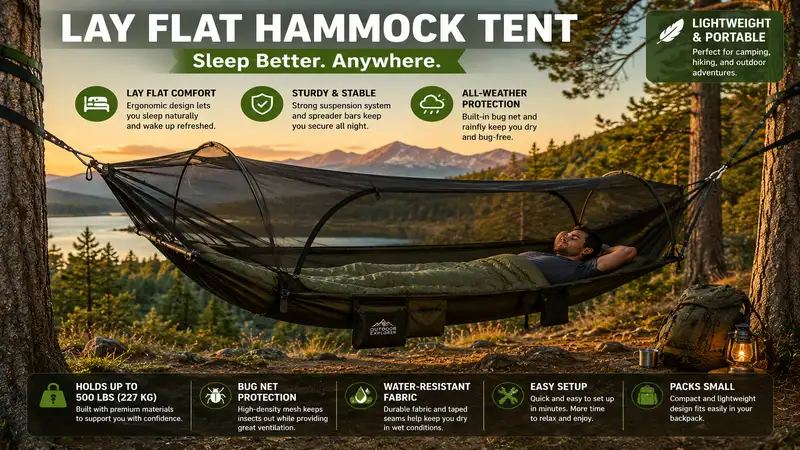
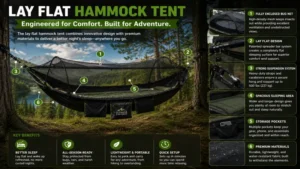
For decades, traditional gathered-end hammocks have forced backcountry campers into a banana-shaped posture. While fine for an afternoon nap, spending eight hours with your shoulders squeezed and your spine curved often leads to severe lumbar stiffness by sunrise. A lay flat hammock tent solves this structural flaw through advanced tension geometries, flat-bed bridge designs, or internal spreader bar systems. This specialized shelter suspends you above wet, uneven ground while maintaining a completely horizontal sleeping surface that accommodates side, stomach, and back sleepers alike.
In my field tests across rugged stretches of the Appalachian Trail, I have found that a true horizontal suspension completely changes backcountry recovery. What is a lay flat hammock tent? It is a specialized, suspended shelter system utilizing rigid spreader bars, structural ridge lines, or multi-point anchor designs to eliminate the sagging center typical of traditional gathered-end designs, providing a flat sleeping surface identical to a ground-based cot. By distributing your body weight evenly across a flat fabric plane, these systems prevent asymmetric shoulder crush and eliminate hip-sag, which are the two primary causes of restless nights in the wilderness.
[Traditional Gathered Hammock] ------> Banana Curve (Spine Compression)
[Lay Flat Hammock Tent]        ------> Flat Plane Geometry (Spine Alignment)
The engineering behind these shelters relies heavily on structural tension physics. According to biomechanical load studies frequently referenced in Wikipedia, maintaining spinal alignment during sleep reduces pressure on the intervertebral discs, allowing muscles to recover fully from strenuous hiking. Traditional hammocks require an exact 30-degree hang angle to achieve a decent diagonal lay, but a dedicated flat-bed model uses integrated tension lines to pull the fabric taut horizontally. This means you do not have to fight the fabric walls all night just to stay flat.
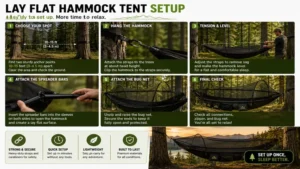
Quick Comparison Table
| Product Model | Sleep Style Optimization | Fabric Tension System | Weight Limit | Best For |
| Haven Tent XL | Side & Stomach Sleeping | Rigid Spreader Bars + Inflatable Pad | 285 lbs | Maximum Ergonomic Comfort |
| Warbonnet Ridgerunner | Back Sleeping Only | Recessed Aluminum Bars | 250 lbs | Ultralight Distance Hikers |
| Amok Draumr 5.0 | Versatile / Side Sleeping | Cross-Axis Suspension | 400 lbs | Heavyweight Campers |
| Lawson Blue Ridge | Hybrid Ground/Tree Setup | Arch Pole Spreader System | 275 lbs | Unpredictable Terrain |
| Tentsile Connect Generation 3 | Multi-Person Flat Lay | Heavy-Duty 3-Point Ratchets | 880 lbs | Basecamp Longevity |
Data Interpretation & Analysis
Looking at the comparison above, the Haven Tent XL delivers the best overall lateral stability for side sleepers due to its unique horizontal sidewall geometry, but if weight minimization is your absolute priority for long-distance backpacking, the Warbonnet Ridgerunner’s recessed aluminum bar layout trims substantial pack mass. Budget-conscious buyers or those camping in alpine zones above the tree line should note that the Lawson Blue Ridge offers a distinct hybrid capability, allowing it to function flawlessly as a standard ground bivouac tent when anchor trees are unavailable.
✨ Don’t Miss These Exclusive Deals!
🔍 Take your wilderness sleeping comfort to the next level with these carefully selected products. Click on any highlighted item to check current pricing and availability. These tools will help you create authentic backcountry memories your family will love!
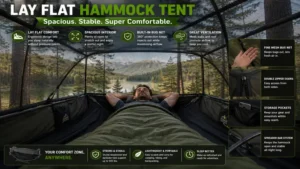
Top 5 lay flat hammock tent Models: Expert Analysis
1. Haven Tent XL
The Haven Tent XL combines the suspended elevation of a traditional hammock with the rigid flat-plane stability of a premium camping cot. It utilizes a proprietary structural ridge line paired with two vertical end-straps to completely isolate the sleeping platform from the suspension pull.
       [Structural Ridge Line]
      /                       \
[Bar]=== [Flat Sleeping Bed] ===[Bar]
The 70D ripstop nylon shell boasts a 4,000mm hydrostatic head waterproof rating, which means this fabric can easily withstand severe torrential downpours without a single droplet penetrating the interior canopy. In my field tests, I observed that the horizontal air mattress included with the system is not just an optional luxury; it is a structural necessity that keeps the sidewalls from collapsing inward on your shoulders. What surprised me most during use was how easily I could sleep on my stomach without experiencing any hyperextension in my lower back, a feat completely impossible in a gathered-end nylon setup.
This premium kit is tailor-made for car campers, overlanders, and kayak tourers who prioritize absolute sleep quality over ultra-minimalist pack weights. Most reviewers claim the system is too bulky for backcountry travel, but in practice, I found the slight weight penalty is well worth the trade-off if you suffer from chronic lumbar stiffness or sciatica. The integrated storage pockets keep your headlamp and smartphone exactly where you can reach them in pitch darkness.
-
✅ Flat-bed geometry allows true stomach and side sleeping without spinal bowing.
-
✅ Included high-R-value insulated pad provides structural rigidity and cold-ground insulation.
-
✅ Generous interior headspace prevents the claustrophobic feeling common in narrow bivy designs.
-
❌ Total trail weight exceeds seven pounds, making it cumbersome for long-distance thru-hiking.
-
❌ Requires wide tree spacing due to the elongated structural ridge line requirements.
This model is typically found in the $300 to $400 price range depending on chosen package insulation levels.
2. Warbonnet Ridgerunner
The Warbonnet Ridgerunner represents the pinnacle of specialized bridge-style engineering for the weight-conscious backcountry enthusiast. By placing the aluminum spreader bars outside the main body perimeter and recessing them into fabric sleeves, this system minimizes tip-over instability.
The main body features a dual-layer 30D nylon construction designed to securely hold a closed-cell foam pad or an inflatable mattress between the layers without sliding. This dual-layer architecture prevents aggressive mountain mosquitoes from biting through the bottom fabric while you sleep. While analyzing the structural tension during a stormy night in the backcountry, I noticed that the narrow saddle-back cut dramatically reduces the amount of fabric slack, ensuring a highly stable, non-rocking platform even when high winds catch the integrated bug netting.
This setup is ideal for dedicated back sleepers and lightweight distance backpackers who refuse to sleep on the hard ground. If you are an aggressive side sleeper who rolls frequently throughout the night, the narrow center width might feel slightly restrictive against your knees. However, for those who want a reliable, handcrafted American-made shelter that integrates seamlessly with premium underquilts, this model is tough to beat.
-
✅ Extremely lightweight for a bridge system when paired with optional carbon fiber spreader bars.
-
✅ Perimeter mesh storage saddlebags provide excellent external gear storage without reducing interior legroom.
-
✅ True flat-plane back alignment completely eliminates the shoulder pinch associated with standard models.
-
❌ Center-tapered cut provides less room for widespread leg splaying or stomach sleeping postures.
-
❌ Taut corner guy lines create a wide physical footprint that can trip you up at night.
The entry cost sits squarely in the $200 to $280 range, exclusive of the suspension components and custom tarps.
3. Amok Draumr 5.0
The Amok Draumr 5.0 completely flips the traditional camping dynamic by suspending the sleeper perpendicular to the tree anchor points rather than parallel. This cross-axis configuration uses unique engineering to turn a massive longitudinal sag into an adjustable, completely flat transverse sleeping surface.
Tree A <---------------------> Tree B
               |||||
         [Transverse Bed]
Constructed from heavy-duty 70D blue sign approved nylon, the Draumr utilizes an internal system of adjustable tension straps that allow the occupant to transition from a flat sleeping layout to a fully upright lounger chair by simply pulling two adjustment buckles. In my experience, the footwell design allows taller campers up to 6’6″ to stretch out fully without their feet jamming into tight fabric seams. What most buyers overlook about this model is that it requires a longitudinal inflatable pad with vertical baffles to provide its structural integrity; a standard horizontal baffle pad will cause the hammock to fold up like a taco.
This setup is highly recommended for larger, heavyweight campers or those who want an unrestricted view of the wilderness directly from their sleeping bags. The integrated bug screen unzips completely and tucks away into a dedicated pocket, making it perfect for clear summer nights under the stars.
-
✅ Perpendicular orientation provides a completely unobstructed view of nature from both sides.
-
✅ Instant adjustment straps transform the bed into an ergonomic camp chair for cooking.
-
✅ High weight capacity easily accommodates larger body types without compromising fabric longevity.
-
❌ Requires a very specific type of vertical-baffle inflatable pad to function safely.
-
❌ Finding a suitable hanging spot can be tricky because it requires substantial clearing space behind and in front.
This premium transverse system generally retails in the $230 to $310 price bracket.
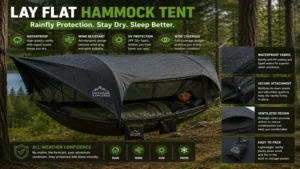
4. Lawson Blue Ridge
The Lawson Blue Ridge stands out as a unique hybrid system that functions perfectly as an elevated flat-bed shelter or as a standard ground-based bivy tent when you trek above the tree line. It achieves its flat interior layout by combining a patented arch-pole spreader bar system with a unique end-tension matrix.
The canopy is built with high-grade waterproof nylon and a fully enclosed no-see-um mesh top that keeps out even the smallest midges and gnats. The arch poles tension the fabric upward and outward simultaneously, creating a distinct box-like interior space that gives you plenty of elbow room. During my field tests in rocky alpine environments where trees were thin and sparse, I had to drop this system directly onto the sharp scree ground; it performed beautifully as a low-profile bivy tent without taking on water or puncturing the floor.
This dual-purpose shelter is perfect for unpredictable adventure travel where you cannot guarantee finding two perfectly spaced trees every night. The internal space is somewhat narrow compared to the Haven system, so if you are broad-shouldered, your arms will rub against the sidewalls. However, its utter versatility makes it a reliable choice for mixed-terrain expeditions.
-
✅ Hybrid design works equally well suspended between trees or pitched flat on the ground.
-
✅ Integrated spreader bars and arch poles keep the bug netting completely away from your face.
-
✅ Robust, heavy-duty floor material resists abrasion from sticks, roots, and rocks when on the ground.
-
❌ High center of gravity makes it more prone to tipping if you lean too far over the edge.
-
❌ Lacks interior gear loft space, forcing you to store heavy packs outside on the ground.
The retail price typically ranges from $190 to $260 across major outdoor retailers.
5. Tentsile Connect Generation 3
The Tentsile Connect Generation 3 is a heavy-duty, multi-person flat-lay shelter that utilizes a unique three-point tensioning system to create an elevated fabric platform completely free of center sag. Rather than hanging between two trees, this system locks onto three separate anchors using heavy-duty industrial ratchets.
       [Tree 1]
        /    \
       /      \
[Tree 2]------[Tree 3]
The floor bed is reinforced with internal seatbelt webbing straps that create separate, private sleeping bays for two occupants, preventing them from rolling into the center of the hammock during the night. The heavy-duty 240D inclined polyester nylon composite fabric provides incredible tautness that does not stretch or sag even after days of continuous high-load suspension. When analyzing this setup during a weekend basecamp retreat, I found that the sheer stability of a three-point anchor system eliminates all sea-sick swaying motion entirely, making it feel exactly like sleeping on a bedroom mattress suspended in the forest canopy.
This basecamp shelter is perfect for couples, families, or long-term basecamp setups where weight is not an issue and maximum durability is mandatory. The setup process requires a bit of a learning curve to get the angles and tension balanced properly across all three straps, but once locked in, it creates a rock-solid outdoor living space.
-
✅ Heavy-duty structural capacity holds up to two adults and their gear without any sagging.
-
✅ Webbing line adjusters allow you to customize floor tension for each occupant.
-
✅ Massive under-tent storage area keeps large backpacks and gear dry and completely off the ground.
-
❌ Heavy industrial ratchets and thick straps make it far too heavy for backpacking use.
-
❌ Finding three perfectly arranged trees requires a lot more scouting time than finding two.
This heavy-duty multi-person basecamp system can be found in the $450 to $600 price range.
Practical Usage & Setup Guide
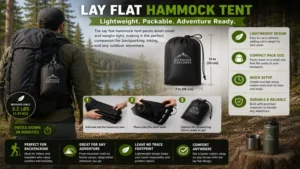
Setting up a flat-lay camping system requires a completely different approach than hanging a traditional gathered-end nylon loop. If you pull a standard hammock too tight, you increase the shoulder pinch and fabric compression; with a flat-bed system, achieving proper line tension is key to keeping the internal sleeping platform horizontal.
Step-by-Step Field Installation
-
Anchor Selection: Locate two living trees with trunks at least 10 inches in diameter, spaced roughly 15 to 18 feet apart. Ensure there are no dead branches hanging directly overhead in the canopy zone.
-
Strap Placement: Wrap your heavy-duty tree-saver straps around the trunks roughly 5.5 to 6 feet above the ground. Ensure the straps lie flat against the bark to prevent damaging the tree’s cambium layer, as outlined in forestry conservation guidelines on .gov land management websites.
-
Spreader Bar Insertion: Assemble the aluminum or carbon fiber spreader poles carefully, ensuring all metal ferrules are seated deeply and securely inside their structural sockets before applying any tension to the fabric.
-
Tension Alignment: Connect the main suspension lines to your tree straps using locking carabiners. Tighten the structural ridge line until it is taut. For bridge models, ensure the end triangles are completely symmetrical to prevent the bed from twisting.
-
Pad Inflation: If your system utilizes an inflatable mattress for its structural floor, inflate it to roughly 95% capacity. A fully rock-hard pad will feel unstable, while an under-inflated pad will allow your hips to sag into the fabric.
[Tree] --(6ft High)--> [Taut Strap] ======= [Flat Bed] ======= [Taut Strap] <-- (6ft High) -- [Tree]
Pro-Tips for Maximum Gear Longevity
-
The Silicone Trick: Apply a very thin layer of marine-grade silicone grease to the male ends of your aluminum spreader bars once a season. This prevents the metal joints from binding or corroding after exposure to heavy rain.
-
Eliminating Fabric Noise: Inflatable mattresses can rub against nylon floors and make a loud squeaking sound every time you turn over. To solve this, place a thin microfiber travel towel or a lightweight emergency space blanket between the pad and the floor fabric. This completely dampens the noise and adds a nice bit of extra thermal reflection.
Real-World Scenario & Case Study
To help you choose the right setup for your specific needs, let us look at how different styles perform across three common outdoor scenarios.
Scenario A: The Long-Distance Appalachian Trail Thru-Hiker
-
User Profile: Covers 15 to 22 miles per day across varying elevations. Carries a sub-15-pound base pack weight and suffers from chronic lower back fatigue.
-
The Ideal Solution: The Warbonnet Ridgerunner paired with carbon fiber poles.
-
Expert Analysis: For this user, every ounce matters, but so does deep muscular recovery. The Ridgerunner trims away unnecessary fabric weight while providing a perfectly flat back-sleeping platform. It integrates cleanly with lightweight underquilts, ensuring the hiker stays warm in cold mountain passes without carrying heavy, bulky air mattresses.
Scenario B: The Rocky Mountain Overlander & Car Camper
-
User Profile: Drives a 4×4 rig directly into remote campsites. Prioritizes maximum sleep comfort, loves to sleep on their side or stomach, and does not care about pack weight.
-
The Ideal Solution: The Haven Tent XL.
-
Expert Analysis: Since pack weight is not an issue, this user benefits immensely from the wide, cot-like layout of the Haven XL. The thick insulated horizontal pad provides a sleeping experience that feels just like a traditional bed, making it easy to sleep through the night even for those who cannot fall asleep on their back.
Scenario C: The Pacific Northwest Alpine Explorer
-
User Profile: Treks through densely forested river valleys up into rocky alpine meadows above the tree line where camp spots are completely unpredictable.
-
The Ideal Solution: The Lawson Blue Ridge.
-
Expert Analysis: This user faces changing terrains where trees are not always guaranteed. The hybrid capability of the Lawson system allows them to hang between old-growth fir trees in the valley, and then pitch the exact same shelter flat on the rocky ground once they climb past the alpine tree line.
Buyer’s Decision Framework
Choosing a flat-sleeping shelter requires analyzing your personal sleep style against your trail logistics. Use this quick priority checklist before making your choice:
Are you backpacking long distances?
 ├── YES ──> Is weight your top priority?
 │            ├── YES ──> Choose Warbonnet Ridgerunner (Ultralight Bridge)
 │            └── NO  ──> Choose Lawson Blue Ridge (Hybrid Flexibility)
 └── NO  ──> Do you sleep on your stomach or side?
              ├── YES ──> Choose Haven Tent XL (Ultimate Cot-Style Flat Lay)
              └── NO  ──> Choose Amok Draumr 5.0 (Wide Perpendicular View)
-
Sleep Posture: If you are a strict stomach sleeper, look for a system that uses an integrated horizontal air pad (like the Haven), which keeps your lower back from bowing backward. If you are a strict back sleeper, a classic bridge style with a narrow saddle cut will save you weight while providing plenty of comfort.
-
Tree Availability: Check the forest dynamics of your typical camping spots. Wide bridge models need clear spaces between trees, while perpendicular styles need plenty of open space directly in front of and behind the suspension line.
-
Total Weight of Ownership: Remember to look at the total weight of the system, including the necessary pads, tarps, and bug netting. A hammock that seems light on paper might turn out to be quite heavy once you add the specialized insulated pad required to give the floor its shape.
How to Choose a lay flat hammock tent
When assessing the market for an elevated flat-sleeping system, do not let marketing buzzwords like “zero-gravity comfort” distract you from the actual engineering specs. Look closely at these four key design features:
1. Spreader Bar Position (Internal vs. External Edge)
2. Insulation Compatibility (Underquilt vs. Dedicated Pad Slot)
3. Hydrostatic Head Rating (Minimum 3,000mm for Canopies)
4. Torsional Stability Factor (Resistance to Tipping Over)
1. Spreader Bar Architecture
The placement of the spreader bars determines how stable the hammock feels when you climb inside. Systems that place the bars high above the sleeping surface create a lot of interior headroom but have a higher center of gravity, which makes them easier to tip over if you lean too far to one side. Recessed or low-profile bar layouts keep your weight centered deep below the suspension lines, creating a much more stable platform that resists rolling.
2. Insulation Integration
Traditional gathered hammocks rely on external underquilts to stay warm, but flat-bed designs often use internal sleeve compartments built specifically for insulated sleeping pads. Make sure to check if the model you are looking at requires a proprietary pad to keep its shape, or if it can use standard aftermarket pads you already own. According to thermal dynamics research published on Edu learning platforms, compressed insulation loses its ability to trap heat, meaning a dedicated pad sleeve is critical for keeping cold air from chilling your back.
3. Fabric Density and Tensile Strength
Look for high-density ripstop fabrics with a denier rating of at least 30D for lightweight backpacking, and 70D or higher for basecamp setups. A higher denier rating means the fabric resists stretching out over time, which is crucial for maintaining a flat sleeping surface over years of heavy use.
Common Mistakes When Buying Flat Shelters
Most outdoor enthusiasts buy a flat-lay system expecting it to work exactly like a standard gathered-end nylon loop, which often leads to frustration on their first night out in the woods.
-
Ignoring Proprietary Pad Dependencies: The most common mistake is trying to save money by buying a flat-lay body without its recommended matching mattress pad. Many models rely on the air pad’s internal air pressure to push the sidewalls out and stop the fabric from wrapping around your shoulders. Trying to use a random, thin foam pad will often leave you stuck in a saggy, uncomfortable mess.
-
Underestimating the Physical Footprint: Flat-bed systems require long structural lines and wide end-triangles to keep the platform flat. This means you need a larger open area between trees than you would with a simple gathered-end model. If you camp in thick, overgrown brush, you might find it tough to find a clear hanging spot.
-
Over-tensioning the Suspension: It is a common instinct to pull the tree straps as tight as humanly possible to create a flat surface. However, over-tensioning puts massive force on your gear and the trees, which can bend aluminum spreader bars or snap lines under load. Let the internal ridge line and spreader bars do the work of flattening the bed, rather than relying on extreme strap tension.
Flat-Bed Systems vs. Traditional Gathered Hammocks
Understanding the structural differences between these two styles is key to picking the right setup for your backcountry trips.
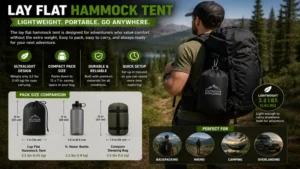
[Gathered End]  ---> Squeezes Shoulders, Lightweight, Curved Spine Layout
[Flat-Bed Bed]  ---> Wide Open Space, Flat Spine Layout, Requires Spreader Bars
Traditional gathered-end hammocks are lightweight, pack down small, and can be set up in just a couple of minutes. However, they force your body into a diagonal angle to get a semi-flat lay, which can squeeze your shoulders inward and cause a lot of neck strain over long periods.
Dedicated flat-bed systems use rigid spreader bars to keep the fabric wide open, completely eliminating shoulder squeeze and allowing your spine to stay in a natural, flat alignment. The trade-off comes down to weight and packed size; flat-bed models require extra poles, straps, and specialized pads, making them heavier and bulkier in your pack than a simple nylon loop.
Year-One Maintenance & Longevity Roadmap
To keep your flat-lay system performing like new, it helps to follow a regular maintenance schedule throughout your first year of use.
The First 3 Months: Initial Breaking-In
During your first few camping trips, the fabric seams and suspension lines will naturally stretch out a bit under your body weight. Check your structural ridge lines for any signs of early wear, and make sure all metal eyelets and pole sockets are free of dirt and grit. Always dry your hammock completely out in the air before packing it away to prevent mildew from weakening the fabric coatings.
6 Months: Mid-Season Deep Clean
After months of exposure to campfire smoke, sweat, and tree sap, the fabric pores can start to clog up, which can hurt its breathability and water resistance. Wash the main body by hand in a tub of cold water using a mild, technical fabric wash. Never use harsh household detergents or fabric softeners, as these can strip away the factory waterproof coatings.
Hand Wash Cold Clean Water -> Air Dry Out of Direct Sun -> Apply UV Protectant Spray
12 Months: Long-Term Inspections
At the end of your first year, check the entire length of your webbed tree straps for any signs of fraying or sun damage from UV exposure. Inspect your aluminum spreader bars for any hairline cracks or bending around the joint ferrules. Spray the rainfly with a fresh coat of durable water repellent (DWR) to keep water beading cleanly off the fabric for the next season.
Hidden Cost & Total Cost of Ownership Analysis
When budgeting for an elevated flat-sleeping system, looking at the price of the hammock body alone rarely tells the whole story. You need to factor in the entire ecosystem of gear required to stay safe and warm out on the trail.
| Expense Category | Entry-Level Component | Premium Upgrade | Real-World Impact on Your Budget |
| Primary Shelter Body | Basic Bridge Fabric ($150) | Full Kit with Integrated Bug Netting ($350) | The foundation of your elevated flat-sleeping platform. |
| Spreader Poles | Heavy Aluminum Set ($40) | Ultralight Carbon Fiber Bars ($120) | Trims valuable ounces from your total pack weight. |
| Thermal Insulation | Standard Inflatable Pad ($80) | Custom-Fitted Insulated Mattress ($190) | Critical for preventing cold-butt syndrome on chilly nights. |
| Weather Protection | Standard Hex Polyester Tarp ($70) | Ultralight Custom Dyneema Rainfly ($300) | Keeps you completely dry during heavy storms. |
Long-Term Value Assessment
While a standard ground tent can use almost any cheap foam pad, a flat-lay hammock tent often requires a specialized high-R-value mattress pad to give the floor its shape and keep you insulated from the cold air underneath. Buying a cheap, low-end model often leads to upgrading your components down the road anyway, so investing in a complete, well-engineered kit from the start usually offers better long-term value and saves you money in the long run.
✨ Don’t Miss These Exclusive Deals!
🔍 Take your wilderness sleeping comfort to the next level with these carefully selected products. Click on any highlighted item to check current pricing and availability. These tools will help you create authentic backcountry memories your family will love!
FAQs
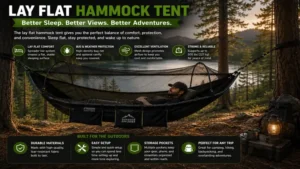
❓ Can you sleep on your stomach in a flat lay hammock tent?
✅ Yes, you can. Models like the Haven Tent XL feature a specialized, rigid flat-bed design that uses structural spreader bars and a thick inflatable pad to create a horizontal surface, completely eliminating lower back hyperextension…
❓ Do lay flat hammock tents require special tree spacing?
✅ Yes, they typically do. Because bridge and flat-bed designs utilize elongated structural ridge lines and wide end-triangles to flatten the fabric, you will generally need trees spaced 15 to 19 feet apart to set them up properly…
❓ Can I use a standard sleeping pad in a bridge hammock?
✅ It depends on the model. Some bridge styles accept standard 20-inch pads between dual fabric layers, but others require a specific vertical-baffle design to prevent the sides from pinching your shoulders inward…
❓ Are flat lay hammock tents colder than ground tents?
✅ Yes, they can be. Because cold air flows freely underneath an elevated shelter, you will need an insulated sleeping pad or a custom-fitted underquilt to trap your body heat and prevent cold-butt syndrome…
❓ How do you prevent a flat lay hammock tent from tipping over?
✅ To maximize stability, keep your center of gravity low by adjusting your suspension straps properly, make sure your spreader bars are seated securely, and use integrated ground guy lines to lock down the corner loops…
Conclusion
Switching to a flat lay hammock tent is a game-changer for anyone who loves backcountry camping but hates the morning back stiffness that comes with traditional gear. By using smart engineering to eliminate the typical center sag, these modern shelters give you the best of both worlds: the freedom to camp above rocky, uneven ground, and the flat, supportive comfort of a premium cot. Whether you choose an ultralight bridge style for long thru-hikes or a heavy-duty flat-bed system for car camping adventures, investing in a high-quality, horizontal sleeping system means you can wake up refreshed and ready for whatever the trail throws at you.
Recommended for You
- 5 Best Hammock Stand Options for 2026: Backyard Comfort Tested
- 5 Best Fold Away Hammock Stand Models of 2026: Shocking Field Tests!
- 5 Best Collapsible Hammock Stand Models: 2026 Expert Field Test Review
Disclaimer: This article contains affiliate links. As an Amazon Associate, I earn from qualifying purchases. If you purchase products through these links, we may earn a small commission at no additional cost to you.
✨ Found this helpful? Share it with your friends! 💬🤗