
In This Article
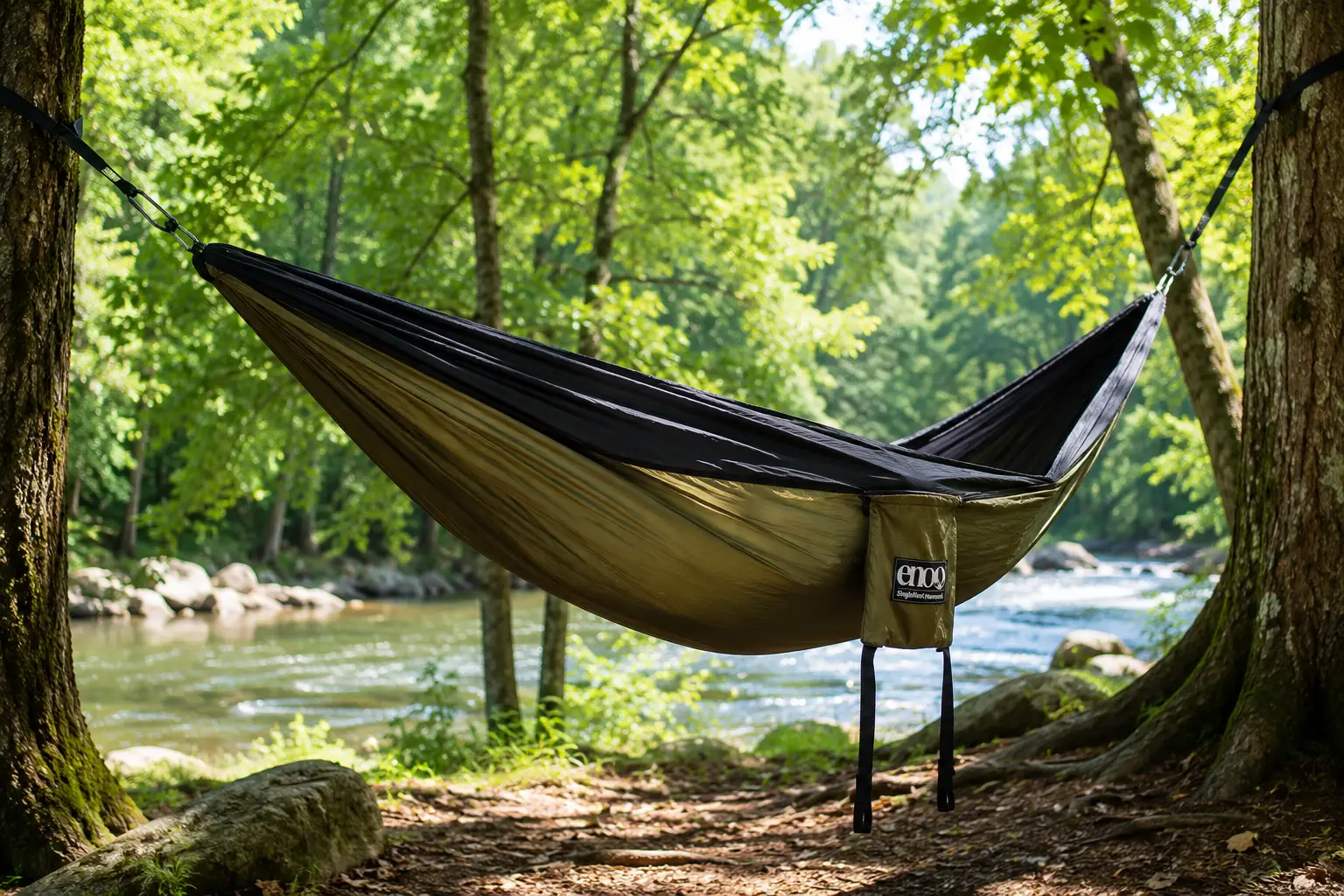
If you’ve spent any time scrolling camping gear forums, you’ve probably noticed one product name keeps popping up: the singlenest hammock. It’s become something of a catch-all term for the compact, one-person camping hammock that fits in a stuff sack the size of a grapefruit and turns any pair of trees into a lounge chair. But “singlenest” isn’t just one product — it’s a whole category, anchored by the original ENO SingleNest and now crowded with competitors chasing the same formula: lightweight nylon, a triple-stitched seam, and a weight rating north of 300 pounds.
The problem is that not all single-person hammocks are built the same, even though the marketing photos make them look interchangeable. Fabric denier, stitching quality, suspension systems, and packed weight vary a lot more than most listings let on, and those differences matter once you’re 40 feet from the trailhead trying to get a flat, comfortable hang. This guide breaks down seven real, currently available single hammocks — from the segment-defining original to ultralight backpacking options and budget-friendly starter kits — with honest analysis of who each one is actually built for.
We’ll walk through detailed specs, aggregated customer sentiment, side-by-side comparisons, and a practical buying framework so you can pick the right hammock the first time instead of ending up with your second purchase in a drawer. This post contains affiliate links, and as an Amazon Associate we may earn from qualifying purchases — more on that at the end.
What Is a Singlenest Hammock?
A singlenest hammock is a compact, one-person camping hammock made from lightweight nylon fabric, designed to pack down small and support a single sleeper or lounger — typically between 300 and 500 pounds of capacity. The name traces back to the original ENO SingleNest, though it’s now used loosely for the entire category of gathered-end, single-occupant camping hammocks.
Unlike the woven cotton hammocks you might picture on a porch, these are built for portability first: parachute-grade or ripstop nylon, a stuff sack that doubles as storage, and a design meant to hang between two trees using webbing straps (usually sold separately). They’re a direct descendant of the hammocks used by sailors and explorers for centuries, adapted with modern synthetic materials for backpacking, festivals, and backyard use alike.
Quick Comparison: Top Singlenest Hammocks at a Glance
| Product | Weight | Capacity | Best For |
|---|---|---|---|
| ENO SingleNest | 16 oz | 400 lbs | All-around reliability |
| Grand Trunk TrunkTech Single | 11.7 oz | 500 lbs | Extra room to stretch out |
| Kammok Roo Single | 11.4 oz | 500 lbs | Long-term durability |
| Hummingbird Hammocks Single+ | 7.6 oz | 350 lbs | Ultralight backpacking |
| Wise Owl Outfitters Camping Hammock | 24 oz (w/ straps) | 400 lbs | Complete beginner kit |
| Covacure Camping Hammock | 1.93 lbs | 772 lbs | Tight budgets |
| Onewind 11ft Ultralight Hammock | 2.1 lbs (system) | 300 lbs | Bug-free backcountry nights |
At a glance, the spread here is bigger than it looks. The Hummingbird Hammocks Single+ is roughly a third the weight of the Wise Owl Outfitters Camping Hammock, but that savings comes from thinner fabric and a lower weight rating — a trade-off that matters if you’re over 250 pounds or camping with a dog. Meanwhile, the Covacure Camping Hammock posts a 772-pound capacity at a fraction of the price of the Kammok Roo Single, which tells you capacity alone isn’t a reliable stand-in for build quality or comfort. We’ll unpack all of that below.
💬 Found a hammock you like already? Scroll down to the full breakdown — one click helps you make a confident choice before you buy! 😊
Top 7 Single-Person Camping Hammocks, Reviewed
Coverage here spans entry-level bundles, mid-range all-rounders, and premium ultralight builds, so there’s a realistic option whether you’re outfitting a car-camping kit or shaving ounces off a thru-hike loadout.
1. ENO SingleNest — the tried-and-true benchmark
The ENO SingleNest is the hammock that basically defined this category, and it’s still the one most other brands get compared against. It’s made from 70-denier high-tenacity nylon taffeta, a fabric choice that prioritizes durability and quick-drying performance over ultralight weight savings. In practice, that means the ENO SingleNest shrugs off rough tree bark, gravel, and repeated pack-downs better than thinner fabrics, at the cost of carrying a bit more heft than backpacking-specific models. It ships with aluminum wiregate carabiners and nautical-grade line, but — like most hammocks in this list — the hanging straps are sold separately, which is easy to miss at checkout. Reviews consistently report that the fabric holds its shape and color well over years of use, and that the stuff sack doubles nicely as an on-the-go pocket for a phone or drink. A common critique in aggregated feedback is that taller users (roughly 6’2″ and up) find it snug for a true diagonal lay. This model is the safest default pick for someone buying their first single hammock and wanting brand reliability over cutting-edge weight savings. The ENO SingleNest typically runs in the $55–$65 range, and given its reputation for longevity, it’s a fair value for casual campers, festival-goers, and backyard loungers who don’t need to shave every ounce.
Pros:
- ✅ Durable 70D nylon holds up to years of regular use
- ✅ Compact stuff sack doubles as a pocket
- ✅ Backed by a well-known brand with wide accessory support
Cons:
- ❌ Snug diagonal lay for users over 6’2″
- ❌ Heavier than dedicated ultralight competitors
2. Grand Trunk TrunkTech Single — roomiest single on the list
Where the ENO SingleNest plays it safe on size, the Grand Trunk TrunkTech Single goes bigger — its 11-foot by 4-foot-10-inch footprint is noticeably longer than most singles, which translates directly into a flatter, more comfortable diagonal lay for taller campers. It’s built from 40D diamond ripstop nylon, a fabric pattern that resists tear propagation (small punctures don’t easily turn into big rips), and it weighs just 11.7 ounces despite the extra square footage. Independent gear testing has noted that the added length makes this one of the more comfortable singles to actually sleep in overnight, not just lounge in during the day. Aggregated customer sentiment leans positive on comfort and value, though a recurring theme is that the ripstop fabric feels thinner underfoot than the ENO’s taffeta, which some campers read as a durability trade-off rather than a flaw. This hammock is best suited to taller users, backpackers who still want some extra stretch room, and anyone who’s found standard singles cramped. Priced in the $40–$50 range, it undercuts several competitors here while offering more usable space, making it one of the stronger value picks on this list for anyone prioritizing comfort over ultralight weight.
Pros:
- ✅ Longer 11-foot bed suits taller campers
- ✅ Reflective end-loops improve nighttime visibility
- ✅ Weighs under 12 ounces despite the larger size
Cons:
- ❌ Thinner-feeling fabric than heavier-denier competitors
- ❌ Reported color variation between production batches
3. Kammok Roo Single — built to outlast everything else
The Kammok Roo Single leans hard into durability, backed by a 500-pound capacity and Kammok’s lifetime Adventure Grade guarantee. Its GravitasX 40D diamond ripstop fabric is made from 100% recycled, bluesign-approved material, which matters both for sustainability-minded buyers and for the practical fact that recycled ripstop from a reputable mill tends to hold consistent quality control. At 11.4 ounces, it’s genuinely competitive on weight for what it offers in strength margin — a 500-pound rating gives real peace of mind if you’re hammocking with gear, a dog, or simply want a wider safety buffer than a 300-pound-rated hammock provides. What most buyers overlook here is the lifetime warranty itself: it effectively lowers the total cost of ownership over a decade of use, even though the sticker price looks steep next to budget options. Reviews of the broader Roo lineup describe the fabric as notably soft and comfortable against the skin, water-resistant enough to shrug off morning dew, and easy to pack into its included roll-top stuff sack. The trade-off is price — this is one of the pricier entries on this list — and the recycled fabric sourcing means colorways can be less predictable than standard nylon. Expect to pay in the $70–$90 range; for campers who hammock often enough to wear out cheaper gear within a season or two, the lifetime backing makes this a legitimately strong long-term value.
Pros:
- ✅ 500-lb capacity with a lifetime Adventure Grade warranty
- ✅ Recycled, bluesign-approved ripstop fabric
- ✅ Compact roll-top stuff sack about the size of a can
Cons:
- ❌ Higher upfront price than most competitors
- ❌ Recycled-fabric batches can vary slightly in color
4. Hummingbird Hammocks Single+ — lightest setup for thru-hikers
If ounces are the deciding factor, the Hummingbird Hammocks Single+ is hard to beat. Weighing just 7.6 ounces, it’s built from PIA-C-44378 T4 certified reserve parachute fabric — the same material family used in actual parachute canopies — stitched with military-spec bonded nylon thread. What that spec sheet doesn’t say plainly is what it means in the field: this is genuinely one of the lightest full-size hammocks commercially available, and independent field testers have confirmed it as among the lightest options they’ve evaluated. The Button Link attachment system swaps heavy metal carabiners for a lightweight, 3D-printed button paired with 1,500-pound-rated Spectra cord, shaving weight without sacrificing rated strength. Reviews consistently praise the packed size (smaller than a coffee mug) and note it’s comfortable enough for both daytime lounging and overnight sleeping for hikers under roughly 200 pounds. The honest caveat, echoed across multiple independent reviews, is that the ultralight fabric is more prone to small nicks and abrasions from sticks or rough handling than heavier-denier hammocks, and the Button Link system only integrates cleanly with Hummingbird’s own straps. This is the pick for thru-hikers, ounce-counters, and anyone building a genuinely ultralight kit — expect to pay in the $65–$80 range for the hammock alone, straps sold separately.
Pros:
- ✅ Among the lightest full-size hammocks on the market
- ✅ Military-spec parachute fabric and Spectra cord hardware
- ✅ Packs smaller than a coffee mug
Cons:
- ❌ More prone to nicks from sticks and rough handling
- ❌ Button Link system works best with Hummingbird’s own straps
5. Wise Owl Outfitters Camping Hammock — best all-in-one starter kit
The Wise Owl Outfitters Camping Hammock solves the single biggest frustration first-time buyers run into with this category: nearly every other hammock on this list sells its tree straps separately, but this one bundles 9-foot Talon straps and carabiners right in the box. Built from 210T parachute nylon with triple interlock stitching, it holds up to 400 pounds and packs into an attached storage bag that doubles as a pocket once unrolled. What that inclusion means practically is a genuinely lower total cost to get hanging on day one, since straps alone often run $15–$20 elsewhere. Wise Owl is also a US-based, family-run small business, which shows up in the brand’s responsive customer service — a detail aggregated reviews mention more often than with larger competitors. Common feedback themes are positive on ease of setup (the five-loop strap system needs no knots) and value, with occasional notes that the parachute nylon feels less premium than heavier-denier fabrics from ENO or Grand Trunk. This is the pick for someone who wants to be hammocking within ten minutes of opening the box, without researching a separate suspension system. Bundled kits typically fall in the $25–$35 range, making it one of the most complete deals in this roundup once you factor in the included straps.
Pros:
- ✅ Tree straps and carabiners included in the box
- ✅ No-knot, five-loop adjustable strap system
- ✅ US-based small business with responsive support
Cons:
- ❌ Fabric feels thinner than higher-denier competitors
- ❌ 400-lb rating is lower than some similarly priced rivals
6. Covacure Camping Hammock — best budget pick
For campers who just want to try hammocking without a big financial commitment, the Covacure Camping Hammock is the standout budget option here. It’s made from 210T parachute nylon and posts a genuinely surprising 772-pound weight capacity — well above what most single-person hammocks in this price bracket claim. At 9.5 feet long by 4.6 feet wide, it’s roomy enough for a single sleeper to stretch out or for two people to share for casual lounging, and it comes with aluminum sand pegs and adjustable straps included. What the spec sheet doesn’t fully convey is that this generous capacity rating is partly a marketing lever at this price point — it’s a reassuring safety margin rather than a signal of premium-grade materials, and buyers should treat it as a comfortable, budget-friendly option rather than a technical match for the fabric-grade durability of the Kammok Roo Single or ENO SingleNest. Aggregated customer sentiment is generally positive on value and ease of setup, with the bundled accessories cited as a nice touch for the price. This is the pick for beginners testing whether hammock camping is even for them, backyard casual use, or anyone equipping a group on a tight budget. Expect pricing in the $20–$30 range, which makes it one of the lowest-cost complete kits on this list.
Pros:
- ✅ High rated capacity at an entry-level price
- ✅ Includes straps and aluminum pegs in the kit
- ✅ Roomy enough for solo stretching or casual double use
Cons:
- ❌ Fabric quality trails premium, higher-denier competitors
- ❌ Less proven long-term durability track record
7. Onewind 11ft Ultralight Hammock — best bug-free backcountry system
The Onewind 11ft Ultralight Hammock stands apart because it’s sold as a near-complete sleep system rather than just a hammock body. The version built with an integrated no-see-um bug net and adjustable UHMWPE ridgeline includes 12-foot tree straps, aluminum tent stakes, and a double-sided stuff sack, all for around 2.1 pounds total. The 40D hexagon ripstop nylon construction and included ridgeline mean you can dial in consistent sag night after night — a detail that matters more than it sounds, since ridgelines take the guesswork out of achieving a flat, ergonomic lay every time you set up. Reviewers highlight the bottom-entry bug net design as genuinely useful for buggy backcountry campsites, letting you get in and out without exposing yourself to mosquitoes the way a top-entry net can. Onewind Outdoors positions this as a beginner-friendly option for scouts and weekend campers, and the bundled accessories back that up: there’s little else you need to buy separately. The honest trade-off is that “complete system” pricing puts it above bare hammock-only competitors, and the standard version’s 300-pound rating is on the lower end of this list. For backcountry campers who deal with bugs regularly, this is one of the more thoughtfully engineered picks here, typically priced in the $45–$60 range depending on configuration.
Pros:
- ✅ Complete kit: bug net, ridgeline, straps, and stakes included
- ✅ Bottom-entry net design reduces bug exposure while entering
- ✅ Adjustable ridgeline delivers a consistent, flat hang
Cons:
- ❌ Lower 300-lb capacity than several list competitors
- ❌ Complete-system pricing costs more than hammock-only options
Singlenest Hammock vs Traditional Tent Camping
One question we get constantly: is a single hammock actually a reasonable substitute for a tent, or just a novelty for backyard lounging? The honest answer depends heavily on climate, terrain, and how you sleep.
| Factor | Single Hammock | Traditional Tent |
|---|---|---|
| Packed weight | 7–24 oz (hammock only) | 2–5 lbs typical |
| Setup time | 2–5 minutes | 5–15 minutes |
| Ground impact | Minimal — no footprint needed | Requires flat, clear ground |
| Cold-weather comfort | Needs underquilt below ~50°F | Better stock insulation |
| Best for | Wooded terrain, warm-to-mild climates | Open terrain, cold or wet conditions |
The weight and setup-time columns favor hammocks pretty clearly, and that’s before accounting for the fact that a hammock doesn’t require you to find, clear, or level a tent pad — you just need two trees roughly 12 to 15 feet apart, which Leave No Trace’s hammock camping guidance notes is one of the format’s genuine low-impact advantages over ground tents. Where tents pull ahead is cold-weather performance: because a hammock suspends you in open air, compressed insulation underneath you loses effectiveness fast, and most hammock campers need a dedicated underquilt or foam pad once temperatures drop below the mid-40s Fahrenheit. If your trips are mostly three-season, wooded, and weight-conscious, a singlenest hammock setup like the Onewind 11ft Ultralight Hammock or ENO SingleNest is a legitimately strong alternative; if you regularly camp above treeline or in freezing conditions, a tent still makes more sense as your primary shelter.
✨ Ready to pick your hang? Compare current pricing on today’s featured picks and start planning your next trip! 🌲
How to Choose a Singlenest Hammock
Picking the right single hammock comes down to a handful of variables that matter far more than color options. Here’s the framework we’d recommend working through, in order:
- Confirm your weight capacity margin. Don’t buy right at your body weight — leave at least 50–100 pounds of headroom, especially if you’ll ever hammock with a pack, pet, or extra gear inside.
- Decide how much you care about packed weight. Backpackers shaving ounces should look toward the Hummingbird Hammocks Single+; car campers and backyard users can prioritize comfort and durability instead, like the Grand Trunk TrunkTech Single.
- Check whether straps are included. Several hammocks on this list, including the ENO SingleNest and Kammok Roo Single, sell suspension straps separately — budget for that add-on before you compare final prices.
- Match fabric denier to your use case. Higher-denier nylon (like the ENO’s 70D taffeta) resists abrasion better for frequent, rough-terrain use; lower-denier ripstop saves weight for occasional trips.
- Consider bug protection if you camp in humid or buggy regions. Integrated-net systems like the Onewind 11ft Ultralight Hammock save you from buying a separate bug shelter later.
- Factor in your height. Taller campers (6’2″+) generally get a flatter, more comfortable diagonal lay from longer-bodied hammocks like the Grand Trunk.
- Set a realistic budget including accessories. A hammock, straps, and (optionally) an underquilt or bug net can add up — decide upfront whether you want a bundled kit or a build-your-own system.
Working through these seven factors in order will eliminate most of the mismatched-purchase regret we see in aggregated customer reviews — usually tied to capacity surprises or forgetting straps aren’t included.
Common Mistakes to Avoid When Buying a Single Hammock
Even experienced campers make predictable errors when shopping this category, and most of them are avoidable with a little foresight.
The single most common mistake is forgetting that suspension straps are frequently sold separately. Shoppers see a $55 hammock, add it to cart, and don’t realize until setup day that they still need a $15–$20 set of tree-friendly straps — budget for the full kit from the start, or choose an all-in-one option like the Wise Owl Outfitters Camping Hammock. A close second is buying strictly on weight capacity without considering fabric quality; a 772-pound rating on a budget hammock like the Covacure Camping Hammock is a real number, but it doesn’t automatically mean the fabric will resist abrasion or UV degradation as well as a premium-denier competitor over years of use.
Buyers also frequently underestimate how much length matters for comfort. A hammock that’s fine for a 5’6″ camper can feel genuinely cramped for someone over 6 feet, forcing a straight-line lay instead of the flatter diagonal position that makes hammock sleeping comfortable. Another overlooked detail: not every hammock ships with a bug net, and retrofitting one after the fact is more expensive and less effective than buying an integrated system like the Onewind 11ft Ultralight Hammock upfront if you camp somewhere buggy. Finally, plenty of first-time buyers skip researching hang angle and strap length entirely, then blame the hammock for a “banana-shaped,” uncomfortable lay that’s actually caused by hanging it too tight or too far apart — a setup issue, not a product flaw.
What to Expect: Everyday Comfort and Performance
Specs only tell part of the story — what actually matters is how a hammock feels once you’re in it. The single biggest factor in comfort is the diagonal lay: hammocks are most comfortable when you lie at roughly a 30-degree angle across the body rather than straight down the centerline, which flattens your back and reduces the “cocoon” curl that causes shoulder squeeze in cheaper or narrower models. Longer, wider hammocks like the Grand Trunk TrunkTech Single make this angle easier to achieve, which is exactly why independent testers rate it highly for overnight comfort despite using a thinner ripstop fabric than the ENO.
Fabric texture matters more day-to-day than most buyers expect, too. Higher-denier nylon on the ENO SingleNest feels slightly stiffer against skin but resists pilling and abrasion better over repeated use; the ultralight parachute fabric on the Hummingbird Hammocks Single+ feels noticeably softer and quieter but demands more careful handling around sharp branches and rocks. Temperature regulation is another real-world consideration reviewers bring up often — nylon breathes well in warm weather, but without an underquilt or sleeping pad beneath you, expect to feel cold air moving underneath your body once nighttime temperatures drop, even if the air around you feels mild. Set expectations accordingly: for casual daytime lounging, almost anything on this list will feel great within minutes of hanging it; for genuine overnight sleep comfort, length, hang angle, and insulation matter far more than brand name.
Getting Started: Setting Up and Breaking In Your Singlenest Hammock
The first thirty days with a new hammock set the tone for how much you’ll actually use it, so it’s worth doing the basics right from the start.
Begin by choosing two healthy, sturdy trees roughly 12 to 15 feet apart — closer spacing forces a steeper hang angle that reduces comfort and increases strain on the fabric. Wrap your webbing straps around the thickest part of each trunk (not thin upper branches), keeping the hang low enough that your seated height off the ground stays under about 18 inches; this keeps you safe if a strap slips and reduces impact on overhead growth, a point Leave No Trace’s hammock guidance emphasizes specifically. Aim for roughly a 30-degree strap angle relative to the ground — steep enough for a flat lay, not so steep that you’re sitting nearly upright.
For your first few uses, get in and out slowly, testing your weight gradually rather than dropping in all at once, especially with lower-capacity ultralight models. Once you’re settled, shift diagonally across the hammock body instead of lying straight down the centerline — this single adjustment does more for comfort than any gear upgrade. For maintenance during the break-in period, avoid setting the hammock down on gravel or rough pavement, since abrasion damage accumulates fastest in the first several uses before the fabric “settles.” After each trip, let the hammock air dry fully before stuffing it away, since packing damp nylon encourages mildew and weakens stitching over time. A quick monthly inspection of seams, carabiners, and strap stitching catches wear before it becomes a safety issue.
Real-World Scenarios: Matching the Right Hammock to Your Trip
Different camping styles call for genuinely different hammocks, and matching your use case upfront avoids an expensive do-over.
The weekend car camper on a budget wants low upfront cost and a hassle-free first setup more than ounce-counting performance. The Wise Owl Outfitters Camping Hammock or Covacure Camping Hammock both fit this profile well — bundled straps mean no surprise add-on purchases, and neither requires research into separate suspension systems before the first trip.
The thru-hiker counting every ounce has a completely different priority stack: total system weight trumps almost everything else, including price. For this camper, the Hummingbird Hammocks Single+ at 7.6 ounces is the clear standout, especially paired with lightweight straps rather than heavier standard webbing.
The taller camper who’s been uncomfortable in standard singles — think 6’2″ and up — should prioritize length over weight savings. The Grand Trunk TrunkTech Single‘s extra 12 to 18 inches of body length translates directly into a flatter, less cramped diagonal lay, solving a complaint that shows up repeatedly in reviews of shorter, standard-length hammocks.
The buggy-region backcountry backpacker needs integrated bug protection more than raw weight savings, since retrofitting a separate net system after the fact rarely fits as cleanly. The Onewind 11ft Ultralight Hammock‘s bottom-entry net and included ridgeline solve this in a single purchase rather than three separate ones.
The frequent user who hammocks weekly and wants gear that won’t need replacing in a year benefits most from paying up for the Kammok Roo Single‘s lifetime warranty and 500-pound-rated recycled fabric — a case where higher upfront cost genuinely lowers cost per use over several seasons.
Common Hammock Problems (and How to Solve Them)
Even a well-chosen hammock runs into predictable snags. Here’s how to fix the most common ones.
Problem: the hammock sags into an uncomfortable “banana” shape. This is almost always a hang-angle issue, not a product defect — tighten your strap angle closer to 30 degrees, or shift your body diagonally across the fabric instead of lying straight down the center.
Problem: shoulder or arm squeeze while lying down. This happens when the sides of the hammock press inward, usually from hanging it too tight or using a hammock that’s too narrow for your build. Loosening the hang slightly and lying at a steeper diagonal angle both help; if it persists, a wider model like the Grand Trunk TrunkTech Single solves it structurally.
Problem: cold air underneath you at night. Compressed insulation beneath your body loses effectiveness fast in a hammock, since there’s no ground to block wind. Adding a foam sleeping pad or dedicated hammock underquilt underneath solves this far more effectively than extra layers of clothing.
Problem: straps damaging tree bark. Use webbing straps at least an inch wide rather than thin rope or cord, which concentrates pressure and can girdle bark over repeated use — a concern Leave No Trace’s guidance addresses directly for backcountry hammock campers.
Problem: mildew smell after storage. Always fully air-dry your hammock before packing it into its stuff sack; damp nylon stored in a sealed bag is the single most common cause of persistent odor and stitching degradation.
Long-Term Cost and Maintenance
The sticker price on a single hammock is only part of the real cost picture. Straps, carabiners, and (for cold-weather or overnight use) an underquilt or sleeping pad can add $30–$100 on top of the hammock itself, depending on how complete a system you’re building. Budget options like the Covacure Camping Hammock win on upfront price but may need replacing sooner if used heavily, while premium picks like the Kammok Roo Single spread their higher cost across a longer usable lifespan thanks to the lifetime warranty backing the fabric and stitching.
Maintenance costs, fortunately, are low across the board. Hand-washing in cold water and air-drying keeps nylon hammocks in good shape for years; machine washing on a gentle cycle is fine for most models but check manufacturer guidance first, since some ultralight fabrics and Spectra cord hardware, like the Hummingbird Hammocks Single+‘s Button Link system, aren’t designed for machine agitation. Replacement parts — carabiners, straps, or bug nets — are widely available and inexpensive, typically $10–$25 each, meaning a worn strap doesn’t require replacing the entire hammock. Looked at over a five-year ownership window, the total cost of ownership gap between a $25 budget hammock replaced twice and a $75 premium hammock bought once ends up closer than the sticker prices suggest — a useful reframe if upfront cost is the only thing steering your decision.
Safety, Regulations, and Leave No Trace Standards
Hammock camping is generally low-risk when set up correctly, but a few safety and etiquette standards are worth knowing before your first trip. Always respect the manufacturer’s stated weight capacity with a comfortable margin rather than hanging right at the limit, and inspect straps, carabiners, and stitching for wear before every trip — small nicks in webbing straps or hairline cracks in carabiners are the most common failure points reported across aggregated hammock reviews.
On the environmental side, the nonprofit Leave No Trace organization’s hammock camping guidance recommends using webbing straps at least an inch wide, wrapped around the thickest part of a healthy, sturdy tree trunk, and hanging no higher than about 18 inches off the ground to limit both fall risk and impact on tree branches. It also advises setting up at least 200 feet from water sources and established trails when backcountry camping, and always taking your hammock down before leaving a campsite so wildlife or other campers don’t get tangled in it. Some public parks and specific trail systems restrict or ban tree-anchored hammocks entirely, so it’s worth checking local regulations before you hang — a quick search of the park or forest’s official rules page usually clarifies this in under a minute. None of the single hammocks reviewed here are marketed or rated as infant sleep products, and none should be used as one; the U.S. Consumer Product Safety Commission has specifically restricted inclined infant sleep products in a separate regulatory category that doesn’t apply to adult camping hammocks like these.
Frequently Asked Questions
❓ What's the difference between a singlenest and a doublenest hammock?
❓ Do I need to buy straps separately for a singlenest hammock?
❓ How much weight can a single camping hammock hold?
❓ Is a singlenest hammock comfortable enough to sleep in overnight?
❓ What's the best singlenest hammock for backpacking?
Conclusion
There’s no single “best” singlenest hammock — there’s a best one for your specific trips, budget, and body type. If you want the dependable, do-everything classic, the ENO SingleNest remains a smart default. Taller campers will likely be happier in the roomier Grand Trunk TrunkTech Single, while anyone hammocking for years to come should weigh the long-term value of the Kammok Roo Single‘s lifetime warranty. Ounce-counting backpackers have a clear winner in the Hummingbird Hammocks Single+, and first-time buyers who want zero setup guesswork will appreciate the bundled convenience of the Wise Owl Outfitters Camping Hammock. Budget-conscious shoppers can start hammocking affordably with the Covacure Camping Hammock, and anyone dealing with buggy backcountry campsites should look hard at the Onewind 11ft Ultralight Hammock‘s integrated net system.
Whichever you choose, the fundamentals matter more than the brand name: leave a real weight-capacity margin, don’t skip the straps, hang at roughly a 30-degree angle between two sturdy trees, and add insulation below you before your first overnight trip. Get those right, and almost any hammock on this list will earn its spot in your gear closet for years.
Recommended for You
- Rain Tarp Camping: 7 Best Tarps for Dry Outdoor Adventures
- 5 Best Hammock Porch Swings in 2026: Hands-On Field Test
- Suspended Tent Guide: 5 Best Tree Tents Tested for Comfort in 2026
Disclaimer: This post contains affiliate links. As an Amazon Associate, I earn from qualifying purchases made through these links, at no additional cost to you.
✨ Found this article helpful? Share it with someone who needs it! 💬🤗