
In This Article
Introduction: Why a 1 person hammock Deserves a Spot in Your Pack
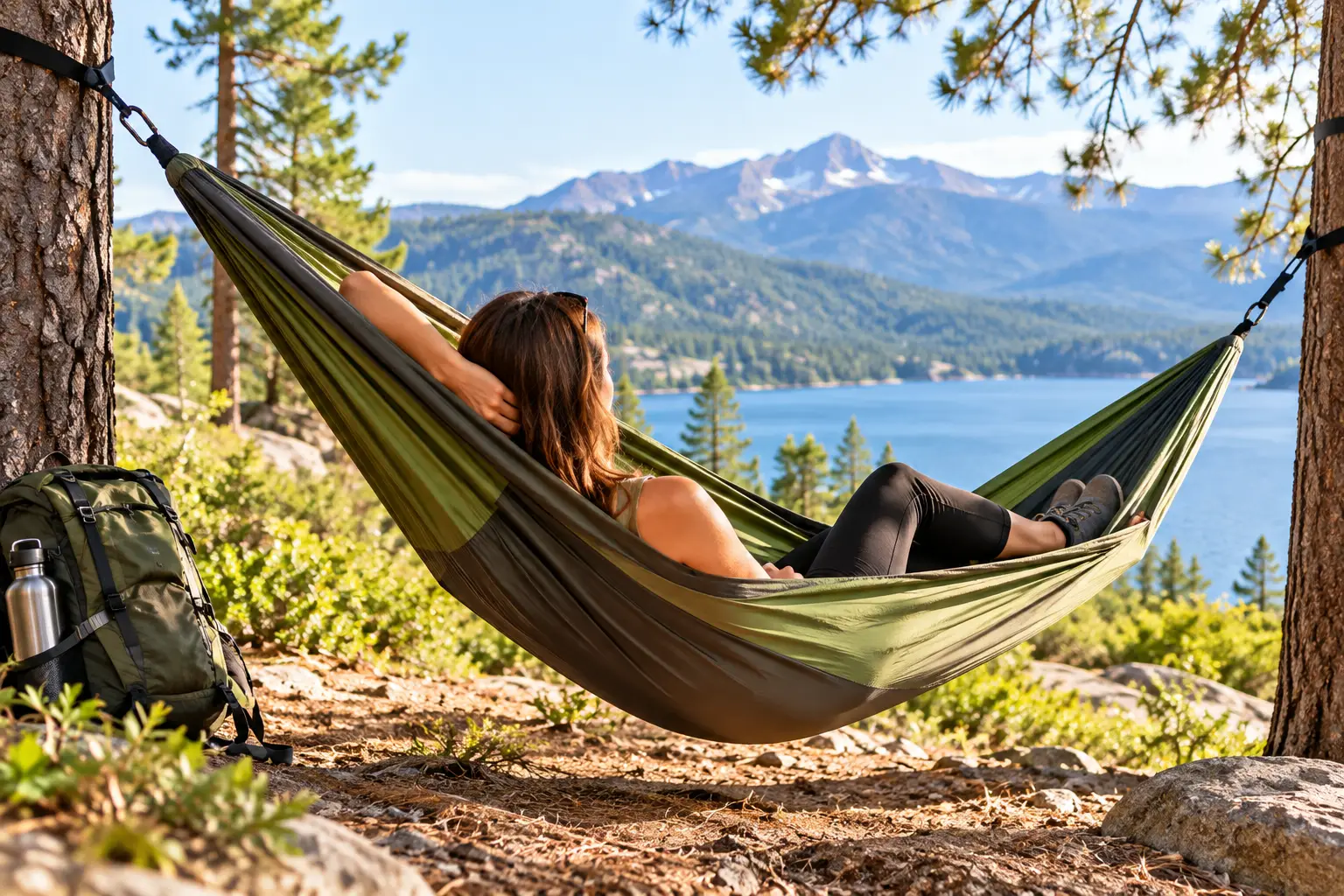
Picture this: you’ve just crested the last switchback, your legs are toast, and two perfectly spaced pines are practically begging you to stop. Ninety seconds later you’re swaying above the trail, boots off, watching the light go gold. That’s the quiet magic of a 1 person hammock — and it’s why solo hammocks have quietly become one of the most popular pieces of outdoor gear in America.
But here’s the catch. Walk through any Amazon search for a 1 person hammock and you’ll find hundreds of near-identical listings, wildly different weight ratings, and “ultralight” claims that don’t survive contact with a kitchen scale. Some hammocks are built for afternoon naps in the backyard; others are full shelters engineered to replace a tent. Buy the wrong one and you’ll either haul extra ounces for years or spend a miserable night folded like a taco.
This guide cuts through that noise. Every product below is a real, currently sold model, and every claim is drawn from manufacturer spec sheets and aggregated customer reviews — no invented test stories, no made-up star ratings. You’ll get honest analysis, side-by-side comparisons, setup advice, and a clear sense of which hammock fits your body, your budget, and your trips.
What Is a 1 person hammock?
A 1 person hammock is a suspended fabric bed sized and rated for a single user, typically 8 to 10 feet long and 4 to 5 feet wide, with a weight capacity of roughly 250 to 500 pounds. It’s lighter and more compact than a double, making it ideal for solo lounging, backpacking, and hammock camping.
If you want a broader primer before diving in, REI’s expert guide to choosing a hammock is a solid overview of sizes, materials, and hardware. Below, we go deeper on the solo category specifically.
Quick Comparison: The Best 1 person hammock Options at a Glance
Short on time? This table gives you the essentials before we dig into each model.
| Hammock | Weight (hammock) | Capacity | Straps included? | Best for |
|---|---|---|---|---|
| ENO SingleNest | 16 oz | 400 lbs | No | ENO SingleNest: all-around solo lounging |
| Wise Owl Outfitters SingleOwl | ~24 oz (with straps) | 400 lbs | Yes | Wise Owl Outfitters SingleOwl: first-time buyers on a budget |
| Kammok Roo Single | 11.4 oz | 500 lbs | No | Kammok Roo Single: light weight with high capacity |
| Grand Trunk Ultralight Hammock | 12 oz | 300 lbs | No (carabiners only) | Grand Trunk Ultralight Hammock: day hikes and travel |
| Sea to Summit Pro Hammock Single | 19.7 oz (set) | 400 lbs | Yes | Sea to Summit Pro Hammock Single: fast, integrated setup |
| Hennessy Hammock Expedition Asym Zip | 2 lbs 12 oz (packed) | 250 lbs | Yes (short) | Hennessy Hammock Expedition Asym Zip: all-in-one overnight shelter |
| ENO JungleNest | 20 oz | 300 lbs | No | ENO JungleNest: bug-free backcountry sleep |
Looking at the table, the Kammok Roo Single stands out on paper by pairing the lowest listed weight in the full-size group with the highest capacity, while the Wise Owl Outfitters SingleOwl is the only budget pick that ships ready to hang out of the box. If you plan to sleep overnight rather than nap, the real split is between the Hennessy Hammock Expedition Asym Zip (bug net and rainfly included) and the ENO JungleNest (bug net included, tarp sold separately). Note that “weight” figures aren’t always apples to apples — some include straps, some don’t — which is why the detailed sections matter.
💬 One click helps other shoppers make an informed choice too! 😊
Top 7 1 person hammock Picks for 2026: Expert Analysis
Each pick below covers what the specs actually mean when you’re hanging, who the hammock suits, what real reviews consistently say, and where it falls short. For independent lab-style scoring across dozens of models, OutdoorGearLab’s ongoing hammock testing is a useful second opinion to cross-check any of these.
1. ENO SingleNest — the benchmark for solo relaxation
The ENO SingleNest is the hammock most other solo models get measured against, and for good reason: it balances size, weight, and durability with almost no weak spots.
It measures 9’6″ x 4’10”, weighs 16 ounces, and carries a 400-pound rating on triple-stitched FreeWave 70D nylon. In practice, that 70-denier fabric feels noticeably sturdier than the 40D fabrics on ultralight models, so snags from zippers or keys are less of a worry. The integrated stuff sack compresses to roughly grapefruit size and doubles as a stash pocket while you hang.
Based on comparing the specs, this is the right pick if you want one hammock for the backyard, the beach, and the occasional campsite — and you’re under about 6 feet tall. It’s not the lightest, but it’s the most versatile. Just budget for straps: they’re sold separately, and ENO’s Atlas straps are the natural pairing.
Reviews consistently praise the soft, breathable fabric and simple carabiner setup; the most common trade-off buyers mention is the extra cost of buying suspension separately.
Pros:
- ✅ Durable 70D fabric resists everyday snags and wear
- ✅ Packs to grapefruit size with an attached stuff sack
- ✅ Huge ecosystem of compatible straps, nets, and tarps
Cons:
- ❌ Straps are not included in the base price
- ❌ Heavier than 40D ultralight alternatives
Expect to pay roughly $50 to $70 at the time of writing — fair value for a hammock that will likely outlast several trendier rivals.
2. Wise Owl Outfitters SingleOwl — best ready-to-hang budget kit
The Wise Owl Outfitters SingleOwl solves the most annoying beginner problem: it arrives with everything you need to hang on day one.
The hammock is 9 feet long by 4.5 feet wide, made from 210T parachute nylon, and rated to 400 pounds. The kit includes tree straps and two D-shaped carabiners, and the whole package weighs about 24 ounces. What that means in practice: you save the $30 to $40 most brands expect you to spend on suspension, but you carry roughly half a pound more than an ENO SingleNest plus lightweight straps.
Here’s what to weigh: for car camping, backyard hangs, or a kid’s first scout trip, the extra ounces barely matter, and the price is hard to argue with. For long backpacking trips, you’ll eventually want something lighter. The included straps are also on the shorter side, so very wide tree spacing can leave you coming up short.
Customer reviews consistently describe the fabric as comfortable and the setup as fast, and many buyers compare it favorably with pricier name brands; the recurring complaint is strap length on widely spaced trees.
Pros:
- ✅ Straps and carabiners included — no extra purchases
- ✅ Strong 400-pound rating at an entry-level price
- ✅ Wide range of colors for style-conscious buyers
Cons:
- ❌ Heavier overall than premium solo hammocks
- ❌ Included straps can be short for wide trees
Usually priced around $25 to $35, it’s arguably the best value-per-dollar option in this roundup.
3. Kammok Roo Single — lightest full-size pick with 500-pound strength
The Kammok Roo Single proves you don’t have to choose between low weight and serious strength.
At 11.4 ounces with a 500-pound rating, it pairs the highest capacity in this lineup with one of the lowest weights. The secret is Kammok’s 40D GravitasX diamond ripstop, which is 100% recycled and bluesign approved. Eight gear loops along the edges let you clip a pillow, lantern, or quilt, and the Kanga Claw carabiners are rated to 4,720 pounds of force.
The trade-off is size. At 100 by 50 inches, the Kammok Roo Single is shorter and narrower than the ENO SingleNest, so users around 6 feet or taller may find it snug for a true diagonal lay. For average-height hikers who count ounces, though, it’s a smart buy — especially backed by Kammok’s lifetime guarantee.
Aggregated review sentiment highlights the buttery-soft feel and recycled construction; some testers, including Outdoor Life’s reviewer, note the thinner fabric feels less substantial than heavier 70D hammocks, even though it held up without issues.
Pros:
- ✅ Class-leading 500-pound capacity at just 11.4 ounces
- ✅ Recycled, bluesign-approved fabric with a lifetime guarantee
- ✅ Eight gear loops for pillows, lights, and quilts
Cons:
- ❌ Shorter body may cramp taller sleepers
- ❌ Suspension straps are sold separately
Typically in the $55 to $75 range, it’s excellent value for weight-conscious hikers under 6 feet.
4. Grand Trunk Ultralight Hammock — pocket-sized for travel and day hikes
The Grand Trunk Ultralight Hammock is the one you toss in a daypack “just in case” and then forget you’re carrying.
It weighs 12 ounces, measures 9’6″ x 4’6″, and is rated to 300 pounds. The fabric is King Rhombic ripstop polyester — polyester stretches less than nylon when damp, so your sag point stays more consistent after a humid morning. Two nautical-grade carabiners are included, but hanging straps are not.
Honestly, this is a lounging hammock first. The 4’6″ width is fine for an hour with a book, but side sleepers and anyone above average build may feel cocooned overnight. Where it shines is travel: it squeezes into a glovebox or carry-on corner, and the price is low enough to keep one in the car permanently.
Reviews consistently call it a great, affordable introduction to hammocking that packs remarkably small; the most common criticism is that it feels small for full nights of sleep.
Pros:
- ✅ Just 12 ounces and packs extremely small
- ✅ Low-stretch polyester keeps hang height consistent
- ✅ Affordable enough to stash one in every vehicle
Cons:
- ❌ Narrow width limits overnight comfort
- ❌ 300-pound capacity is lower than most rivals
Priced around $25 to $40, it’s a strong value purchase for travelers and day hikers.
5. Sea to Summit Pro Hammock Single — fastest integrated setup
The Sea to Summit Pro Hammock Single is built for people who hate fiddling with gear at the end of a long day.
The set weighs 19.7 ounces including suspension, measures about 3 x 1.5 meters (roughly 9’10” x 4’11”), and holds 400 pounds. Instead of carabiners, it uses plated-steel buckles that feed directly into single-length 15mm webbing straps — one continuous strap per side instead of a two-part system. In practice, that means fewer pieces to lose and quicker length adjustments. The straps even store inside the Ultra-Sil compression sack.
What most buyers overlook: 15mm webbing is narrower than the 1-inch minimum Leave No Trace recommends for tree protection, so pairing it with Sea to Summit’s Tree Protectors is the responsible move. The buckle system also ties you to Sea to Summit straps unless you modify it.
Reviewers consistently praise the compact pack size and tidy setup; the recurring caveat is the proprietary buckle design and the extra purchase for tree protectors.
Pros:
- ✅ Straps included and stored inside the same sack
- ✅ Generous dimensions for a comfortable diagonal lay
- ✅ Fast, knot-free single-strap adjustment
Cons:
- ❌ Narrow straps need tree protectors for low impact
- ❌ Proprietary buckles limit third-party strap options
Expect roughly $80 to $110 depending on retailer — solid value given the included suspension.
6. Hennessy Hammock Expedition Asym Zip — complete overnight shelter in one bag
The Hennessy Hammock Expedition Asym Zip is less a hammock than a tiny treehouse: bug net, rainfly, and suspension all come in one package.
It’s rated for users up to 250 pounds and 6 feet tall, with a packed weight of 2 lbs 12 oz (not counting the complimentary 42-inch tree-hugger straps). The patented asymmetrical shape and structural ridgeline set the same sag every time, which helps you find a flatter diagonal position. A double-slider #10 zipper handles side entry, and the included rainfly measures 63″ x 99″.
Based on comparing the specs, this is the best choice for someone who wants to buy once and camp tonight — no piecing together nets, tarps, and straps. The trade-offs are weight, a strict height limit, and rope suspension that requires tying a hitch. CleverHiker’s reviewers also found the deeper curve a bit more cramped than some 10-foot competitors.
Reviews consistently call it bombproof and comfortable for multi-night trips; common complaints include the heavy stock suspension, no underquilt attachment points, and a rainfly that’s small for severe storms.
Pros:
- ✅ Bug net, rainfly, and straps all included
- ✅ Structural ridgeline gives a consistent, repeatable hang
- ✅ Durable build trusted on long expeditions
Cons:
- ❌ Heaviest pick with a strict 6-foot height limit
- ❌ Stock rainfly is small for severe weather
Usually around $160 to $190, it’s good value once you price out a separate net and tarp.
7. ENO JungleNest — bug protection without the bulk
The ENO JungleNest is the middle path between a simple lounger and a full shelter system.
It features a 10-foot body (10′ x 4’10”), weighs 20 ounces, and holds 300 pounds. The integrated no-see-um bug net rides on a DAC spreader bar that lifts the mesh off your face, and a built-in structural ridgeline sets your hang angle automatically. Unlike most integrated-net hammocks, the net fully unzips and stows in an end pouch when bugs aren’t a problem. An overhead gear loft and side pocket keep your headlamp and phone close.
This is the pick for warm-weather backpackers in mosquito country who already own (or plan to buy) a tarp. At 20 ounces with the net, it’s far lighter than the Hennessy Hammock Expedition Asym Zip, though it’s designed around ENO’s Helios straps, sold separately.
Reviews consistently praise the attached bug net, the roomy feel, and quick setup; a few users question long-term durability of the thin cord connection points.
Pros:
- ✅ Integrated, stowable bug net with face-clearing spreader bar
- ✅ Long 10-foot body supports a flatter diagonal lay
- ✅ Interior gear loft and pocket for small essentials
Cons:
- ❌ Straps and rain tarp must be purchased separately
- ❌ Lower 300-pound capacity than ENO’s SingleNest
Typically in the $110 to $150 range, it’s excellent value for buggy summer trips.
✨ Don’t miss the perfect hang this season!
🔍 Take your solo adventures to the next level with this carefully curated lineup. Click any highlighted hammock above to check current pricing and availability. These picks will help you rest better and pack lighter on every trip! 🌲
Specs Side by Side: Where Each 1 person hammock Wins
Specs only become useful when you line them up. Here’s the full picture, including what’s missing from each box.
| Hammock | Dimensions | Fabric | Bug net | Rain protection | Price range | Review consensus | Best for |
|---|---|---|---|---|---|---|---|
| ENO SingleNest | 9’6″ x 4’10” | 70D nylon | Sold separately | Sold separately | $50–$70 | Durable, comfortable | ENO SingleNest: versatile daily use |
| Wise Owl Outfitters SingleOwl | 9′ x 4’6″ | 210T parachute nylon | Sold separately | Sold separately | $25–$35 | Great value, short straps | Wise Owl Outfitters SingleOwl: beginners |
| Kammok Roo Single | 100″ x 50″ | 40D recycled ripstop | Sold separately | Sold separately | $55–$75 | Soft, light, snug | Kammok Roo Single: ounce counters |
| Grand Trunk Ultralight Hammock | 9’6″ x 4’6″ | Ripstop polyester | Sold separately | Sold separately | $25–$40 | Tiny pack, small bed | Grand Trunk Ultralight Hammock: travelers |
| Sea to Summit Pro Hammock Single | ~9’10” x 4’11” | 70D ripstop nylon | Sold separately | Sold separately | $80–$110 | Tidy, fast setup | Sea to Summit Pro Hammock Single: quick camps |
| Hennessy Hammock Expedition Asym Zip | 120″ x 59″ (bottom fabric) | Coated polyester ripstop | Included | Included | $160–$190 | Bombproof, heavy | Hennessy Hammock Expedition Asym Zip: overnight trips |
| ENO JungleNest | 10′ x 4’10” | 40D ripstop nylon | Included | Sold separately | $110–$150 | Roomy, bug-free | ENO JungleNest: buggy summers |
The pattern is clear: five of the seven hammocks are “open” designs meant for lounging, while only the Hennessy Hammock Expedition Asym Zip and ENO JungleNest are ready for bug season straight out of the bag. If you’re weighing the Sea to Summit Pro Hammock Single against the ENO SingleNest, remember that the Sea to Summit price already includes straps, which narrows the real cost gap considerably. Fabric weight matters too — 70D options trade a few ounces for more abrasion resistance, which is worth it if you hang near rough bark or brush.
How to Hang a 1 person hammock: Your First 30 Days
Owning a great hammock is half the battle; hanging it well is the other half. Here’s a practical first-month routine.
Week 1: Nail the Basics in Your Backyard
- ✅ Find two healthy trees 12 to 15 feet apart. Most solo hammocks, like the ENO SingleNest with its roughly 9-foot hanging distance, hang best in this range.
- ✅ Aim for a 30-degree strap angle. A loose, smiling sag is far more comfortable than a tight, banana-shaped hang — and it puts much less force on the straps and trees.
- ✅ Set seat height around chair height (about 18 inches). You can sit down like you would on a couch and swing your legs in safely.
Weeks 2–3: Learn the Diagonal Lay
The single biggest comfort upgrade is lying at a slight diagonal — head off-center one way, feet off-center the other. This flattens the fabric under your back and eliminates the “taco” squeeze. Hammocks with longer bodies, such as the ENO JungleNest and Sea to Summit Pro Hammock Single, make this easier.
Week 4: Your First Overnight
Pack insulation for underneath you. Your sleeping bag gets compressed under your body weight, so even summer nights can feel cold from below. A foam pad or underquilt fixes this.
Common First-Month Mistakes
- ❌ Wrapping straps around trees multiple times or tying knots
- ❌ Hanging too tight, which strains fabric and hardware
- ❌ Storing a damp hammock in its stuff sack (mildew risk)
For the tree side of things, follow the Leave No Trace hammock camping guidelines: use straps 1 inch or wider, one loose wrap per tree, and camp at least 200 feet from water where possible.
Real-World Scenarios: Matching a single person hammock to Your Life
Specs are abstract; trips are not. Here are three realistic profiles and the single person hammock that fits each.
Profile 1: The Weekend Park Lounger (budget under $40)
You hang out in local parks a couple of times a week and car-camp twice a summer. Weight doesn’t matter much; convenience does. The Wise Owl Outfitters SingleOwl is the logical pick because straps come included, so your total spend stays under about $35. If you’d rather have the smallest possible package for your commuter bag, the Grand Trunk Ultralight Hammock plus a basic pair of straps also works.
Profile 2: The Summer Backpacker (budget $120–$200)
You do three or four overnight trips a year in the Appalachians, where mosquitoes are relentless from June to August. You need bug protection and decent weight. The ENO JungleNest gives you an integrated net at 20 ounces; add straps and a lightweight tarp and you have a complete system. If you’d rather buy everything in a single box, the Hennessy Hammock Expedition Asym Zip includes the net and rainfly — as long as you’re 6 feet or under.
Profile 3: The Ounce-Counting Thru-Hiker (budget $60–$100 for the hammock)
You measure gear in grams and hang daily. The Kammok Roo Single at 11.4 ounces and 500 pounds of capacity is hard to beat on paper, and its gear loops accept Kammok’s add-on netting and tarps. Taller hikers should compare it with the roomier Sea to Summit Pro Hammock Single, which already includes straps.
In each case, the “best” single person hammock depends less on brand prestige and more on how often you’ll sleep in it versus lounge in it.
Problem → Solution: Fixing Common Solo Hammock Headaches
Even the best hammock can frustrate you if something’s off. Here are five common complaints and exactly how to fix them.
1. “My shoulders feel squeezed.”
Solution: Lie more diagonally and loosen the hang. If the squeeze persists, your hammock may be too narrow — the Sea to Summit Pro Hammock Single or ENO SingleNest offer nearly 5 feet of width compared with the 4’6″ of the Grand Trunk Ultralight Hammock.
2. “I wake up with a cold back.”
Solution: Compressed insulation is the culprit. Add a closed-cell foam pad inside the hammock or an underquilt outside it. This matters even in 60°F weather.
3. “My straps won’t reach between the trees.”
Solution: Buy longer straps (10 to 12 feet each) rather than tying on rope. This is a common upgrade for Wise Owl Outfitters SingleOwl owners.
4. “Bugs are eating me alive.”
Solution: Either choose a hammock with an integrated net, like the ENO JungleNest, or buy a separate full-wrap bug net that zips around an open hammock.
5. “I slid down in the middle of the night.”
Solution: Hang the foot end about 8 to 10 inches higher than the head end. Asymmetric designs like the Hennessy Hammock Expedition Asym Zip reduce this, but most gathered-end hammocks benefit from the tweak.
How to Choose a 1 person hammock: 7 Steps
Use these seven criteria to narrow your options fast.
- Decide: lounging or sleeping? Loungers can go small and cheap; overnight hammocks need length, width, and bug/rain options.
- Match length to your height. A good rule of thumb is a hammock about 2 to 3 feet longer than you are for a comfortable diagonal lay.
- Check weight capacity with margin. Choose a rating well above your body weight plus gear — a 300-pound rating isn’t ideal for a 280-pound camper.
- Look at the fabric denier. 70D fabrics survive rough use better; 40D fabrics save weight but demand more care.
- Account for suspension costs. If straps aren’t included, add about $30 to $40 to the price.
- Plan for bugs and rain. Integrated nets simplify setup; separate nets and tarps offer flexibility.
- Consider the ecosystem. Brands like ENO and Kammok sell compatible nets, tarps, and quilts, making upgrades easier later.
Follow these steps in order and you’ll usually land on two or three candidates — at which point comfort preferences and budget decide the winner.
Single vs Double: Is a one person camping hammock Really Enough?
This is the question almost every buyer asks, and the honest answer is: for one person, usually yes — with a couple of caveats.
The Case for Going Single
A one person camping hammock is lighter and smaller packed. The Kammok Roo Single weighs 11.4 ounces, while Kammok’s own Roo Double comes in around 17 ounces. Across a long hike, those savings add up, especially when combined with a lighter tarp and bug net sized for a solo setup.
Single hammocks also have less loose fabric flapping around your face, which some people find cozier. And they’re typically a bit cheaper.
The Case for Going Double (Even Solo)
Here’s what most buyers overlook: many people who sleep alone still choose a double because extra width makes the diagonal lay flatter. Taller users — especially those over 6 feet — often find single hammocks snug, and several single models, like the Kammok Roo Single, measure closer to 8’4″ long.
The Verdict
If you’re under about 6 feet and prioritize packability, a one person camping hammock like the ENO SingleNest or Sea to Summit Pro Hammock Single is plenty. If you’re tall, broad-shouldered, or a restless sleeper, consider a longer single like the ENO JungleNest (10 feet) or step up to a double.
Remember: a single is not designed to hold two adults. Even when the weight rating allows it, the dimensions don’t — so don’t treat one as a shared lounger.
Hammock vs Tent: Advantages Over Traditional Solo Shelters
For solo campers, the real alternative to a hammock is a one-person tent. Here’s how they compare.
| Factor | 1 person hammock system | Solo tent | Best for |
|---|---|---|---|
| Terrain needs | Two sturdy trees | Flat, clear ground | ENO JungleNest: rocky, sloped, or rooty forests |
| Sleep surface | Suspended, no rocks | Ground (pad required) | Hennessy Hammock Expedition Asym Zip: back comfort seekers |
| Weight (typical) | ~1–3 lbs complete | ~1.5–4.5 lbs | Kammok Roo Single: ultralight builds |
| Cold weather | Needs underinsulation | Warmer by default | Tent for winter |
| Site impact | Very low with wide straps | Ground compression | Sea to Summit Pro Hammock Single with tree protectors |
The table shows why hammocks win in forested terrain: no leveling, no rocks, and a small footprint, as long as you use tree-friendly straps. Tents still win above treeline and in cold weather, since hammock insulation adds cost and bulk. For many hikers, the deciding factor is simple — if your favorite trails are wooded, a hammock system like the ENO JungleNest paired with a tarp can match a tent on weight while delivering better sleep on uneven ground.
Features That Actually Matter (and Ones That Don’t)
Marketing copy loves buzzwords. Here’s what genuinely changes your experience.
Features That Matter
- ✅ Structural ridgeline. Found on the ENO JungleNest and Hennessy Hammock Expedition Asym Zip, it sets the same sag every time regardless of strap tension — a real comfort and consistency upgrade.
- ✅ Real, verifiable weight capacity. Established brands publish specific ratings; be skeptical of unnamed listings claiming 600+ pounds at 10 ounces.
- ✅ Fabric denier and weave. Ripstop resists tear propagation; higher denier resists abrasion.
- ✅ Wide, adjustable straps. More loops or buckle adjustment points mean faster, better hangs.
Features That Matter Less Than You Think
- ❌ “Parachute nylon” as a selling point. It’s a generic term; the actual weave and denier matter more.
- ❌ Extreme color options. Fun, but zero impact on comfort.
- ❌ Built-in pillows or cup holders. Often add weight without improving sleep.
Do You Need a 1 person hammock with bug net?
If you camp anywhere between late spring and early fall in the eastern US, the Midwest, or near water, a 1 person hammock with bug net is close to essential. Integrated designs like the ENO JungleNest save setup time and keep mesh off your face thanks to a spreader bar. Separate nets, on the other hand, let you use an open hammock like the ENO SingleNest for daytime lounging and add protection only when needed. For desert, high-altitude, or late-fall trips, you can often skip the net entirely.
Lightweight single hammock Picks for Backpackers
When every ounce rides on your shoulders, a lightweight single hammock becomes a central decision rather than an accessory.
The Ounce Math
Start with the hammock itself: the Kammok Roo Single (11.4 oz) and Grand Trunk Ultralight Hammock (12 oz) lead this roundup. Then add straps — typically 6 to 12 ounces depending on design — plus a bug net and tarp. A complete lightweight single hammock system realistically lands between 1.5 and 3 pounds, which is competitive with many solo tents.
Where Backpackers Go Wrong
The most common mistake is choosing the lightest possible hammock body without considering comfort. A narrow ultralight model may save three ounces but cost you hours of sleep. If you plan to sleep in it nightly, prioritize a length of at least 9.5 to 10 feet — the ENO JungleNest or Sea to Summit Pro Hammock Single — over raw weight.
Durability Trade-offs
Lighter fabrics (40D and below) need more care: keep them away from sharp bark, zippers, and trekking pole tips. The 40D Kammok Roo Single has held up well in reviews, but treating it gently extends its lifespan.
Bottom Line for Backpackers
For most hikers, the sweet spot is a lightweight single hammock around 11 to 20 ounces with a proven brand warranty. Pair it with wide straps, a minimalist tarp, and a quilt, and you’ll have a shelter that’s light, comfortable, and low-impact.
Long-Term Cost and Maintenance
The sticker price is only the beginning. Here’s what a complete, ready-to-sleep setup realistically costs.
| Setup | Hammock cost range | What you still need | Estimated total to sleep outdoors | Best for |
|---|---|---|---|---|
| Budget lounger | $25–$35 (Wise Owl Outfitters SingleOwl) | Nothing for day use | $25–$35 | Wise Owl Outfitters SingleOwl: backyard fun |
| Versatile daily | $50–$70 (ENO SingleNest) | Straps ($30–$40) | $80–$110 | ENO SingleNest: all-around use |
| Summer backpacking | $110–$150 (ENO JungleNest) | Straps + tarp | $200–$300 | ENO JungleNest: buggy trips |
| All-in-one shelter | $160–$190 (Hennessy Hammock Expedition Asym Zip) | Insulation | $250–$450 | Hennessy Hammock Expedition Asym Zip: complete kit buyers |
These are rough estimates, and prices vary. The key takeaway: the cheapest hammock isn’t always the cheapest system. Once you add straps, a tarp, and insulation, the gap between budget and premium setups narrows — which makes durability and warranty coverage more valuable.
Maintenance Tips That Extend Lifespan
- ✅ Hand wash or machine wash on gentle, cold cycle (follow manufacturer instructions — Kammok, for example, advises against fabric softener and bleach).
- ✅ Always air-dry completely before packing.
- ✅ Inspect stitching, carabiners, and straps every season for fraying.
- ✅ Store out of direct sunlight, since UV weakens nylon over time.
With basic care, a quality hammock like the ENO SingleNest or Kammok Roo Single can last many seasons, lowering the cost per use dramatically.
Safety, Regulations, and Standards
Hammocks are simple, but falls and tree hazards are real. Here’s what you need to know.
Weight Ratings Are Manufacturer-Stated
There is no universal federal certification (like UL listing for electronics) specific to camping hammocks, so weight capacities are set by manufacturers. Stick with established brands that publish clear ratings, and always leave a comfortable margin above your body weight. Also check the rating of your straps separately — they’re not always the same as the hammock’s.
Hang Height and Site Safety
Keep your hammock low — around chair height — so a fall wouldn’t be dangerous. Before hanging, look up for dead branches (often called “widowmakers”) and avoid dead or leaning trees. Grand Trunk’s own warnings also caution against hanging near campfires, grills, or open flames, and advise against use in high winds.
Park Rules and Local Regulations
Some parks, campuses, and state lands restrict or ban hammocks on trees, especially in high-traffic areas where bark damage has occurred. Always check posted rules before hanging.
Chemical and Materials Disclosures
Some hammock listings sold in the US include California Proposition 65 warnings, which is a state-level disclosure requirement. Meanwhile, bluesign-approved fabrics (used by ENO on solid colors and by Kammok on the Kammok Roo Single) indicate third-party oversight of chemical management in production.
Kids and Supervision
Children should always be supervised in or around hammocks. Manufacturers commonly recommend adult supervision for younger users.
FAQs
❓ How much should I spend on a 1 person hammock?
❓ Does a 1 person hammock come with straps?
❓ Can you use a 1 person hammock in cold weather?
❓ Is a 1 person hammock comfortable for side sleepers?
❓ Can I set up a 1 person hammock without trees?
Conclusion: Find the 1 person hammock That Fits Your Adventures
Choosing a 1 person hammock comes down to one honest question: will you mostly lounge, or will you sleep? Answer that, and the lineup sorts itself out.
For budget-minded beginners, the Wise Owl Outfitters SingleOwl is the easiest ready-to-hang start. For all-around versatility, the ENO SingleNest remains the benchmark. Ounce counters will appreciate the Kammok Roo Single and its impressive strength-to-weight ratio, while travelers can stash the Grand Trunk Ultralight Hammock almost anywhere. If you value speed and included straps, the Sea to Summit Pro Hammock Single delivers. And for overnight trips, the ENO JungleNest and Hennessy Hammock Expedition Asym Zip turn the trees into a comfortable, bug-free bedroom.
Whatever you choose, pair it with wide, tree-friendly straps, practice your diagonal lay, and plan for insulation once the temperature drops. If you want even more long-term testing context on overnight systems, CleverHiker’s hammock camping reviews are worth a look. With the right setup, your next “quick break” might turn into the best nap of your year.
🌲 Ready to find your perfect solo hang?
👉 Click any highlighted hammock in this guide to check current prices and availability. Pick the one that matches your trips, and get ready to relax above the trail this season! 😊
Recommended for You
- Bug Net for Sleeping: 7 Best Picks for Bite-Free Nights (2026)
- Military Hammock Guide 2026: 7 Best Picks That Won’t Let You Down
- Hammock Posts DIY: 7 Proven Essentials for a Rock-Solid 2026 Build
Disclaimer: This post contains affiliate links. As an Amazon Associate, I earn from qualifying purchases made through these links, at no additional cost to you.
✨ Found this article helpful? Share it with someone who needs it! 💬🤗