
In This Article
Hammock in a Bag: Why It’s the Easiest Way to Get Outside
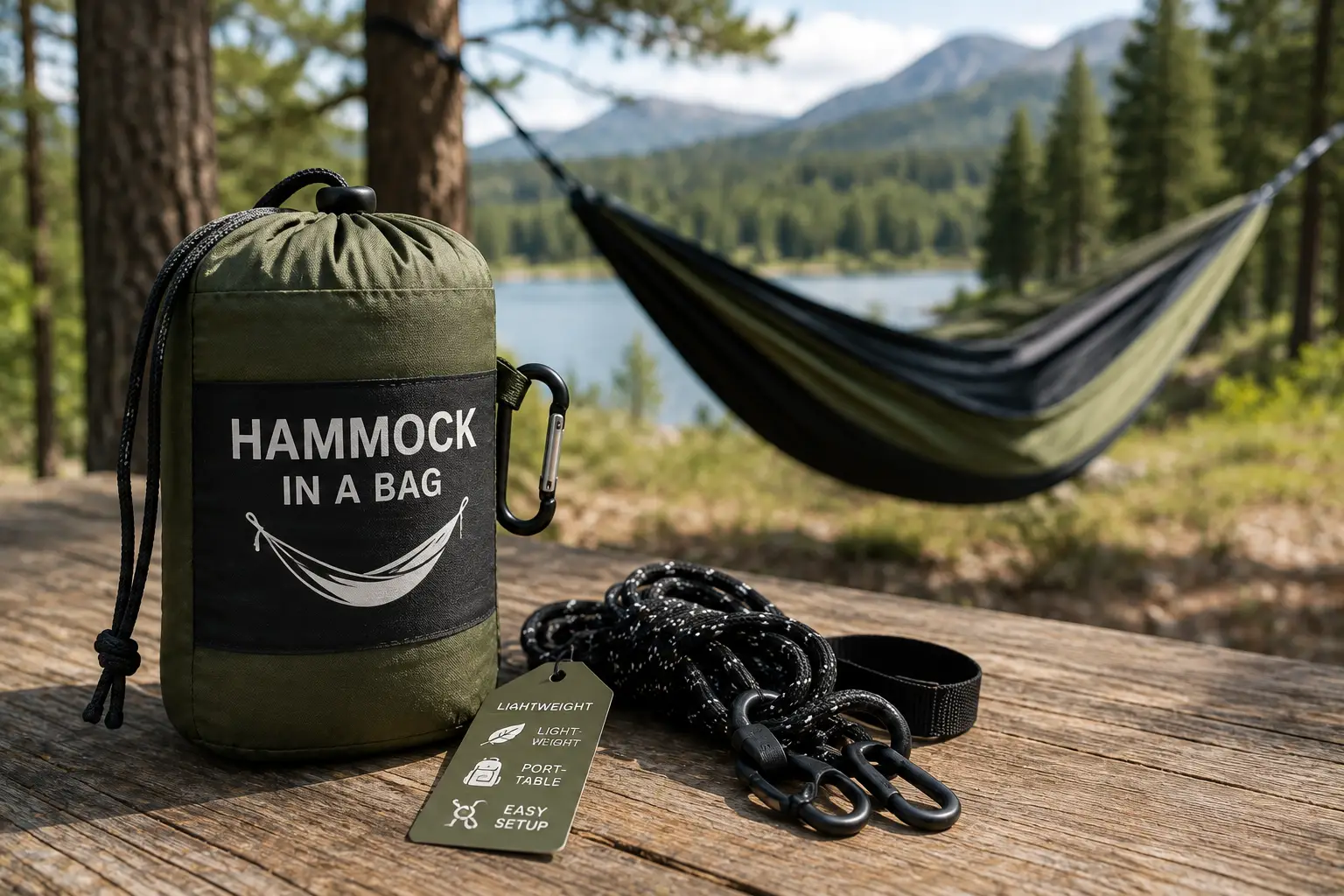
There’s a specific kind of magic in pulling a stuff sack the size of a grapefruit out of your backpack, clipping two straps to a pair of trees, and being horizontal in the shade within ninety seconds. That’s the entire appeal of a hammock in a bag: no poles, no footprint to clear, no assembly manual. Just fabric, straps, and a sack small enough to toss in a daypack pocket.
If you’ve ever wrestled a tent stake into rocky soil or hauled a folding chair across a festival field, you already understand why this category has exploded in popularity across backyards, trailheads, and beaches from coast to coast. A good hammock in a bag weighs a pound or two, packs down smaller than a water bottle, and — once you know what to look for — costs less than a pair of hiking boots. As outdoor retailers like REI point out in their own buying guide to hammocks, fabric weight and suspension type matter far more than price tag alone.
But not every hammock in a bag is built the same. Some ship with flimsy ropes that damage tree bark and unravel after a season; others include genuine tree-friendly straps, triple-stitched seams, and weight ratings backed by real testing. Fabric weight, denier count, and strap width all quietly determine whether your $25 impulse buy becomes a decade-long favorite or a torn scrap of nylon by August.
This guide breaks down seven real, currently available options — from budget-friendly starter kits to premium everyday setups — based on manufacturer specs, aggregated customer feedback, and independent gear-review testing. You’ll also find a practical setup walkthrough, real-world buyer scenarios, and answers to the questions people actually search before clicking “buy.” Whether you want a $20 backup for camping trips or a hammock nice enough to replace your porch swing, there’s a specific pick here for you.
Hammock in a Bag: Quick Comparison at a Glance
Before diving into the full breakdown, here’s how all seven picks stack up side by side.
| Product | Price Range | Weight Capacity | Best For |
|---|---|---|---|
| Wise Owl Outfitters Camping Hammock | $25–$40 | Up to 500 lbs | Best budget all-in-one kit |
| Legit Camping Double Parachute Hammock | $18–$28 | ~400 lbs (mfr. claim) | Lightest grab-and-go pick |
| Gold Armour Camping Hammock | $25–$35 | ~400–500 lbs (mfr. claim) | Best budget bug-net option |
| Sunyear Camping Hammock with Net & Rain Fly | $35–$50 | Up to 500 lbs | Most weather-ready bundle |
| Grand Trunk Double Deluxe Parachute Nylon Hammock | $40–$55 | Up to 500 lbs | Best trusted mid-range brand |
| Bear Butt Double Parachute Camping Hammock | $35–$45 | Up to 500 lbs | Roomiest double for the price |
| ENO DoubleNest Hammock & Atlas Straps Bundle | $85–$100 | Up to 400 lbs | Best premium everyday hammock |
At a glance, the split is clear: the first four options prioritize price and simplicity, while the Grand Trunk Double Deluxe Parachute Nylon Hammock and Bear Butt Double Parachute Camping Hammock add brand-backed durability testing for a modest premium. The ENO DoubleNest Hammock & Atlas Straps Bundle costs roughly triple the cheapest kit here, but that gap mostly buys fabric softness, bluesign-approved manufacturing, and a suspension system built for repeated heavy use rather than a single season.
💬 One click helps other shoppers make an informed choice too! 😊
Top 7 Hammocks in a Bag: Expert Picks and Analysis
Each of these seven picks is a real, currently listed product, chosen to cover entry-level budgets, dependable mid-range builds, and one premium everyday option. Specs and pricing reflect manufacturer listings and independent testing at the time of writing, so always check the current listing for the latest availability.
1. Wise Owl Outfitters Camping Hammock — best budget all-in-one kit
The Wise Owl Outfitters Camping Hammock built its reputation by including everything you need — hammock, tree straps, and carabiners — in one compact stuff sack, which is exactly what most first-time buyers searching for an all-in-one camping hammock actually want.
Inside that sack is a double-wide hammock made from 210-thread-count parachute nylon, rated by the manufacturer to hold up to 500 pounds. In practice, that thread count means the fabric resists tearing from branch snags and pet claws far better than the thin 190T material found on the cheapest imitators, though it’s still nowhere near as robust as backpacking-grade ripstop. The triple-stitched seams at the stress points are the detail that actually matters here, since that’s where budget hammocks typically fail first.
This is the pick for someone who wants to try hammock camping without committing to premium pricing — students, casual backyard users, and anyone buying a first hammock as a gift. Reviews consistently report that setup takes under five minutes even for total beginners, though a recurring theme in customer feedback is that the included straps offer fewer adjustment loops than pricier competitors, which can make finding the perfect sag between mismatched trees slightly fiddly.
Pros:
- ✅ Complete kit — hammock, straps, and carabiners included
- ✅ 500-lb weight capacity fits two average-sized adults
- ✅ Compact stuff sack fits in a daypack side pocket
Cons:
- ❌ Strap adjustment loops are fewer than premium competitors
- ❌ Fabric feels stiffer than pricier brushed-nylon options
Pricing typically falls in the $25 to $40 range depending on color and bundle, which makes it one of the better value-for-money entries in this roundup for anyone testing the waters.
2. Legit Camping Double Parachute Hammock — lightest grab-and-go pick
The Legit Camping Double Parachute Hammock consistently ranks among Amazon’s best-selling camping hammocks, largely because it strips the category down to its simplest, cheapest form without cutting the parts that actually keep you off the ground.
The lightweight parachute nylon shell packs into a sack roughly the size of a can of tennis balls, and the included carabiners clip directly onto tree straps or, in a pinch, onto playground-style chains at a park pavilion. Because Legit Camping doesn’t publish independently verified third-party weight testing the way larger brands do, it’s worth treating the manufacturer’s stated capacity as a starting point rather than a guarantee, and inspecting stitching before every trip.
This hammock earns its spot as the pick for festival-goers, casual beachgoers, and anyone who wants a $20 backup hammock to leave in the trunk. Based on comparing it against pricier kits in this list, what you’re sacrificing is longevity and strap adjustability, not immediate comfort — for occasional weekend use, that trade-off is perfectly reasonable. Aggregated buyer feedback frequently praises the low price and easy setup, while a recurring complaint involves the stock tree straps being narrower and less tree-friendly than dedicated webbing straps sold separately.
Pros:
- ✅ Among the lowest prices in the entire category
- ✅ Packs down small enough for a jacket pocket
- ✅ Simple carabiner clips need no instructions
Cons:
- ❌ Narrow stock straps aren’t ideal for thin bark
- ❌ Fewer independently verified durability tests exist
Expect a price under $25 in most listings, which makes this an easy low-risk starting point, though upgrading to wider tree-friendly straps separately is a smart first modification.
3. Gold Armour Camping Hammock — best budget bug-net option
The Gold Armour Camping Hammock stands out in this lineup because several of its listings bundle in an integrated mosquito net at a price point competitors typically reserve for hammock-only kits, which matters the moment you’re camping anywhere with dusk mosquitoes.
The double-hammock body uses lightweight parachute nylon similar in weight to other budget entries here, and the bundled tree straps mean you’re not stuck buying webbing separately just to hang it responsibly. In practice, the bug net’s fine mesh keeps out no-see-ums about as effectively as far pricier backpacking shelters, though it does add a few ounces and a slightly fussier setup versus a net-free hammock.
Gold Armour, a US-based company, positions this as an entry point for family camping and casual hikers rather than serious backcountry use, and that framing tracks with the honest analysis here: it’s a strong value pick specifically for anyone camping in bug season on a tight budget. Customer feedback commonly highlights the bug net as the standout feature, while some reviewers note the included straps run short for wider tree spacing.
Pros:
- ✅ Integrated bug net included on several listings
- ✅ Tree straps bundled — no separate purchase needed
- ✅ Budget-friendly for a net-equipped hammock
Cons:
- ❌ Included straps run short for widely spaced trees
- ❌ Net adds setup time versus a net-free hammock
Price typically lands in the $25 to $35 range for the bug-net double version, undercutting most competitors that bundle mosquito protection.
4. Sunyear Camping Hammock with Mosquito Net & Rain Fly — most weather-ready bundle
The Sunyear Camping Hammock with Mosquito Net & Rain Fly goes a step further than most hammocks in a bag by pairing the hammock and net with a rain tarp option, effectively turning a fair-weather nap spot into a legitimate overnight shelter.
Its anti-rollover design uses a flatter lay angle than a basic single-layer hammock, which in practice means less of that “taco fold” feeling that makes budget hammocks uncomfortable for side-sleeping. The manufacturer rates the double version at up to 500 pounds, and the two included tree straps are wider than the stock straps bundled with several cheaper competitors in this list, spreading pressure more evenly across bark.
This is the pick for anyone planning an actual overnight hang rather than a backyard nap — think weekend backpackers who want the shelter piece without buying a tent. Reviews consistently report that the rain fly, sold as a combo or separately depending on the listing, performs well in light-to-moderate rain, though a common thread in customer feedback flags the tarp’s guy-lines as thinner than dedicated backpacking tarps.
Pros:
- ✅ Anti-rollover flatter lay improves sleeping comfort
- ✅ Wider tree straps included versus base-tier competitors
- ✅ Rain fly option available for real overnight use
Cons:
- ❌ Rain fly sold separately on some listings
- ❌ Thinner guy-lines than dedicated backpacking tarps
Expect the net-only combo in the $35 to $50 range, with the full net-plus-rainfly bundle running somewhat higher — still a strong value next to buying a hammock, net, and tarp separately.
5. Grand Trunk Double Deluxe Parachute Nylon Hammock — best trusted mid-range brand
The Grand Trunk Double Deluxe Parachute Nylon Hammock carries the weight of a company that’s been making hammocks since 2001, and that experience shows up in details budget brands routinely skip, like reinforced stitching at every stress point.
At roughly 10.5 by 6.5 feet, the double-wide body is genuinely large enough for two average-sized adults or one person who likes to sprawl diagonally, and the manufacturer backs it with a 500-pound capacity rating. What that size means in practice: you get a flatter, more supported lay than the narrower budget doubles in this list, which noticeably reduces the pressure points that cause “hammock back” after long naps.
Grand Trunk built its name on the trail-tested end of casual hammocking, making this the pick for buyers who want a step above disposable budget gear without jumping to backpacking-specific pricing. Reviews consistently point to the durable fabric holding up across repeated seasons of use, while a recurring critique is that the included suspension is rope-based on some bundles rather than the wider webbing straps found on pricier kits — an easy, inexpensive upgrade if tree protection matters to you.
Pros:
- ✅ Established brand with 20-plus years of hammock design
- ✅ Extra-wide 6.5-foot body improves comfortable lay
- ✅ Reinforced stitching at every major stress point
Cons:
- ❌ Some bundles include rope rather than tree-friendly straps
- ❌ Sits above budget-tier pricing for casual buyers
Price generally falls in the $40 to $55 range, which is a fair premium for the extra width and brand-backed construction quality.
6. Bear Butt Double Parachute Camping Hammock — roomiest double for the price
The Bear Butt Double Parachute Camping Hammock earned an independent gear-lab score in the high 70s out of 100, specifically for being, in the reviewer’s words, “shockingly” comfortable and spacious for its price point.
Independent testing measured the hammock body at a full 6 feet wide with 75-denier nylon and triple-stitched seams, and clocked the weight capacity at 500 pounds — specs that hold up well against hammocks costing considerably more. What that denier count means in practice: it’s a noticeably heavier, more tear-resistant fabric than the thinner options earlier in this list, at the cost of a slightly bulkier pack size.
This is the pick for anyone who specifically wants a wide, sharing-friendly hammock and is willing to trade a little portability for it — couples, larger-bodied users, or anyone who dislikes the narrow “cocoon” feel of single-width hammocks. Independent reviewers specifically flagged that the stock suspension uses rope rather than trunk straps, which can bite into bark on repeated use, so budgeting for a separate strap upgrade is a smart move.
Pros:
- ✅ Independently tested at 500-lb weight capacity
- ✅ Full 6-foot width is genuinely shareable
- ✅ Heavier 75-denier nylon resists tearing well
Cons:
- ❌ Stock suspension is rope-based, not tree straps
- ❌ Bulkier packed size than thinner nylon competitors
Typical pricing sits around $40, occasionally dipping into the $35 range — a strong price-to-width ratio once you budget a few extra dollars for proper tree straps.
7. ENO DoubleNest Hammock & Atlas Straps Bundle — best premium everyday hammock
The ENO DoubleNest Hammock & Atlas Straps Bundle is the pick for buyers who’ve already tried a budget hammock and want to upgrade to the setup outdoor retailers like REI and L.L.Bean stock as their go-to recommendation.
The hammock body uses bluesign-approved 70-denier nylon taffeta, a certification that verifies the fabric was manufactured under audited environmental and safety standards — a detail entirely absent from the budget entries in this list. Independent testing rates the DoubleNest’s capacity at 400 pounds, slightly below several budget doubles here, but the tradeoff is a noticeably softer hand-feel and tighter triple-stitched construction that testers describe as meaningfully more comfortable over repeated use. Bundling in the Atlas suspension straps solves the single biggest complaint about the standalone DoubleNest: that straps are sold separately.
This bundle makes the most sense for frequent users — weekend campers, festival regulars, or anyone replacing a worn-out budget hammock who now knows exactly what they want. Reviews consistently describe the fabric as noticeably softer than competing parachute nylon, while some note it lacks the ultra-lightweight specs of true backpacking hammocks like ENO’s own JungleLink.
Pros:
- ✅ Bluesign-approved fabric meets audited safety standards
- ✅ Includes Atlas straps — no separate purchase needed
- ✅ Softer hand-feel than standard parachute nylon
Cons:
- ❌ Lower weight rating than several budget doubles here
- ❌ Costs roughly triple the cheapest kits in this list
Bundle pricing generally runs between $85 and $100, positioning it as the premium choice here — a fair ask for buyers who hang out weekly rather than twice a summer.
Detailed Spec Comparison: Which Hammock in a Bag Wins Each Category
| Product | Material | Packed Weight (approx.) | Straps Included? | Bug Net Included? | Price Range |
|---|---|---|---|---|---|
| Wise Owl Outfitters Camping Hammock | 210T parachute nylon | ~1.9 lbs | Yes | No | $25–$40 |
| Legit Camping Double Parachute Hammock | Parachute nylon | ~1.5 lbs | Yes (basic) | No | $18–$28 |
| Gold Armour Camping Hammock | Parachute nylon | ~1.8 lbs | Yes | Yes (select listings) | $25–$35 |
| Sunyear Camping Hammock with Net & Rain Fly | Parachute nylon | ~2.2 lbs | Yes (wider) | Yes | $35–$50 |
| Grand Trunk Double Deluxe Parachute Nylon Hammock | Parachute nylon | ~1.8 lbs | Varies by bundle | No | $40–$55 |
| Bear Butt Double Parachute Camping Hammock | 75D nylon | ~2 lbs | Rope-based | No | $35–$45 |
| ENO DoubleNest Hammock & Atlas Straps Bundle | Bluesign 70D nylon taffeta | ~2 lbs (bundle) | Yes (Atlas) | No | $85–$100 |
No single hammock wins every category, which is exactly why matching the pick to your specific trip matters more than chasing a single “best” label. If bug protection is non-negotiable, the Gold Armour Camping Hammock and Sunyear Camping Hammock with Mosquito Net & Rain Fly are your only two net-equipped options here, while the Bear Butt Double Parachute Camping Hammock wins on raw width for shared use. For buyers prioritizing tree health and long-term fabric quality over price, the ENO DoubleNest Hammock & Atlas Straps Bundle and Grand Trunk Double Deluxe Parachute Nylon Hammock justify their higher price tags.
✨ Ready to Trade Your Couch for a Tree Line?
🔍 Take your next weekend outdoors with a hammock in a bag that actually fits how you camp. Click any highlighted pick above to check current pricing and availability, and get ready to relax the moment you arrive!
How to Set Up a Hammock in a Bag in Under 10 Minutes
The entire point of an all-in-one hammock kit is speed, and once you’ve done it twice, the process becomes muscle memory.
First, pick two living trees at least six inches in diameter and roughly 12 to 15 feet apart — closer together and you’ll fight excessive sag; farther apart and most stock straps won’t reach. Wrap each tree strap fully around the trunk at roughly shoulder height, threading the strap’s tail through its own loop rather than cinching it down hard against the bark, which is the single biggest mistake that damages trees. REI’s own guide on hammocking responsibly covers this exact technique in more depth if you want a visual walkthrough.
Clip a carabiner through the strap’s nearest loop and through the hammock’s suspension line, then repeat on the second tree. Aim for a 30-degree sag angle — roughly the angle your arm makes when relaxed at your side — rather than pulling the hammock drum-tight, since a slight sag actually distributes your weight more evenly and feels dramatically more comfortable.
Before your first real use, do a low test: sit in the hammock a few inches off the ground and shift your weight to confirm both anchor points feel solid. For your first thirty days of ownership, inspect stitching and strap loops after every trip; parachute nylon shows wear early, and catching a loose thread now beats a torn seam mid-nap later.
Real-World Scenarios: Which Hammock in a Bag Fits Your Trip
Not every hammock in a bag suits every trip, so here’s how three common buyer profiles typically shake out.
The budget-conscious festival-goer: someone attending a weekend music festival who wants a comfortable place to nap between sets and doesn’t want to babysit expensive gear in a crowd. The Legit Camping Double Parachute Hammock or Wise Owl Outfitters Camping Hammock make the most sense here — both pack small enough for a festival bag, and neither represents a painful loss if damaged or misplaced in a crowd.
The bug-season backyard user: a homeowner who wants a permanent-feeling lounging spot for summer evenings without dealing with mosquitoes. The Gold Armour Camping Hammock or Sunyear Camping Hammock with Mosquito Net & Rain Fly solve that specific pain point, since both bundle netting that a bare hammock simply can’t offer.
The frequent weekend backpacker: someone who hikes two to three weekends a month and wants gear that survives repeated trail use without babying it. Here, the Bear Butt Double Parachute Camping Hammock and Grand Trunk Double Deluxe Parachute Nylon Hammock both offer trail-tested width and stitching, while the ENO DoubleNest Hammock & Atlas Straps Bundle suits the buyer who’s ready to invest in gear they’ll use for years rather than seasons.
Common Problems With a Hammock in a Bag (and Quick Fixes)
Even a well-reviewed compact camping hammock runs into the same handful of predictable problems. Here’s how to solve the ones that come up most often.
Problem: the hammock feels like it’s folding you in half. This almost always means it’s pulled too tight rather than defective — loosen the straps until you hit roughly a 30-degree sag, and lie diagonally rather than straight down the centerline, which flattens your body position dramatically.
Problem: straps slip or dig into bark. Cheaper rope-based suspensions, like the stock lines on the Bear Butt Double Parachute Camping Hammock, are the usual culprits. Upgrading to wide webbing tree straps, sold separately for under $15, solves this permanently and protects the tree.
Problem: fabric feels damp or smells musty after storage. Parachute nylon traps moisture easily; always air-dry a hammock fully before stuffing it back into its sack, and avoid storing it in a closed car trunk during summer heat.
Problem: carabiners feel weak or plasticky. This is common on entry-level bundles like the Legit Camping Double Parachute Hammock. Swapping in a pair of rated aluminum carabiners, widely sold for $8 to $12 a pair, is a cheap insurance policy against a stress fracture mid-use.
What Is a Hammock in a Bag?
A hammock in a bag is a complete, portable hammock system — the hammock body, suspension straps, and carabiners — packed into one compact stuff sack small enough to fit in a backpack pocket. Unlike a fixed backyard hammock, it’s designed for fast setup between two trees, posts, or a portable stand, then just as quick to pack away.
The category grew popular because it solves a real friction point: traditional hammocks with wooden spreader bars are bulky, slow to hang, and awkward to transport, while this all-in-one setup can go from car trunk to campsite in under ten minutes flat.
How to Choose the Best Hammock in a Bag
Picking the right hammock in a bag comes down to matching a handful of specs to how you’ll actually use it.
- Check the weight capacity against your real use case. A single hiker needs less than a couple planning to share — most doubles in this list rate between 400 and 500 pounds, which comfortably covers two average adults.
- Look at denier count and material. Higher-denier nylon, like the 75D fabric on the Bear Butt Double Parachute Camping Hammock, resists tears better but weighs slightly more; lower-denier fabric packs smaller but demands gentler handling.
- Decide if you need a bug net. If you’re camping anywhere with dusk mosquitoes, a net-equipped option like the Gold Armour Camping Hammock saves you from buying one separately later.
- Confirm straps are actually included. Some hammock-only listings look cheaper until you add mandatory tree straps — always check whether suspension is bundled.
- Consider whether you need overnight-rated shelter. A rain fly, like the one available for the Sunyear Camping Hammock with Mosquito Net & Rain Fly, turns a nap hammock into real backpacking shelter.
- Factor in packed size versus your bag space. Festival- and beach-goers usually prioritize the smallest packed footprint over raw durability.
- Read aggregated reviews for stitching complaints specifically. Seam failure at the suspension points is the single most common failure mode independent testers at OutdoorGearLab flag across this entire product category, regardless of price.
Hammock in a Bag vs Traditional Camping Tent
A hammock in a bag and a traditional tent solve overlapping but genuinely different problems, and the right call depends more on terrain and climate than personal preference alone.
| Factor | Hammock in a Bag | Traditional Tent |
|---|---|---|
| Setup time | 5–10 minutes, two anchor points | 10–20 minutes, needs flat clear ground |
| Packed weight | Roughly 1.5–3 lbs | Roughly 4–8 lbs for a 2-person tent |
| Ground impact | Zero ground footprint | Requires cleared, flat site |
| Cold-weather comfort | Needs an underquilt below ~50°F | Naturally insulated by ground and walls |
| Rain protection | Requires separate or bundled rain fly | Fully enclosed, built-in protection |
The clearest advantage of this style of portable hammock over a tent is terrain flexibility — rocky, sloped, or root-covered ground that would ruin a night in a tent is a non-issue when you’re suspended above it. The tradeoff shows up in cold weather: without an insulating underquilt, cold air circulating beneath a hammock pulls heat away from your body far faster than a tent’s floor does, which is why serious three-season hammock campers budget for underquilt insulation as a near-mandatory add-on.
Common Mistakes to Avoid When Buying a Hammock in a Bag
The most expensive mistake buyers make isn’t picking the wrong hammock — it’s assuming every listing photo showing tree straps means straps are actually included. Read the bundle contents line by line before checking out.
The second common mistake is buying based on packed size alone. A hammock that compresses impressively small often does so because the fabric is thinner and less tear-resistant, which matters if you’re an occasional heavy user rather than an ultralight backpacker counting ounces.
Third, buyers frequently ignore weight capacity math. A 400-pound rating sounds generous until you remember that’s a combined limit — two average adults plus gear can approach that ceiling faster than expected, so err toward a higher-rated double if you’ll ever share it.
Finally, many first-time buyers skip checking whether the included suspension is rope or webbing straps. Rope is genuinely damaging to tree bark over repeated use, and several budget kits in this roundup — including the Bear Butt Double Parachute Camping Hammock and some Grand Trunk Double Deluxe Parachute Nylon Hammock bundles — still ship with rope by default.
Features That Actually Matter (and Ones That Don’t)
Marketing copy loves to highlight features that barely affect real-world use, so here’s an honest breakdown of what’s worth paying for.
Denier count and stitching quality actually matter — they’re the difference between a hammock that survives five seasons and one that tears at the first snag. Integrated bug nets matter if you camp anywhere with mosquitoes, full stop; skip them if you’re strictly a backyard or beach user.
What doesn’t matter nearly as much as the packaging implies: color count (a hammock in twelve colors isn’t more durable than one in three), and “military-grade” marketing language, which has no regulated meaning in this product category and shouldn’t factor into your decision at all.
| Tier | Price Range | What You Actually Get | Best For |
|---|---|---|---|
| Budget | $18–$35 | Hammock + basic straps or rope | Occasional, low-stakes use |
| Mid-range | $35–$55 | Wider straps, higher denier, sometimes a net | Regular weekend use |
| Premium | $85–$100+ | Certified fabric, premium straps, softer feel | Weekly or frequent use |
Looking at this tier breakdown, the honest takeaway is that the jump from budget to mid-range buys real durability improvements, while the jump from mid-range to premium buys comfort and certification rather than dramatically better function — a distinction worth remembering before assuming “more expensive” always means “better.”
Safety, Regulations, and Standards for Hammock Camping
Hammock safety isn’t heavily regulated the way car seats or helmets are, but that doesn’t mean there’s no oversight worth knowing about. The Consumer Product Safety Commission maintains an ongoing list of hammock-related recalls covering fall hazards from failed stands, stitching, and hardware — worth a quick check before pairing any hammock in this list with a freestanding stand, since stands, not hammock bodies, account for most reported incidents.
The bigger everyday safety issue is tree health, not personal injury. Rope and thin cord — the default suspension on several budget kits here — can girdle bark and damage the cambium layer of a tree with repeated use, which is why land managers increasingly ask campers to use wide, flat webbing straps exclusively. If tree protection matters to you, treat a $15 strap upgrade as mandatory rather than optional on any rope-suspended hammock.
Weight ratings themselves aren’t independently regulated the way, say, ladder ratings are, so manufacturer claims should be treated as a ceiling to respect, not a guarantee to test. Sticking meaningfully under a hammock’s stated capacity, rather than right up against it, is the simplest safety habit worth building.
FAQ: Hammock in a Bag Questions Answered
❓ What's the difference between a hammock in a bag and a regular camping hammock?
❓ Can a hammock in a bag hold two people?
❓ Do I need trees to use a hammock in a bag?
❓ How much does a good hammock in a bag cost?
❓ Is a hammock in a bag comfortable enough to sleep in overnight?
Conclusion
This style of portable hammock earns its popularity honestly: it’s genuinely one of the fastest, cheapest ways to turn any two trees into a place worth stopping at. The right pick for you depends less on chasing a single “best” label and more on matching capacity, fabric, and included accessories to how you’ll actually use it.
If you’re testing the waters, the Wise Owl Outfitters Camping Hammock or Legit Camping Double Parachute Hammock get you outside for less than the cost of a nice dinner. If bugs are your dealbreaker, the Gold Armour Camping Hammock and Sunyear Camping Hammock with Mosquito Net & Rain Fly solve that specific problem without upselling you on gear you don’t need. Buyers who camp often enough to justify trail-tested durability should look toward the Grand Trunk Double Deluxe Parachute Nylon Hammock or Bear Butt Double Parachute Camping Hammock, and anyone ready to invest in gear they’ll use for years should strongly consider the ENO DoubleNest Hammock & Atlas Straps Bundle.
Whichever you choose, pair it with proper tree-friendly straps, respect the stated weight capacity, and give the seams a quick check before every trip. That’s really all it takes to turn a stuff sack in your trunk into your favorite way to spend an afternoon outside.
Recommended for You
- Flat Hammock Tent: 7 Best Picks for Comfortable Camping in 2026
- Three Person Hammock: 7 Best Picks Worth Buying in 2026
- Hammock Floor Stands: 7 Best Picks to Try in 2026
Disclaimer: This post contains affiliate links. As an Amazon Associate, I earn from qualifying purchases made through these links, at no additional cost to you.
✨ Found this article helpful? Share it with someone who needs it! 💬🤗