
In This Article
A portable collapsible hammock is one of those rare purchases that actually lives up to the hype — until you realize the market is flooded with nearly identical-looking nylon sacks, and picking the wrong one means a saggy bed, a busted zipper, or a stand that rusts after one summer. A portable collapsible hammock, in the simplest terms, is a lightweight sleeping or lounging hammock (sometimes paired with a self-supporting frame) that folds down small enough to fit in a backpack, trunk, or hall closet — no trees, tools, or permanent installation required. That single feature — the ability to pack it away in minutes — is what separates this category from the fixed backyard hammocks your grandparents strung between two oaks.
This guide breaks down seven real, currently available models spanning entry-level parachute nylon slings to full hammock-tent systems built for multi-night backpacking trips. We looked at real spec sheets — denier ratings, weight capacities, packed dimensions — and cross-referenced them against aggregated customer feedback and independent outdoor-gear testing to figure out where each one actually earns its price tag. You’ll also get a practical setup and maintenance walkthrough, real-world buyer scenarios, and a breakdown of what separates a lightweight camping hammock built for the trail from a hammock with stand built for the patio.
One quick note before we dive in: this article contains affiliate links, and as an Amazon Associate, purchases made through them may earn a small commission at no extra cost to you. That never influences which products make the list — the goal here is to help you avoid an impulse buy you’ll regret by week two. Let’s get into it.
Quick Comparison: Portable Collapsible Hammock Options at a Glance
Before the deep dive, here’s a snapshot of how the top contenders stack up on the two things most buyers care about first — how small they pack and how much weight they’ll hold.
| Hammock | Style | Weight Capacity | Packed Size | Best For |
|---|---|---|---|---|
| ENO DoubleNest | Tree-hung, parachute nylon | 400 lbs | Grapefruit-sized | All-around camping & backyard use |
| Wise Owl Outfitters Camping Hammock | Tree-hung, parachute nylon | 400–500 lbs | Eggplant-sized | First-time buyers on a budget |
| Grand Trunk TrunkTech Double | Tree-hung, ripstop nylon | 400 lbs | Fist-sized | Ultralight backpackers |
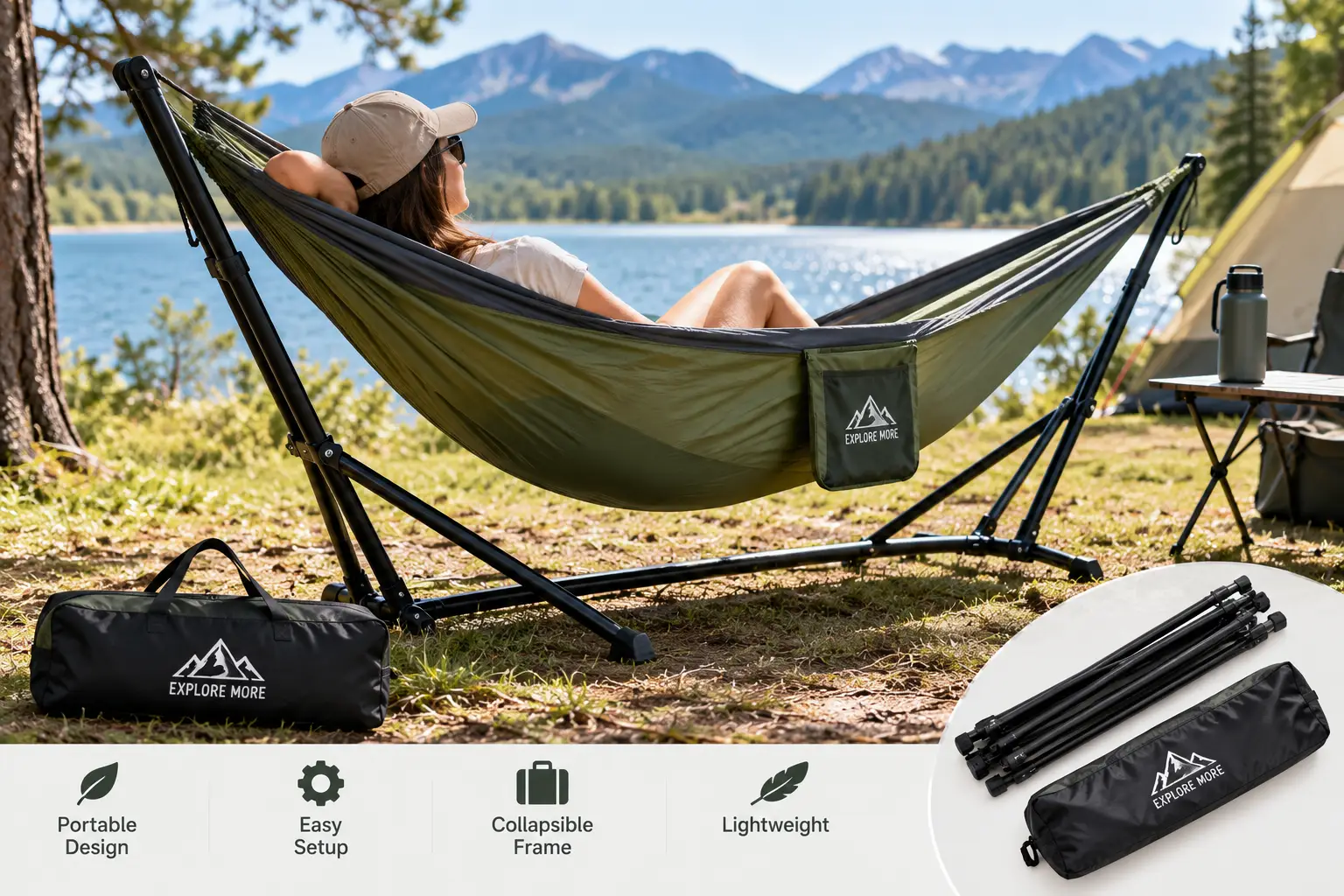
| Vivere Double Hammock with Steel Stand | Self-standing, cotton | 450 lbs | Duffel-bag-sized | No-trees-available backyards |
This is a snapshot only — full specs, pricing ranges, and honest pros/cons for all seven models (including the recycled-material pick and the all-in-one hammock tent) are covered below.
Looking at this shortlist, a clear pattern emerges: tree-hung nylon hammocks like the ENO DoubleNest and Wise Owl Outfitters Camping Hammock win on pack size and weight, while stand-based combos like the Vivere Double Hammock with Steel Stand trade some portability for the freedom to set up literally anywhere, trees or no trees. If ultralight backpacking is the priority, the Grand Trunk TrunkTech Double pulls ahead simply because ounces matter more than almost anything else on a multi-day trip.
💬 One click helps other shoppers make an informed choice too! 😊
Top 7 Portable Collapsible Hammocks: Expert Analysis
We picked these seven to cover the full spectrum — ultralight backpacking hammocks, budget-friendly starter picks, sustainability-focused options, and no-trees-required stand combos — so there’s a realistic match here whether you’re outfitting a thru-hike or a Saturday in the backyard.
1. ENO DoubleNest Hammock — best all-around pick for camping and backyard use
The ENO DoubleNest has become something close to the default recommendation in outdoor gear circles, and the spec sheet explains why. It’s built from 70-denier high-tenacity nylon taffeta with triple-stitched seams, which in practice means it shrugs off the abrasion and micro-tears that thinner fabrics develop after a season of regular use. The no-knot suspension system, paired with heavy-duty aluminum wiregate carabiners, means setup takes under two minutes even if you’ve never hung a hammock before — you’re not fumbling with rope tension or slippery knots at dusk.
What most buyers overlook is how much the compression stuff sack matters day-to-day: the DoubleNest packs down to roughly the size of a grapefruit, which is small enough to clip to a daypack rather than eat up a whole compartment. Based on comparing the specs against competitors, this is the strongest all-rounder for someone who wants one hammock that works equally well strapped between two pines on a backpacking trip and strung across a backyard patio. Reviews consistently report high satisfaction with durability and comfort, with the most common critique being that two adults feel genuinely snug inside — it’s rated for 400 lbs and two people, but it’s not spacious for two larger adults stretched out simultaneously.
Pros:
- ✅ Packs down to roughly grapefruit size for easy carry
- ✅ No-knot setup with aluminum wiregate carabiners
- ✅ Triple-stitched 70D nylon resists tears and abrasion
Cons:
- ❌ Tree suspension straps are sold separately
- ❌ Feels snug for two full-sized adults at once
Expect to pay somewhere in the $70–$85 range at the time of writing, though prices may vary — check the current price before buying, since Amazon listings fluctuate with seasonal demand. Given the fabric quality and near-universal praise in aggregated reviews, this is genuinely good value for a hammock designed to last several camping seasons rather than one summer.
2. Wise Owl Outfitters Camping Hammock — best budget pick for first-time buyers
If you’re not ready to commit to a premium price tag before you even know whether hammock camping is for you, the Wise Owl Outfitters Camping Hammock is the logical entry point. It’s built from parachute nylon in a roomy 9-foot by 4.5-foot double configuration, and — unlike some budget competitors — it ships with tree straps and carabiners already included, so there’s no hidden add-on cost before your first trip. The fabric folds down to roughly the size of an eggplant, small enough to toss in a beach bag or the side pocket of a backpacking pack without a second thought.
Here’s what the spec sheet doesn’t say, but aggregated review data reveals: this hammock has accumulated tens of thousands of five-star ratings on Amazon, an unusually large sample size that lends real credibility to the sentiment. What most buyers overlook, though, is that at this price point the nylon denier is noticeably thinner than premium picks like the ENO DoubleNest, which is exactly how the brand keeps the price so low — it’s a reasonable trade-off for casual users, but frequent backpackers who put serious miles and setups on their gear may wear through the fabric faster. Reviews consistently report satisfaction with comfort and portability, with occasional notes about color variation between the product photos and the item received.
Pros:
- ✅ Tree straps and carabiners included at no extra cost
- ✅ Folds down to eggplant size for effortless packing
- ✅ Tens of thousands of verified five-star ratings
Cons:
- ❌ Thinner nylon denier than premium competitors
- ❌ Some buyers report color variance from listing photos
Pricing typically lands in the $25–$35 range, making this one of the most accessible entry points in this entire lineup. For the money, it’s hard to find a more forgiving way to test whether hammock camping earns a permanent spot in your gear closet.
3. Kammok Roo Double Hammock — best eco-conscious pick made from recycled materials
Sustainability-minded shoppers should take a close look at the Kammok Roo Double, which is constructed from 100% recycled ripstop nylon — meaning the fabric itself is diverted from existing plastic waste rather than newly manufactured petroleum-based material. That’s a meaningful distinction from most of the hammocks on this list, and it doesn’t come at the cost of durability: the fabric holds up to a 500-lb weight capacity across a roomy 10-foot by 6-foot-6-inch bed, with a water-resistant stuff sack and built-in gear loops for clipping on a headlamp or stuff sack of trail snacks.
What sets this apart in practice is the hand-feel — aggregated reviews consistently mention that the recycled nylon feels noticeably softer against bare skin than standard parachute nylon, which matters more than it sounds like it should when you’re lying in it for hours. Based on comparing the specs against the ENO DoubleNest, the Roo Double is a genuine peer in build quality, not a “green” product that compromises on performance to check a sustainability box. The honest trade-off is price: recycled materials and the added gear loops push this above the budget tier, and a handful of reviews mention that ordered colors don’t always perfectly match the online photos.
Pros:
- ✅ Made from 100% recycled ripstop nylon
- ✅ Noticeably soft against skin per aggregated reviews
- ✅ Built-in gear loops and water-resistant stuff sack
Cons:
- ❌ Priced above comparable non-recycled competitors
- ❌ Occasional color-matching discrepancies reported
Expect a price range around $70–$95 at the time of writing. For buyers who want their gear purchases to reflect a lower environmental footprint without sacrificing comfort or capacity, this is the strongest option in the lineup.
4. Grand Trunk TrunkTech Double Hammock — lightest pack size in this lineup
For ounce-counting backpackers, the Grand Trunk TrunkTech Double is purpose-built to solve one specific problem: standard parachute nylon hammocks, while already light, still add noticeable bulk to a pack over a multi-day trip. Grand Trunk’s proprietary TrunkTech fabric is a 40-denier diamond ripstop nylon engineered to pack down smaller and weigh nearly half as much as an ordinary parachute nylon hammock of the same size — the listed hammock weight comes in at roughly 15.5 ounces, genuinely competitive with dedicated ultralight backpacking gear.
The practical upshot: on a five-day thru-hike, the difference between a 28-ounce hammock and a 15.5-ounce one is the difference between carrying an extra half-pound you feel in your shoulders by day three or not. Reviews indicate strong satisfaction with the reduced pack size and weight capacity, which still holds a respectable 400 lbs despite the lighter denier fabric. What buyers should know going in — and what listings don’t always make obvious upfront — is that carabiners are typically included, but tree suspension straps are frequently sold as a separate accessory, an easy detail to miss during checkout.
Pros:
- ✅ Roughly half the weight of standard parachute nylon
- ✅ Diamond ripstop construction with triple-stitched seams
- ✅ Packs down to a genuinely pocket-sized bundle
Cons:
- ❌ Suspension straps often sold separately from the hammock
- ❌ Thinner denier fabric than heavier-duty alternatives
Pricing generally falls between $40 and $70 depending on color and bundle configuration — check the current price, since Grand Trunk periodically bundles straps at a discount. For weight-conscious hikers, the savings in pack weight alone can justify the modest premium over ultra-budget options.
5. Hennessy Hammock Explorer Deluxe Asym Zip — best all-in-one hammock tent for backpackers
The Hennessy Hammock Explorer Deluxe Asym Zip occupies a different category entirely from the other entries on this list — it’s less a hammock and more a complete hanging shelter system. The asymmetric bed design paired with a side-entry, double-slider #10 zipper means you can get in and out without disturbing your sleeping position, while the integrated no-see-um mesh and a waterproof polyester ripstop rainfly handle bugs and weather in one setup. A patented integral ridgeline keeps the diagonal lay consistent every single time you hang it, which solves one of the most common complaints in hammock camping: an uneven, banana-shaped sleeping position that leaves your lower back sore by morning.
Reviews consistently report that this system genuinely functions as a full three-season shelter, with the manufacturer citing roughly a three-minute setup once you’ve practiced the technique a couple of times. What most first-time buyers overlook, however, is that the asymmetric, side-entry design has a real learning curve — reviews and independent outdoor-gear testing both note it takes a trip or two to get comfortable with the entry method compared to a simple gathered-end hammock. The suspension system includes two 10-foot, 1,500-lb-test low-stretch ropes with protective tree-bark webbing, which is a meaningfully stronger and more tree-friendly setup than the basic straps bundled with entry-level hammocks.
Pros:
- ✅ Integrated bug net and rainfly in one packed system
- ✅ Ridgeline keeps the sleeping position consistent
- ✅ Rated 1,500-lb-test suspension ropes with tree-safe webbing
Cons:
- ❌ Noticeably pricier than standalone camping hammocks
- ❌ Asymmetric entry has a real learning curve for beginners
This model typically sits in the $180–$220 price range, reflecting the added engineering of a full shelter system rather than a simple sling. For backpackers who camp in unpredictable weather or buggy regions and don’t want to pack a separate tent as backup, the value proposition holds up well against the premium.
6. Vivere Double Hammock with Space-Saving Steel Stand — best no-trees-needed portable stand combo
Not every backyard has two perfectly spaced, sturdy trees — and that’s precisely the problem the Vivere Double Hammock with Space-Saving Steel Stand solves. The 9-foot heavy-duty steel stand assembles in a matter of minutes without any tools, and the whole combo — hammock, stand, and included carrying case — breaks back down just as quickly for storage or a move across town. The hammock bed itself is woven from densely packed 100% cotton, measuring roughly 63 by 94 inches, with a 450-lb capacity that comfortably accommodates two adults.
What the spec sheet doesn’t capture is just how large this product’s review footprint has become — some listings show upward of 30,000 verified customer reviews, an unusually deep sample that lends real weight to the aggregated sentiment. Reviews consistently praise the tool-free assembly and adjustable hammock hooks that let you set the hang height to preference, and independent testing from outdoor-gear reviewers ranks it competitively against tree-hung alternatives specifically for its versatility in yards without adequate tree spacing. The honest trade-off, and what most buyers overlook until delivery day, is total weight: at roughly 27–35 lbs for the full combo, this is meaningfully heavier and bulkier to transport than any tree-hung nylon hammock on this list, and the cotton bed needs to dry thoroughly after rain to avoid mildew.
Pros:
- ✅ No trees required — assembles anywhere in minutes
- ✅ Tool-free steel stand with included carrying case
- ✅ 450-lb capacity comfortably fits two adults
Cons:
- ❌ Notably heavier and bulkier than tree-hung hammocks
- ❌ Cotton fabric needs full drying time after rain
Expect a price range roughly between $90 and $160 depending on frame material and color — steel-stand versions generally sit at the lower end, while wood-frame variants trend higher. Given the included stand, carrying case, and 450-lb capacity, this represents strong value for households without suitable trees.
7. SUNCREAT Double Portable Hammock with Stand — best budget stand alternative
For buyers who like the no-trees-required convenience of a stand combo but don’t want to spend triple digits on the premium end, the SUNCREAT Double Portable Hammock with Stand is a smart middle ground. It uses curved 55-inch spreader bars and balance ropes to keep the frame stable, paired with a dual-layer, fade-resistant fabric bed rated for a substantial 450-lb weight capacity — on par with pricier competitors despite the lower price point.
Based on comparing the specs against the Vivere combo, the core trade-off here is refinement rather than capability: the SUNCREAT hits similar weight-capacity and stability numbers, but the assembly process is reported as slightly more involved, and the stand takes up more storage footprint than a simple parachute-nylon tree hammock once broken down. Reviews consistently highlight the dual-layer fabric’s resistance to sun fading, a common complaint with cheaper backyard hammocks that lose their color within a single season of outdoor exposure. What most buyers overlook is that the curved spreader-bar design, while stable, does add noticeably more assembly time on first setup compared to the simpler steel-tube stands on some competitors — budget a solid 15–20 minutes the first time around.
Pros:
- ✅ 450-lb capacity rivals pricier stand combos
- ✅ Dual-layer fabric resists sun fading over time
- ✅ Curved spreader bars add frame stability
Cons:
- ❌ First-time assembly takes longer than simpler stands
- ❌ Bulkier storage footprint than tree-hung hammocks
Pricing typically falls in the $100–$140 range at the time of writing. For buyers who want the stand-based convenience without the premium price tag of the Vivere combo, this is a genuinely competitive value pick.
Getting Started: Setup, First Use, and Maintenance
Buying the right portable collapsible hammock is only half the equation — how you set it up and care for it in the first month determines whether it lasts three seasons or three trips.
First-time setup. For tree-hung models like the ENO DoubleNest or Wise Owl Outfitters Camping Hammock, wrap the tree straps around two anchor points spaced roughly 12–15 feet apart, at a height that lets the hammock’s lowest point sit about 18 inches off the ground when you’re lying in it (not sitting — the correct sag angle is closer to a 30-degree diagonal than a tight, flat line). For stand-based combos like the Vivere or SUNCREAT, lay all frame pieces out and identify matching hardware before starting assembly; most tool-free steel stands snap together in under 10 minutes once pieces are sorted.
Common first-30-days mistakes. New owners most often hang the hammock too tight, which creates a flat, uncomfortable “banana” shape and puts unnecessary strain on the suspension straps. A second common error is leaving nylon hammocks stuffed in their compression sack while still damp from morning dew — nylon dries fast, but trapped moisture against tightly packed fabric can lead to mildew odor within days. Air-dry fully before repacking, every time.
Maintenance schedule. Rinse nylon hammocks with fresh water after any beach or saltwater exposure, and hand-wash cotton stand hammocks like the Vivere in cold water with mild detergent, air-drying flat to preserve shape. Inspect carabiners and stitching every few outings, particularly around the suspension attachment points, since that’s where load-bearing stress concentrates over time. Store hammocks loosely coiled rather than tightly compressed for long-term storage between seasons — constant tight compression can weaken fabric fibers faster than regular use does.
Real-World Scenarios: Which Portable Collapsible Hammock Fits Your Life
The weekend backpacker. If you’re hitting 8–15 miles of trail on a typical weekend trip and need gear that disappears into your pack, the Grand Trunk TrunkTech Double or ENO DoubleNest make the most sense — both prioritize pack weight and size without sacrificing the 400-lb capacity most solo or duo hikers need. Budget-conscious weekend warriors doing car camping rather than backpacking can comfortably step down to the Wise Owl Outfitters Camping Hammock and pocket the savings.
The buggy-region multi-night camper. Anyone camping in regions with heavy mosquito or tick activity — think Southeastern swampland or high-humidity forest trails — should strongly consider the Hennessy Hammock Explorer Deluxe Asym Zip. Its integrated bug net and rainfly eliminate the need to pack (and set up) a separate tent as backup shelter, which meaningfully reduces overall pack weight despite the higher unit price.
The tree-less backyard owner. If your outdoor space is a concrete patio, an apartment balcony, or a yard without two suitably spaced mature trees, a stand combo is not optional — it’s the only workable format. Between the two stand picks here, the Vivere Double Hammock with Space-Saving Steel Stand suits buyers who want a more premium cotton-fabric feel and don’t mind paying up for it, while the SUNCREAT Double Portable Hammock with Stand suits budget-focused buyers who still want the full 450-lb capacity.
How to Choose a Portable Collapsible Hammock
Cutting through marketing copy, here’s what actually determines whether a hammock earns its price tag:
- Weight capacity relative to actual use. A single-person hammock rated for 300 lbs is fine solo, but if you plan to share it with a partner or pet, look for at least 400 lbs of rated capacity with margin to spare.
- Fabric denier and type. Higher denier nylon (70D and up) resists abrasion and tearing better than thinner 30–40D fabrics, though the trade-off is slightly more pack weight — a real consideration for backpackers.
- Packed size versus your storage reality. A grapefruit-sized stuff sack matters enormously if it’s going in a daypack; it matters far less if the hammock lives in a garage bin for backyard use only.
- Suspension system included or separate. Confirm whether tree straps and carabiners ship with the hammock — many budget listings sell the hammock bed alone, with straps as an add-on purchase.
- Stand versus tree-hung format. If your space lacks suitable anchor points, a stand combo like the Vivere or SUNCREAT isn’t a luxury — it’s the only category that will actually work for you.
- Weather and bug protection needs. Multi-night backcountry campers in buggy or wet regions should weigh the added cost of an integrated bug net and rainfly system against packing a separate tent.
- Real aggregated review sentiment, not just star averages. A 4.8-star rating with 200 reviews carries less statistical weight than a 4.6-star rating built on 40,000 reviews — read for recurring themes, not just the number.
Common Mistakes to Avoid When Buying a Lightweight Camping Hammock
The most expensive mistake buyers make is assuming “portable” and “durable” are mutually exclusive trade-offs — in reality, the ENO DoubleNest and Kammok Roo Double both prove that premium nylon can be simultaneously lightweight and long-lasting; the real determining factor is denier and stitching quality, not just price. A second common error is buying a hammock without checking whether suspension straps are included, only to discover at checkout — or worse, at the campsite — that they’re sold separately, as is the case with several models on this list including the Grand Trunk TrunkTech Double.
A third mistake is underestimating weight capacity needs. Buyers frequently purchase a single-capacity hammock and are surprised when it feels unstable with two people or a pet aboard; always round up rather than buying to the exact expected load. Finally, shoppers researching stand-based combos often skip checking total assembled weight, assuming “portable” means the same thing across formats — a Vivere stand combo at 27–35 lbs is genuinely portable between rooms or a car trunk, but it is not backpack-portable in the way a nylon tree hammock is.
Portable Collapsible Hammock vs. Traditional Fixed Hammocks
Traditional fixed hammocks — the kind permanently strung between two posts with a wooden spreader bar — still have their place, but they solve a fundamentally different problem than the portable, collapsible category covered in this guide.
| Factor | Portable Collapsible Hammock | Traditional Fixed Hammock |
|---|---|---|
| Setup time | 2–10 minutes | Often a permanent, one-time install |
| Portability | Packs into a bag or small stuff sack | Not designed to be moved once installed |
| Typical weight capacity | 300–500 lbs | 250–400 lbs |
| Weather exposure | Can be stored indoors between uses | Usually left outdoors year-round |
| Ideal use case | Camping, travel, small or flexible spaces | Permanent backyard fixtures with mature trees |
The comparison table makes the core trade-off clear: traditional fixed hammocks with wooden spreader bars can offer excellent stability for a dedicated backyard spot, but they sacrifice everything this guide’s category is built around — the ability to take the hammock with you, store it indoors away from UV and weather damage, and set it up somewhere new next weekend. For anyone who travels, camps, or simply wants gear that doesn’t commit an entire corner of the yard permanently, models like the ENO DoubleNest or Vivere Double Hammock with Space-Saving Steel Stand offer meaningfully more flexibility for a comparable investment.
✨ Don’t miss these exclusive deals! 🔍 Take your outdoor lounging setup to the next level with this carefully curated lineup. Click a highlighted item to check current pricing and availability. These picks will help you turn any weekend — camping trip or backyard afternoon — into a genuinely relaxing one.
What to Expect: Everyday Performance
Technical specs only tell part of the story — here’s what the numbers translate to once you’re actually using one of these hammocks regularly. A 400-lb-rated nylon hammock like the ENO DoubleNest doesn’t just mean it can technically hold that weight without snapping; in practice, it means the fabric maintains its shape and doesn’t stretch out or sag permanently after repeated use across a full camping season, which cheaper, lower-rated fabrics often do within a few months.
Pack-down claims also deserve real-world context. A “grapefruit-sized” stuff sack, as with the DoubleNest, genuinely does fit in the side mesh pocket of most daypacks — this isn’t marketing exaggeration, based on the consistent dimensions reported across aggregated reviews. On the stand-combo side, “assembles in minutes without tools” for products like the Vivere Double Hammock with Space-Saving Steel Stand generally holds true after the first attempt, though first-time assembly frequently takes closer to 15–20 minutes as you sort hardware and learn the click-lock mechanism — subsequent teardown and rebuild, such as moving the stand between a garage and patio seasonally, becomes noticeably faster.
Comfort-wise, aggregated review sentiment across nearly every product in this category converges on one consistent theme: hanging at the correct diagonal angle (rather than lying straight down the centerline) is what actually determines comfort, far more than fabric type or price point. This is a technique issue, not a product-quality issue, and it explains why some reviewers rate an identical hammock model wildly differently based on how they hung it.
Hammock with Stand vs. Tree-Hung: Which Foldable Hammock for Travel Wins?
This is one of the most common decision points buyers face, and the honest answer is that it depends entirely on where you’ll actually use the hammock most often. A tree-hung foldable hammock for travel — like the Wise Owl Outfitters Camping Hammock or Kammok Roo Double — wins decisively on pack weight and size, since there’s no frame to transport. These are the only realistic option for backpacking, and they’re dramatically cheaper as a category.
A hammock with stand, on the other hand, wins on placement flexibility and consistency. You’re never at the mercy of tree spacing, tree health regulations in certain parks (some public lands prohibit hammock straps on trees entirely to prevent bark damage), or seasonal changes to your yard’s tree cover. The Vivere Double Hammock with Space-Saving Steel Stand and SUNCREAT Double Portable Hammock with Stand both solve this convincingly, at the cost of roughly 10x the transport weight of a nylon tree hammock. For buyers torn between the two formats, the deciding question is simple: will this hammock primarily travel with you, or primarily stay in one flexible location? That answer determines the right format far more reliably than price or brand reputation.
Long-Term Cost and Maintenance of a Packable Hammock
Sticker price only tells part of the ownership story. A budget pick like the Wise Owl Outfitters Camping Hammock, priced around $25–$35, offers excellent short-term value, but the thinner nylon denier means heavy users — multiple trips per month, exposure to rough bark or rocky ground — may need to replace it within two to three seasons of frequent use. A premium pick like the ENO DoubleNest, priced roughly double the Wise Owl, is built with heavier 70D fabric and triple-stitched seams designed to outlast several budget-tier replacements, which can make it the cheaper option on a five-year timeline despite the higher upfront cost.
Stand-based combos carry a different cost profile entirely. The steel frame on the Vivere or SUNCREAT stands is the long-lasting component — cotton hammock beds typically need replacement or re-weaving well before the frame itself wears out, so factor in an eventual $30–$50 replacement-bed cost when budgeting for a stand combo’s true lifetime cost. Across every format, the single biggest driver of longevity isn’t the initial price tag — it’s whether the fabric is stored dry and the suspension hardware is inspected regularly, as covered in the maintenance section above.
Safety, Regulations, and Standards
Hammock safety is an area where the U.S. Consumer Product Safety Commission has issued real recalls over the years, most commonly tied to stand hardware failure — cracked foot brackets, failing hooks, or frame welds that give way under load. This is a useful reminder that not all stand-based hammocks are engineered to the same standard, and it’s worth checking a product’s current recall status before buying secondhand or from an unfamiliar brand. For the products covered in this guide, all are currently active, non-recalled listings from established outdoor and home brands with substantial review histories.
Weight capacity ratings on legitimate listings are typically tested with a safety margin built in, but that margin shrinks with dynamic loading — jumping into a hammock, rather than sitting into it gradually, adds significant transient stress beyond the static weight rating. For tree-hung models, using wide webbing straps (rather than narrow rope) is both more comfortable for the tree bark and generally required in parks and public lands that permit hammock camping at all; the National Park Service and many state park systems restrict rope-based suspension specifically to prevent damage to tree bark and the cambium layer beneath it. Always check local regulations before hanging a hammock on public land, and inspect carabiners, stitching, and stand hardware each season for wear before continued use.
Best Hammock for Backpacking: Features That Actually Matter (and Ones That Don’t)
When shoppers ask what makes the best hammock for backpacking specifically, a few features consistently separate genuinely useful gear from marketing fluff. Packed weight and volume matter enormously — every ounce is felt over a multi-day trip, which is exactly why the Grand Trunk TrunkTech Double‘s roughly 15.5-ounce weight is a meaningful differentiator, not a marginal one. Integrated ridgelines, as found on the Hennessy Hammock Explorer Deluxe, matter too, since they solve the consistent-hang-angle problem that otherwise requires trial and error on every setup.
What matters far less than marketing copy suggests: exact denier count beyond a certain threshold. Once a fabric crosses roughly 40D with quality stitching, the real-world durability difference between, say, 40D and 70D nylon is smaller in practice than the difference between good and mediocre seam construction. Similarly, “extreme” weight capacity claims well above 500 lbs are largely irrelevant for solo backpackers — that spec matters far more for stand-based combos designed for two adults than for a single hiker’s ultralight sleep system.
FAQs
❓ What is a portable collapsible hammock?
❓ How much weight can a portable collapsible hammock hold?
❓ Can I use a portable collapsible hammock without trees?
❓ What's the best hammock for backpacking specifically?
❓ How do I clean and store a foldable hammock for travel?
Conclusion
The right portable collapsible hammock really does come down to matching format to how you’ll actually use it. Backpackers chasing every spare ounce should look hardest at the Grand Trunk TrunkTech Double or the ever-reliable ENO DoubleNest, while anyone camping in bug-heavy or unpredictable weather conditions gets real, tangible value from the all-in-one protection of the Hennessy Hammock Explorer Deluxe Asym Zip. Budget-conscious first-timers can start confidently with the Wise Owl Outfitters Camping Hammock without locking in a big financial commitment, and sustainability-focused buyers have a genuinely strong, non-compromised option in the Kammok Roo Double.
For anyone without suitable trees — an apartment balcony, a concrete patio, a yard mid-renovation — a stand combo isn’t optional, and between the two covered here, the Vivere Double Hammock with Space-Saving Steel Stand and SUNCREAT Double Portable Hammock with Stand both deliver real value at different price points. Whichever you choose, remember that correct diagonal hang angle, dry storage between uses, and periodic hardware inspection matter more to long-term satisfaction than almost any spec on the label. Check current prices and availability before buying, since listings and seasonal promotions shift regularly on Amazon.
Recommended for You
- ENO Stand: 7 Best Picks for Backyard & Camping in 2026
- Hanging Swing Chair Hammock: 7 Best Picks for 2026 (Ranked)
- Hanging Hammock Swing: 7 Best Picks for 2026 (Real Buyer’s Guide)
Disclaimer: This post contains affiliate links. As an Amazon Associate, I earn from qualifying purchases made through these links, at no additional cost to you.
✨ Found this article helpful? Share it with someone who needs it! 💬🤗