
In This Article
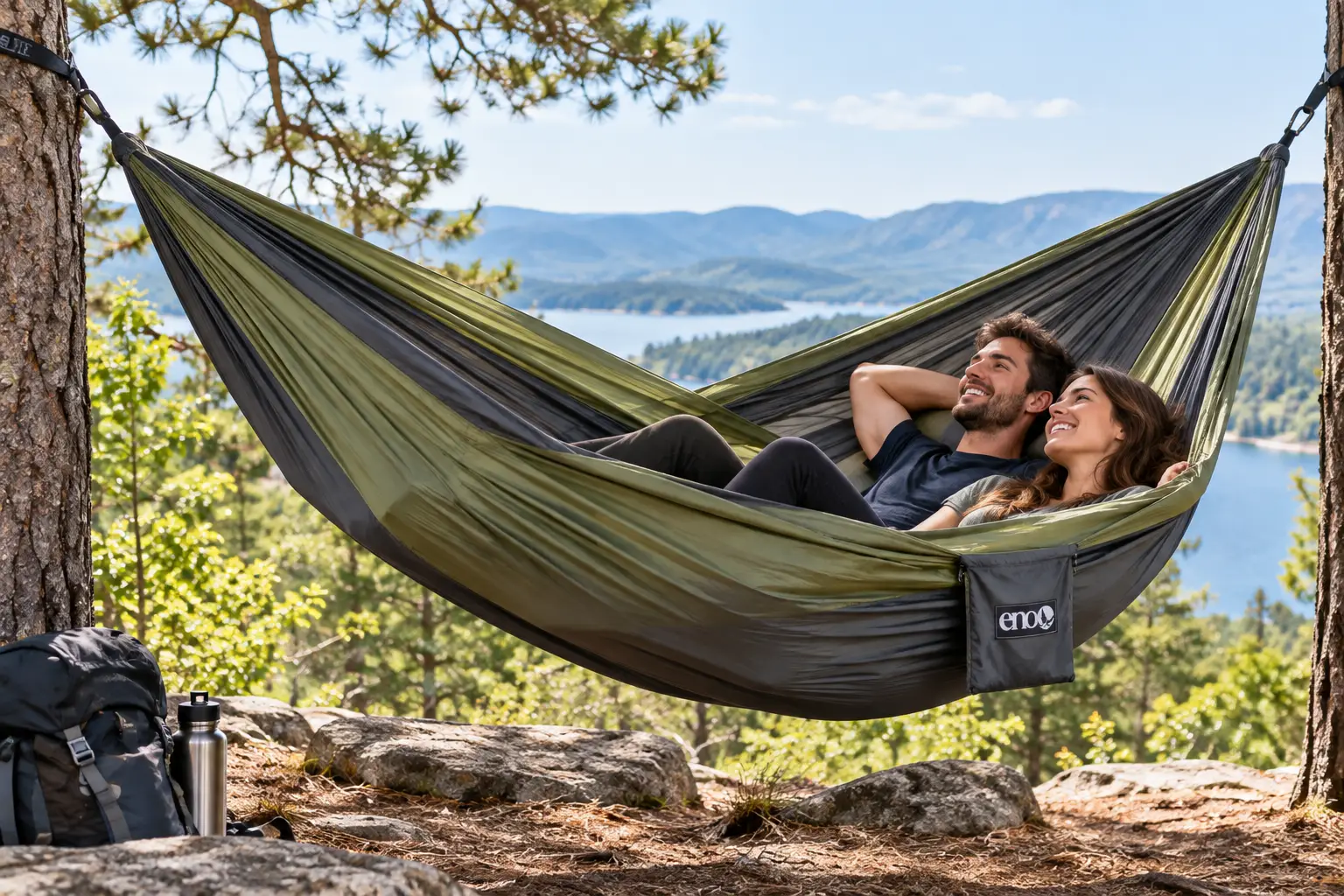
A double nest hammock is one of those rare purchases that actually delivers on the promise printed on the box: instant, low-effort relaxation for two. Whether you’re picturing a lazy Sunday strung between two oaks in the backyard or a multi-day trek where your shelter doubles as your bed, a double nest hammock swaps out a bulky tent and sleeping pad for about a pound and a half of packable nylon. That said, “double” doesn’t automatically mean “roomy,” and “nest” doesn’t automatically mean “comfortable” — the market is flooded with lookalikes that vary wildly in fabric quality, stitching, and real-world weight capacity.
This guide cuts through the marketing copy. We researched real spec sheets, cross-referenced aggregated customer feedback, and compared seven genuinely different double nest hammocks — from a $30 backyard starter kit to a recycled-nylon premium build rated for 500 pounds. You’ll also find a full breakdown of what separates a double nest hammock from a single, how to size one for your actual use case, and the setup mistakes that send most first-timers back to the store for a refund.
One quick note before we dive in: as an Amazon Associate, this article may contain affiliate links, and we earn from qualifying purchases at no extra cost to you. Now, let’s find the hammock that actually fits how — and where — you plan to use it.
Quick Comparison: Top Double Nest Hammocks at a Glance
Before the full breakdown, here’s a fast snapshot for anyone who just wants the short version.
| Hammock | Weight Capacity | Best For | Price Range |
|---|---|---|---|
| ENO DoubleNest | 400 lbs | Overall reliability and resale value | $65–$80 |
| Kammok Roo Double | 500 lbs | Premium comfort, sustainability-minded buyers | $70–$95 |
| Wise Owl Outfitters DoubleOwl | 400 lbs | Tightest budget, first-time buyers | Under $40 |
| Grand Trunk Double Deluxe | 400 lbs | All-in-one kit, larger frames | $55–$70 |
| Hammock Bliss Double | 350 lbs | Widest bed, side-by-side lounging | $55–$70 |
| Kootek Double | 500 lbs | Best budget kit with straps included | Under $35 |
| Bliss Hammocks 60″ Stand Set | 400 lbs | Backyards and patios with no trees | $100–$150 |
Looking at the table, a clear pattern emerges: capacity and price don’t move in lockstep. Kootek Double and Kammok Roo Double both clear 500 pounds despite sitting at opposite ends of the price spectrum, which tells you the extra money with Kammok is buying fabric quality and warranty support, not raw strength. If you don’t have trees to work with, the Bliss Hammocks 60″ Stand Set is really the only entry here built for that reality — everything else assumes you’re hanging between anchor points.
💬 Found the right fit already? Tap any highlighted pick above to check current pricing and availability!
Top 7 Double Nest Hammocks: Expert Analysis
We picked these seven specifically to cover the full range a shopper actually encounters — ultra-budget kits, mid-range all-rounders, and a couple of premium and stand-based options — rather than seven near-identical parachute nylon hammocks with different logos.
1. ENO DoubleNest — the industry benchmark
The ENO DoubleNest earned its reputation the old-fashioned way: it’s been the default recommendation from outfitters and hiking forums for over a decade, and the spec sheet still holds up.
Its FreeWave 70D nylon taffeta is breathable and fast-drying, which matters more than it sounds — a hammock that stays damp after morning dew is a miserable place to sit for your coffee. The 9’6″ x 6’4″ body is rated to 400 pounds, and triple-stitched seams mean the stress points (where most cheap hammocks fail first) are reinforced rather than an afterthought. It compresses into an attached stuff sack about the size of a grapefruit, weighing just over a pound.
Based on comparing the specs against the rest of this list, the DoubleNest isn’t the lightest, strongest, or cheapest option here — but it’s the safest all-around bet if you’ve never bought a hammock and don’t want to research warranty policies or return windows. What most buyers overlook is that ENO’s accessory ecosystem (bug nets, straps, rainflies) is built specifically to fit this hammock’s dimensions, which isn’t true for every brand on this list.
Reviews consistently report years of reliable use across seasons, with several long-term owners on outfitter sites noting they compared multiple competitors before landing on ENO and don’t regret it.
Pros:
- ✅ Long track record with consistent quality control
- ✅ Huge compatible accessory ecosystem
- ✅ Fast-drying, breathable FreeWave fabric
Cons:
- ❌ Straps sold separately, adding to total cost
- ❌ Lower 400-lb capacity than several rivals here
In the $65–$80 range, the ENO DoubleNest is a safe, well-supported buy rather than the outright best value on this list.
2. Kammok Roo Double — highest capacity, sustainability-focused build
The Kammok Roo Double is the premium pick here, built from 100% recycled, bluesign-approved GravitasX ripstop nylon and backed by a lifetime warranty.
At 10 feet long and roughly 69 inches wide, it’s noticeably roomier than the ENO, and its 500-pound weight rating gives you a real safety margin when two adults are aboard. The fabric carries a DWR water-resistant finish and a crinkle treatment that makes it feel softer against skin than standard ripstop, while eight gear loops along each side let you rig an underquilt or stash a phone without extra hardware.
Here’s what the spec sheet doesn’t say outright: that extra length and width is the actual reason reviewers describe it as more comfortable than the DoubleNest, not just marketing fluff — more fabric means a flatter, less cocooned lay for two people. This is the pick for buyers who hammock often enough that a lifetime warranty and recycled materials matter to the purchase decision, not just casual backyard use.
Aggregated reviews from outdoor gear testers rate it consistently ahead of the ENO on comfort and versatility, while noting the climbing-rated carabiners and Dyneema suspension cord as standout details for the price.
Pros:
- ✅ 500-lb capacity with climbing-rated hardware
- ✅ Lifetime warranty backs the purchase
- ✅ Eight gear loops for underquilts and accessories
Cons:
- ❌ Priced above most competitors on this list
- ❌ Straps sold separately like most premium hammocks
Between $70 and $95 depending on color, the Kammok Roo Double is worth the premium if you’ll use it often enough for the warranty to matter.
3. Wise Owl Outfitters DoubleOwl — best entry point on a tight budget
The Wise Owl Outfitters DoubleOwl exists to answer one question: how cheap can a double hammock get before quality actually suffers? The answer, mostly, is “not as cheap as you’d expect.”
It’s built from 210T parachute nylon with triple interlocking stitching and carries the same 400-pound rating as the ENO DoubleNest, at roughly half the price. Nine-foot tree straps come included, so there’s no follow-up purchase required to start using it the same day it arrives. The fabric feels close to identical to pricier competitors in side-by-side testing, since most budget and mid-tier double hammocks draw from a similar pool of parachute nylon suppliers.
Where the savings show up is in the hardware: the included carabiners are heavier steel with a sticky gate that sometimes needs manual closing, and the straps use thinner webbing than premium brands, which could shorten their lifespan under frequent use. Based on comparing construction across budget and premium models, this is the right call for anyone testing whether they even like hammock camping before investing further — not for someone planning weekly backcountry trips.
Reviews are largely positive on comfort and value, with recurring notes that quality control is somewhat less consistent than ENO or Grand Trunk, so it’s worth inspecting stitching on arrival.
Pros:
- ✅ Straps and carabiners included in the box
- ✅ Comfort close to hammocks twice the price
- ✅ Available in a wide range of colorways
Cons:
- ❌ Carabiners and webbing are lower quality
- ❌ Quality control varies more than pricier brands
At under $40, the Wise Owl Outfitters DoubleOwl is the strongest value on this entire list for first-time buyers.
4. Grand Trunk Double Deluxe — best complete kit for larger frames
The Grand Trunk Double Deluxe is built around one idea: you shouldn’t need a second order to actually use your hammock.
It ships with two ready-to-hang 5-foot straps, two nautical-grade steel carabiners, and a sewn-in stuff sack, all included in the base price. The 10’6″ x 6’6″ body — the longest on this list — is made from 210T/70D parachute nylon and rated to 400 pounds, and the extra length in particular makes it the most comfortable pick here for taller users or anyone over 6 feet who feels cramped in shorter hammocks.
What that extra 8 to 12 inches of length means in practice: a flatter diagonal lay, which is the position hammock campers use to sleep comfortably, without your feet or head pressing into the fabric’s taper. Reviewers who tested it against the ENO DoubleNest and Hammock Bliss Double specifically called out the Grand Trunk as their top pick among doubles, citing the combination of size, included hardware, and price.
An outdoor guide who uses these commercially with groups of 10 to 16 people at a time reported the straps and stitching holding up to weekly rotation without failures, which is a meaningfully different endorsement than a single weekend review.
Pros:
- ✅ Straps and carabiners included, ready to hang
- ✅ Longest body on this list, ideal for taller users
- ✅ Proven under heavy, repeated commercial use
Cons:
- ❌ At 20 oz, heavier than ultralight competitors
- ❌ Steel carabiners add weight versus aluminum
In the $55–$70 range, the Grand Trunk Double Deluxe delivers the most complete out-of-box kit on this list.
5. Hammock Bliss Double — the widest bed for true side-by-side lounging
The Hammock Bliss Double takes a different approach to comfort: instead of maximizing length, it maximizes width, making it the roomiest hammock here for two people sitting or lying side by side rather than diagonally.
At 22 ounces packed and tested to a 350-pound capacity, it ships with 100 inches of 6mm suspension cord but no carabiners, which is the one meaningful gap in its included accessories. The parachute nylon construction and triple-stitched seams match the rest of the field, and it’s fully machine washable and dryable — a small but genuinely useful detail after a summer of sunscreen and bug spray.
What most listings don’t mention is that skipping carabiners was likely a deliberate cost decision, not an oversight — the cord alone is enough to rig a basic setup, and buyers who already own carabiners from other gear lose nothing. For couples or friends who want to sit up and talk rather than cocoon separately, the extra width here outperforms the longer, narrower designs from ENO and Grand Trunk.
Reviewers specifically flag it as the widest of the tested doubles and call the price a strong value even accounting for the missing hardware, though they note it’s the heaviest option in that particular comparison.
Pros:
- ✅ Widest bed of any hammock on this list
- ✅ Fully machine washable and dryable
- ✅ Reinforced stuff sack doubles as gear pouch
Cons:
- ❌ No carabiners included in the box
- ❌ Slightly lower 350-lb weight rating
Priced in the $55–$70 range, the Hammock Bliss Double is the pick when width, not length, is your priority.
6. Kootek Double — best budget kit with everything included
The Kootek Double undercuts nearly everything else on this list on price while still shipping as a genuinely complete kit — hammock, heavy-duty carabiners, and two 10-foot adjustable straps in one box.
The 210T parachute nylon body measures a generous 118″ x 78″ and carries a 500-pound rating, matching the far pricier Kammok Roo Double on paper. Each strap includes 18-plus loops, so you can dial in your hanging height without tying knots or damaging trees, and the whole setup compresses into an attached carry sack small enough for a daypack side pocket.
The practical takeaway here: a 500-pound rating at this price point means there’s real margin for two full-sized adults plus gear, which isn’t something you can assume from most sub-$40 hammocks. This is squarely the pick for families wanting a shared backyard hammock kids and adults can both use, or for anyone buying their very first double hammock who doesn’t want to shop for straps and carabiners separately.
Aggregated feedback describes it as a “no-brainer” for the price and ranks it among the best double-wide options tested, alongside pricier competitors, though — as with most budget brands — hardware finish is noticeably less refined than premium options.
Pros:
- ✅ Straps, carabiners, and carry bag all included
- ✅ 500-lb rating matches much pricier hammocks
- ✅ 18+ strap loops for easy height adjustment
Cons:
- ❌ Hardware finish is rougher than premium brands
- ❌ Fewer color and print options than ENO
At under $35, the Kootek Double is the best all-in-one kit for budget-conscious first-time buyers.
7. Bliss Hammocks 60″ Wide Hammock & Stand — best for yards with no trees
Every hammock above this one assumes you have two solid trees. The Bliss Hammocks 60″ Wide Hammock & Stand assumes you don’t.
It pairs a 60″ x 78″ poly-cotton hammock bed with a powder-coated steel stand roughly 9 feet long, adjustable across multiple height settings, and rated to 400 pounds. The whole set folds down into an included carrying case, and the poly-cotton blend is colorfast and conforms to your body more than slick nylon does — trading a bit of quick-dry performance for a plusher lounging feel.
What this solves that the other six hammocks can’t: apartment patios, new-build backyards without mature trees, and rental properties where you’re not allowed to hang anything from the landscaping. The steel stand does all the structural work, so setup is a matter of unfolding and locking the frame rather than finding two anchor points 10-15 feet apart. If portability across locations matters more than portability in a backpack, this is the only option on this list built for that use case.
Consumer feedback across major retailers consistently praises the ease of assembly and comfort of the wider bed, with the most common complaint being that the poly-cotton fabric takes longer to dry than nylon after rain.
Pros:
- ✅ No trees or anchor points required
- ✅ Adjustable stand fits multiple hammock heights
- ✅ Softer poly-cotton feel than slick nylon
Cons:
- ❌ Poly-cotton dries slower than nylon after rain
- ❌ Heavier and bulkier than tree-hung options
Running between $100 and $150 for the full set, the Bliss Hammocks 60″ Wide Hammock & Stand earns its higher price by solving a problem no other hammock here can.
What Is a Double Nest Hammock?
A double nest hammock is a two-person camping or lounging hammock, typically made from parachute-style nylon and rated between 350 and 500 pounds, designed with extra length and width compared to single hammocks so two adults can sit or lie together comfortably. Most models pack down to roughly the size of a grapefruit and weigh around one to one-and-a-half pounds.
The “double” in the name refers to the increased dimensions, not a guarantee of two separate sleeping positions — nearly every double nest hammock is still a single fabric sheet, which means two occupants share one continuous curve rather than two flat, independent surfaces. According to the National Park Service’s camping guidance, many campgrounds also restrict where hammocks — double or single — can legally be tied, so it’s worth checking park-specific rules before assuming your double nest hammock replaces a tent everywhere you travel.
How to Choose a Double Nest Hammock
- Confirm the weight capacity covers both occupants plus gear. Add your combined body weight to whatever you’re bringing into the hammock — bags, pets, blankets — and stay comfortably under the rated limit, not right at it.
- Check whether straps and carabiners are included. Budget models like the Kootek Double bundle everything; others, like the Hammock Bliss Double, expect you to supply carabiners yourself.
- Match the fabric to your climate. Parachute nylon dries fast after rain or dew; poly-cotton blends like the Bliss Hammocks 60″ Stand Set feel softer but stay damp longer.
- Decide if you need a stand. If you camp somewhere without trees, or want a backyard setup that doesn’t depend on landscaping, a stand-based option is the only realistic fit.
- Prioritize length if you’re tall, width if you want to sit side by side. The Grand Trunk Double Deluxe wins on length; the Hammock Bliss Double wins on width.
- Look at warranty and return policy, not just price. A lifetime warranty, like Kammok’s, can make a pricier hammock cheaper over years of ownership than a budget option you replace twice.
- Read aggregated reviews for hardware complaints specifically. Fabric quality is fairly consistent across this category; carabiner and strap quality is where budget brands most often cut corners.
Double Nest Hammock vs. Single Hammock
The core trade-off between double and single hammocks isn’t just size — it’s weight, packability, and who actually gets to use the thing.
| Factor | Double Nest Hammock | Single Hammock |
|---|---|---|
| Typical weight capacity | 350–500 lbs | 250–400 lbs |
| Typical packed weight | 1–1.5 lbs | 0.5–1 lb |
| Best occupancy | 1–2 people | 1 person |
| Price range | $30–$150 | $25–$100 |
A double nest hammock costs more, weighs more, and packs down larger than a single — but it also comfortably accommodates one person stretched out diagonally with far more slack than a single ever could, which is precisely why models like the ENO DoubleNest and Kammok Roo Double are popular even among solo campers. The practical calculus for backpackers comes down to ounces: if you’re hiking solo and counting grams, a true single hammock saves real pack weight, but if there’s any chance you’ll share the hang with a partner or just want more room to spread out alone, the extra few ounces of a double are rarely regretted.
✨ Don’t miss these hand-picked deals!
🔍 Ready to upgrade your hammock setup? Click any highlighted pick above to check current pricing and start planning your next hang.
Getting Started: Setting Up Your First Double Nest Hammock
The first hang is where most double nest hammock owners either fall in love with the thing or shove it in a closet for a year. A few habits make the difference.
Start with the 30-degree rule: your suspension straps should sag enough that the hammock body forms roughly a 30-degree angle from the anchor point, not a tight, flat line. A too-tight hang concentrates all your weight in a narrow band across your back, which is the single most common reason first-time users find hammocks uncomfortable and blame the product instead of the setup. Anchor points should sit 10 to 15 feet apart for most double nest hammocks, though the exact distance depends on your specific model’s strap length.
Lie diagonally, not straight down the centerline. This is the single biggest “aha” moment for new hammock owners — lying at roughly a 30-degree angle to the hammock’s long axis flattens out the fabric under your body, eliminating the curled, taco-like position that makes straight-line lying uncomfortable for more than a few minutes. For your first month, inspect stitching and carabiner gates before every use, since manufacturing defects (rare, but real even on premium brands) tend to surface in the first few uses rather than after years of wear. Finally, always take your hammock down when you leave a site — both to prevent tangling hazards for kids or pets and because UV exposure over days at a time noticeably shortens nylon lifespan.
Real-World Scenarios: Which Double Nest Hammock Fits Your Life
The weekend backyard couple: budget around $40–$70, hang frequency a few times a month, priority on comfort over pack weight. The Grand Trunk Double Deluxe or Hammock Bliss Double both fit this profile well — spacious, complete or near-complete kits, no backcountry weight penalty to worry about.
The thru-hiker replacing a tent: budget $70–$95, hang frequency nightly for weeks at a stretch, priority on weight, packed size, and durability under repeated use. The Kammok Roo Double justifies its price here — the lifetime warranty and reinforced hardware matter far more over 100+ nights than they do for occasional lounging.
The family with young kids and no trees: budget $100–$150, hang frequency daily in season, priority on safety and zero setup complexity. The Bliss Hammocks 60″ Stand Set removes the anchor-point guesswork entirely, which matters when children are climbing in and out unsupervised for a few seconds at a time.
The first-time buyer testing the waters: budget under $40, hang frequency unknown, priority on not overspending before knowing if hammock life is for you. The Wise Owl Outfitters DoubleOwl or Kootek Double both let you try the category without much financial risk.
Common Mistakes to Avoid When Buying a Double Nest Hammock
Most buyer’s remorse in this category traces back to a handful of repeat mistakes. First, assuming “double” means two independent sleeping spaces — it doesn’t, and shoppers expecting a two-person tent replacement are often surprised that two adults still touch in the middle. Second, skipping the straps-included check and then being annoyed by a surprise $15–$25 add-on purchase; always confirm what’s actually in the box before comparing prices across brands. Third, ignoring weight capacity margins — buying a 350-pound-rated hammock for two adults who together weigh 340 pounds leaves almost no safety buffer for movement or gear. Fourth, choosing based on packed weight alone when the actual use case is backyard lounging, where an extra half-pound of nylon is irrelevant but a poly-cotton stand set’s superior comfort is not. Fifth, not checking return policies before a first hang — since setup mistakes (not product defects) cause most early dissatisfaction, and a generous return window protects you while you learn proper hanging technique.
Problem → Solution: Fixing the Most Common Double Nest Hammock Complaints
Problem: the hammock feels too tight and uncomfortable to lie in. Solution: loosen your straps to achieve that 30-degree sag angle, and lie diagonally across the body instead of straight down the center — this alone resolves the majority of first-hang complaints.
Problem: carabiners are stiff or hard to close one-handed. Solution: budget hardware like that on the Wise Owl Outfitters DoubleOwl benefits from a drop of dry lubricant on the gate hinge, or an upgrade to lightweight aluminum wire-gate carabiners from a climbing shop for a few dollars each.
Problem: the fabric stays damp long after rain. Solution: this is inherent to poly-cotton blends like the Bliss Hammocks 60″ Stand Set — bringing it under cover during storms, or choosing a parachute nylon model instead, solves it structurally rather than through maintenance.
Problem: no good trees at the intended campsite. Solution: switch to a stand-based setup, or carry a compact hammock stand as a backup — don’t force an anchor onto unsuitable trees, which is both unsafe and damaging.
Problem: hammock sags too low and touches the ground under two adults. Solution: check your combined weight against the rated capacity first; if you’re within limits, the fix is usually shortening the strap distance between anchors, not the hammock itself.
What to Expect: Everyday Performance
On paper, every hammock on this list looks similar — parachute nylon, triple stitching, a few hundred pounds of rated capacity. In daily use, the differences show up in small, cumulative ways. Fabric texture varies more than spec sheets suggest: Kammok’s crinkle-treated GravitasX feels noticeably softer against bare skin than standard 210T nylon, which matters after an hour of lounging but is invisible on a spec sheet. Packed size differences of an inch or two barely register in a backpack but matter a lot in a daypack’s side pocket. According to OutdoorGearLab’s independent testing, testers found it genuinely difficult to distinguish fabric quality among the mid-tier and budget parachute nylon hammocks side by side — the real performance gaps show up in the hardware, not the fabric itself. Expect carabiner quality, strap adjustability, and stitching consistency to be where cheaper hammocks quietly cut corners, even when the core fabric feels comparable to premium competitors.
Long-Term Cost and Maintenance
A double nest hammock’s total cost of ownership rarely ends at the sticker price. Budget models without included straps typically add $10–$25 for a decent set, and anyone lacking carabiners should budget another $10–$20 for a climbing-rated pair rather than the stamped steel hardware some kits include. Maintenance itself is minimal — machine washing on cold with mild detergent, air drying away from direct sun, and periodic inspection of stitching and carabiner gates for wear.
Where the real cost divide shows up is replacement frequency. A $30 budget hammock used weekly for two seasons and then replaced costs roughly the same, over five years, as a single $95 premium hammock backed by a lifetime warranty — except the premium option comes with one purchase decision instead of two or three, and a warranty claim instead of a landfill trip if something fails. For occasional backyard use, the math favors budget; for frequent, multi-year use, it increasingly favors investing once in a durable, warrantied model like the Kammok Roo Double.
Safety, Regulations, and Leave No Trace Standards
Hammock safety splits into two categories: structural (don’t exceed rated capacity, inspect hardware) and environmental (don’t damage the trees you’re anchoring to). On the structural side, staying meaningfully under a hammock’s stated weight limit — not right at it — accounts for dynamic loading when you get in, shift position, or bring gear aboard, none of which the static rating fully captures.
On the environmental side, the Leave No Trace Center for Outdoor Ethics specifically recommends using webbing straps at least one inch wide rather than rope or paracord, since narrow cordage can girdle and permanently damage tree bark. Their guidance also suggests hanging low — generally under 18 inches off the ground — to limit both fall risk and damage to overhead branches, and always anchoring to the thickest, healthiest part of a live tree trunk rather than thin limbs. Many U.S. national and state parks now post hammock-specific rules at individual campsites, so it’s worth a quick check of posted regulations before assuming any tree is fair game, particularly in high-traffic backcountry areas where cumulative bark damage from repeat hammock use has become a real conservation concern.
Frequently Asked Questions
❓ What is the weight limit of a double nest hammock?
❓ Can one person use a double hammock alone?
❓ Do you need a stand for a double nest hammock?
❓ How much does a good double hammock cost?
❓ Are double hammocks worth it for backpacking?
Conclusion
A double nest hammock earns its spot in your gear closet or backyard faster than almost anything else you’ll buy this year — there’s no assembly beyond a few minutes of strap adjustment, no learning curve beyond finding your ideal sag angle, and no real risk if you start with a budget option like the Wise Owl Outfitters DoubleOwl or Kootek Double before deciding whether to invest further.
If this guide has a single takeaway, it’s that the “best” double nest hammock depends entirely on where you’ll actually use it. Frequent backcountry users get the most long-term value from the Kammok Roo Double‘s durability and warranty. Backyard lounging couples do just as well with the Grand Trunk Double Deluxe or Hammock Bliss Double‘s complete kits and roomier builds. And anyone without trees to work with should skip straight to the Bliss Hammocks 60″ Wide Hammock & Stand rather than fighting a setup that was never going to work in their space. Whichever you choose, the real test happens on your first proper hang — loosen those straps, lie diagonally, and give it more than five minutes before deciding whether hammock life is for you.
Recommended for You
- Portable Hammock Chair Stand: 7 Best Picks for 2026
- Truck Hammock Stand: 7 Best Picks & Buying Guide (2026)
- Hammock Hitch Stand: 7 Best Picks for Trouble-Free Camping (2026)
Disclaimer: This post contains affiliate links. As an Amazon Associate, I earn from qualifying purchases made through these links, at no additional cost to you.
✨ Found this article helpful? Share it with someone who needs a good hang! 💬🤗