
In This Article
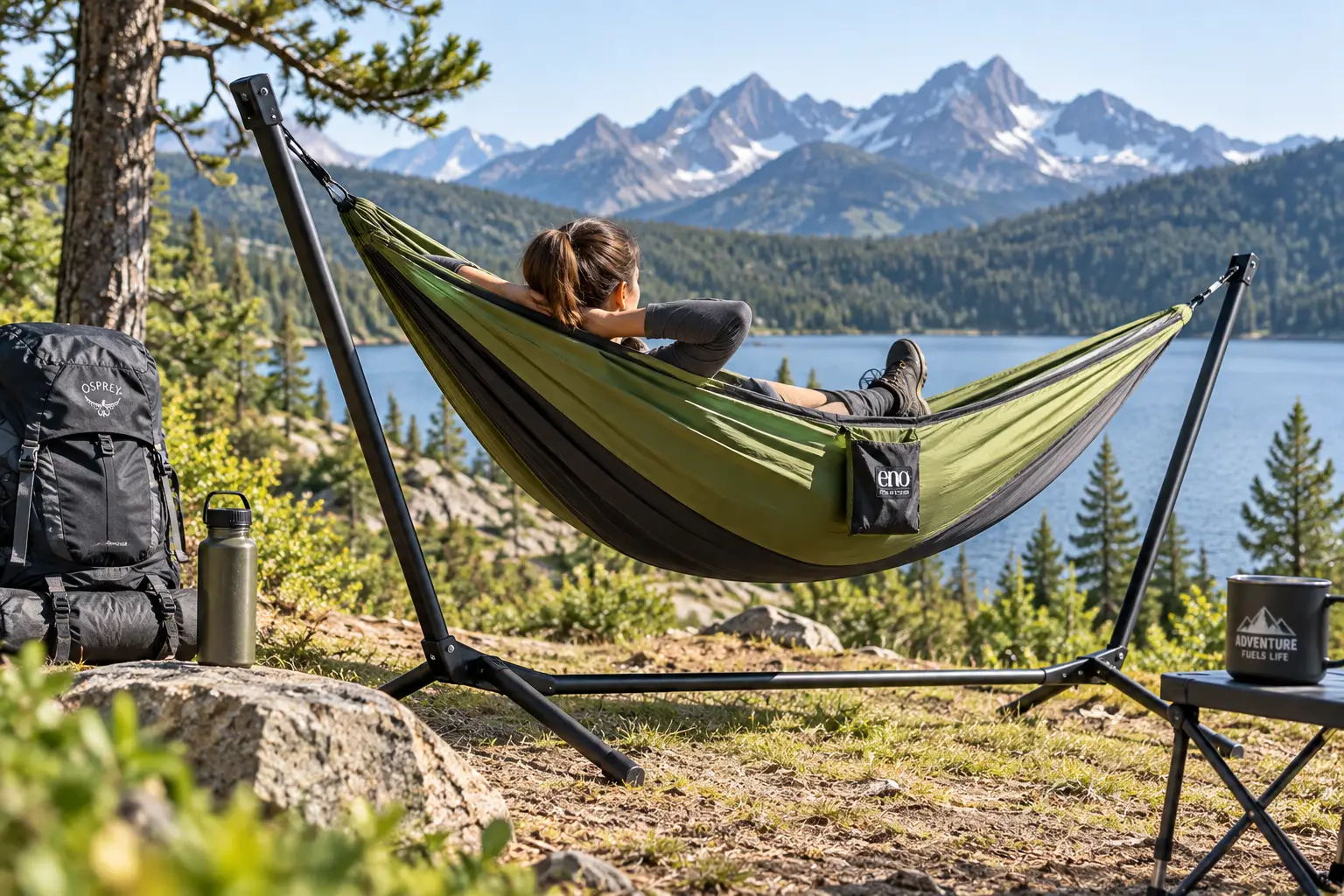
Some of the best hammock camping spots have a problem: no trees. Deserts, alpine ridgelines, sandbars, and grassy meadows all offer incredible views but nothing to hang a hammock from — which is exactly the gap a backpacking hammock stand is built to close. A backpacking hammock stand is a freestanding, collapsible frame that lets you hang a camping hammock without relying on trees, using aluminum or steel poles that fold down small enough to strap to a pack or stash in a trunk.
If you’ve ever driven past a perfect camping spot because it lacked two trees the right distance apart, you already understand the appeal. The tricky part is that “portable” means very different things across this category — a 15-pound aluminum frame designed for the trail and a 33-pound steel frame designed for the patio both get marketed as camping-ready, but they serve very different trips. This guide breaks down 7 real, currently available stands — from true trail-worthy aluminum builds to budget steel frames better suited to car camping — with honest analysis of weight, capacity, and who each one actually fits. We’ll also cover setup tips, buyer mistakes, and safety considerations so you can pick the right stand instead of the most-advertised one.
Quick Comparison: Top Backpacking Hammock Stands at a Glance
| Stand | Approx. Weight | Weight Capacity | Best For |
|---|---|---|---|
| ENO Nomad | ~15.5 lbs | 300 lbs | Ultralight backcountry trips |
| Kammok Swiftlet | ~15–17 lbs | 300 lbs | Trail-to-tailgate versatility |
| Tranquillo Uniki | ~29 lbs | 600 lbs | Fastest tool-free setup |
| Sunnydaze Universal | ~33 lbs | 550 lbs | Car camping & backyard use |
| Wise Owl Outfitters | ~25–28 lbs | 440 lbs | Budget-conscious beginners |
Looking at the numbers above, the split in this category is stark: the ENO Nomad and Kammok Swiftlet are the only two stands here light enough to seriously consider carrying any real distance on foot, while the rest trade portability for capacity and price. If your trips involve more than a short carry from the car or campsite, that weight gap should carry more decision-making weight than the sticker price. We’ll unpack exactly why in the full reviews below.
💬 One click helps you compare real-time pricing before your next trip planning session! 😊
Top 7 Backpacking Hammock Stands: Expert Analysis
1. Amazon Basics 2-Person Heavy Duty Portable Hammock Stand — most affordable way to try hammocking
The Amazon Basics 2-Person Heavy Duty Portable Hammock Stand is the cheapest realistic entry point into freestanding hammocking, and it’s worth starting the list here to set expectations for what budget gear actually delivers. Its steel-tube frame rates a 400-pound weight capacity, spans roughly 9 feet, and disassembles into a bundle that fits in the included carrying case — practical for a car trunk, less so for a pack. What that steel-tube build means in practice: you get real stability on flat ground, but the trade-off is a stand that’s meaningfully heavier and bulkier than the aluminum options later on this list, so treat this as a car-camping or backyard tool rather than something you’ll carry in on foot. Because the manufacturer doesn’t publish an exact stand-only weight, budget-focused shoppers should assume it lands in the same 25-to-30-pound range as comparable steel folding frames from this price tier.
Based on comparing the specs against pricier competitors, this stand makes the most sense for someone testing whether they even like hammock camping before investing $250+ in a trail-ready frame. Reviews of Amazon Basics’ steel hammock-and-stand combos consistently describe quick assembly — often under five minutes — and reasonably comfortable use for backyard and short car-camping trips, though buyers in windier or uneven terrain report needing to anchor the base for stability.
Pros:
- ✅ Lowest price point in this roundup by a wide margin
- ✅ Tool-free assembly in a few minutes
- ✅ Included carrying case for car-trunk storage
Cons:
- ❌ Too heavy and bulky for true backpacking
- ❌ No published stand-only weight to compare precisely
At around $50 to $80 for the stand, this is a reasonable value pick if your “backpacking” really means a short walk-in campsite or a backyard trial run — just don’t expect it to keep up on a multi-mile approach.
2. Wise Owl Outfitters Adjustable Portable Hammock Stand — best steel stand for beginners
The Wise Owl Outfitters Adjustable Portable Hammock Stand distinguishes itself with a 3-hole adjustable design that lets you fine-tune hammock height and sag without extra hardware — a small feature that matters a lot for comfort once you’re actually lying in it. The 440-pound capacity steel frame folds down to a compact 44 by 7 inches from its full 106 by 42-inch footprint, and non-slip feet help it grip uneven ground better than some competitors in this price range. What this means practically: you get more adjustability than most budget stands, but you’re still working with a steel frame, so weight savings aren’t the selling point here.
What most buyers overlook with adjustable-hole designs like this one is that they trade a little setup speed for a genuinely better hang — you can correct for an overly deep or shallow sag after the fact instead of living with whatever the fixed geometry gives you. That’s a real usability upgrade for anyone new to hammock camping who hasn’t yet developed a feel for the ideal hang angle. Reviews of Wise Owl’s portable stands frequently mention the brand’s responsive customer service and straightforward folding mechanism as standout points, with occasional notes that the frame’s steel tubing shows wear faster under frequent transport than pricier aluminum builds.
Pros:
- ✅ Adjustable 3-hole design fine-tunes hang height
- ✅ Non-slip feet improve grip on uneven ground
- ✅ Compact 44 x 7-inch folded size for storage
Cons:
- ❌ Steel construction adds noticeable pack weight
- ❌ Not designed for repeated on-trail carry
Priced between roughly $70 and $100, the Wise Owl stand earns its spot as a smart first purchase for anyone dipping a toe into stand-based hammocking without committing to premium pricing.
3. Vivere Double Cotton Hammock with Steel Stand — best all-in-one hammock-and-stand bundle
The Vivere Double Cotton Hammock with Steel Stand distinguishes itself by including a genuinely nice USA-grown cotton hammock bed in the box, so you’re not shopping for a second product before your first trip. The steel stand supports up to 450 pounds, weighs about 33.4 pounds, and uses a space-saving design that expands to roughly 9 feet — meaning the whole footprint stays manageable even though the frame itself is on the heavier side. In practice, that weight buys real stability: two adults can share this hammock without the sway or tip-risk you sometimes get from lighter, single-user-rated frames.
Here’s what to weigh with a bundled product like this: you’re paying for a matched hammock-and-frame system engineered to work together, which removes guesswork, but you inherit the weight and bulk of both components at once, making this a poor match for anyone trying to shave pack ounces. Reviews of Vivere’s combo stands consistently highlight the cotton fabric’s comfort and the stand’s straightforward, no-tools assembly, with a recurring caveat that cotton hammocks need more care in wet or humid climates than synthetic alternatives.
Pros:
- ✅ Includes a matched cotton hammock — no separate purchase needed
- ✅ 450-lb capacity comfortably supports two adults
- ✅ Simple tool-free assembly with included carry bag
Cons:
- ❌ Cotton fabric needs more upkeep in wet climates
- ❌ Heaviest bundle option here for solo backcountry carry
Expect to pay somewhere between $130 and $200 for the combo, which is genuinely solid value once you account for the included hammock — just plan on this being a car-camping or backyard piece, not a trail companion.
4. Sunnydaze Universal Heavy-Duty Steel Hammock Stand — sturdiest fit for a wide range of hammocks
The Sunnydaze Universal Heavy-Duty Steel Hammock Stand earns its spot through sheer adaptability: adjustable chains and S-hooks let it fit hammocks ranging from 9.5 to 14 feet long, covering everything from compact camping hammocks to full Brazilian and Mayan-style beds. Built from 1.5-inch tubular powder-coated steel with a 550-pound capacity, it measures 124 by 40 by 52.5 inches assembled and weighs approximately 33 pounds. That combination of size range and steel-tube strength means it’s one of the few stands here that can comfortably handle two larger adults or a wider spreader-bar hammock without flexing.
Based on comparing the specs across this category, the Sunnydaze’s biggest strength — universal hammock compatibility — is also a hint at its intended use case: it’s designed as a set-it-and-leave-it patio or campsite anchor, not a grab-and-go trail tool. What the spec sheet doesn’t say, but user feedback suggests, is that stability depends heavily on level ground; several owners note a slightly “tippy” feel if the site isn’t close to flat, which matters more for backcountry sites than manicured backyards.
Pros:
- ✅ Fits hammocks from 9.5 to 14 feet long
- ✅ High 550-lb capacity for two-person use
- ✅ Rust-resistant powder-coated steel finish
Cons:
- ❌ Requires level ground for full stability
- ❌ At ~33 lbs, unrealistic for foot-carried trips
Typical pricing runs between $100 and $140, making it a strong value pick for anyone who wants one universal stand to fit multiple hammocks at a basecamp or backyard setup.
5. Tranquillo Uniki Hammock Stand — fastest tool-free setup
The Tranquillo Uniki Hammock Stand leans hard into convenience, with a patented design that folds and unfolds in about 30 seconds and adjusts height and width in roughly 10 more — no screws, bolts, or tools required at any point. Its electrostatic powder-coated steel frame carries a 550-to-600-pound capacity depending on the specific model, weighs around 28.9 pounds, and uses stainless-steel ball-bearing joints for a smoother, quieter rocking motion than most fixed-joint competitors. In practice, that ball-bearing detail is more than a marketing line — it’s the difference between a stand that creaks with every shift in your hammock and one that rocks gently without announcing your every move to nearby campsites.
What most buyers overlook with fast-fold designs is that the mechanism enabling that 30-second setup typically adds weight relative to simpler bolt-together frames, since the sliding and locking hardware has to be built heavier to hold up over time. Reviews of Tranquillo’s stand-and-hammock combos frequently praise the setup speed and smooth ball-bearing sway, while a recurring critique in cooler or humid climates involves the included mesh-style hammock net needing a liner or underquilt for real comfort.
Pros:
- ✅ Genuinely fast 30-second tool-free fold/unfold
- ✅ Smooth, quiet ball-bearing joint rocking motion
- ✅ High 550–600-lb capacity depending on model
Cons:
- ❌ Fold mechanism adds weight versus simpler frames
- ❌ Included hammock net thin for cold-weather comfort
Pricing typically falls between $130 and $200 depending on color and hammock style, positioning it as a strong mid-range pick for anyone who values setup speed over ounce-counting.
6. Kammok Swiftlet Portable Hammock Stand — most versatile trail-ready design
The Kammok Swiftlet Portable Hammock Stand is where this list crosses into genuinely backpacking-relevant territory. Built from rust-resistant aluminum tubing that slides and snaps together, it weighs roughly 15 to 17.4 pounds depending on configuration, folds down to about 50 by 8.5 by 8.5 inches, and rates a 300-pound capacity. The standout feature is its dual center-bar system: swap between a long bar for full lounging mode and a short bar that converts the same frame into a compact chair, cutting the footprint roughly in half for tight campsites or apartment patios.
Here’s what that aluminum build and dual-mode design mean for a real trip: this is light enough to justify carrying into a treeless basecamp or a short-approach backcountry site, and versatile enough to double as camp seating once you’re not using it to sleep. Based on comparing it against the steel stands earlier in this list, the Swiftlet is the clearest example of paying a premium specifically for portability rather than raw capacity. Reviews consistently rank it as one of the lightest and most polished stands on the market, with the most common critique being price — it’s the second-most expensive stand in most head-to-head comparisons — and a note that it isn’t compatible with every third-party hammock accessory system.
Pros:
- ✅ True aluminum build light enough for trail carry
- ✅ Converts to chair mode for compact campsites
- ✅ 11 adjustment points per arm for a custom hang
Cons:
- ❌ Premium price relative to steel competitors
- ❌ Limited compatibility with some bug-net accessories
Expect to pay between roughly $280 and $350 for the Swiftlet, which is a real investment — but for anyone serious about tree-free backcountry hangs, it’s one of only two stands on this list built for that job.
7. ENO Nomad Hammock Stand — lightest premium pick for the backcountry
The ENO Nomad Hammock Stand is the most purpose-built backcountry option here, using a 6061 anodized aluminum alloy frame with a shock-corded, tent-pole-style assembly that collapses to a compact 29.5 by 13.8 by 6.3-inch bundle. The stand alone weighs about 15 pounds 8 ounces, or roughly 18 pounds 12 ounces including the carry bag and stakes, and carries a 300-pound weight capacity. What that shock-corded design means in practice: setup mirrors pitching a backpacking tent, with poles that self-align through internal cords, which is faster and more intuitive than fumbling with loose aluminum sections in the dark.
Based on comparing the Nomad against every other stand on this list, it’s tied with the Swiftlet as the only genuinely backcountry-capable option, but it distinguishes itself with adjustable tarp poles that create real rain and sun coverage — something none of the steel stands offer. The trade-off is compatibility: the Nomad is built specifically around ENO’s own hammock ecosystem, and doesn’t fit ENO’s SkyLoft or SuperNest lines. Reviews consistently describe the comfort as nearly identical to a tree hang, with the entire kit’s roughly 15-to-19-pound carry weight repeatedly flagged as workable for short approaches but genuinely taxing on longer, multi-day thru-hikes.
Pros:
- ✅ Backcountry-tested aluminum, tent-pole-style assembly
- ✅ Adjustable tarp poles add real weather protection
- ✅ Compact 29.5-inch packed length among the shortest here
Cons:
- ❌ Limited to ENO-compatible hammocks
- ❌ Still heavy for multi-day thru-hike carries
At around $280 to $320, the Nomad commands premium pricing, but for beach, desert, or above-treeline trips where trees simply aren’t an option, it remains one of the most trusted names in the category.
Full Product Comparison: All 7 Stands Side by Side
| Stand | Weight | Capacity | Price Range | Best For |
|---|---|---|---|---|
| Amazon Basics 2-Person | ~25–30 lbs (est.) | 400 lbs | $50–$80 | Trying hammocking on a budget |
| Wise Owl Outfitters | ~25–28 lbs (est.) | 440 lbs | $70–$100 | Adjustable comfort for beginners |
| Vivere Double Cotton | ~33.4 lbs | 450 lbs | $130–$200 | All-in-one hammock + stand bundle |
| Sunnydaze Universal | ~33 lbs | 550 lbs | $100–$140 | Fitting varied hammock lengths |
| Tranquillo Uniki | ~28.9 lbs | 550–600 lbs | $130–$200 | Fastest no-tools setup |
| Kammok Swiftlet | ~15–17 lbs | 300 lbs | $280–$350 | Trail-to-tailgate versatility |
| ENO Nomad | ~15.5–18.75 lbs | 300 lbs | $280–$320 | True backcountry, tree-free camping |
Looking at the full lineup, the price-to-weight relationship in this category is almost linear: the two stands light enough for real trail carry — the Kammok Swiftlet and ENO Nomad — both cost roughly three to four times more than the steel budget options. If you’re camping mostly at drive-up or walk-in sites, that premium buys you very little; if you’re covering real trail miles to a treeless site, it buys you the difference between a workable trip and a stand that never leaves the trunk.
✨ Don’t miss these exclusive hammock stand deals!
🏕️ Take your tree-free camping setup to the next level with a stand built for exactly how you camp. Click a highlighted pick above to check today’s availability and current pricing. These picks will help you get a comfortable hang wherever your next trip takes you!
How to Set Up a Backpacking Hammock Stand for the First Time
Getting a new stand right on the first outing prevents most of the frustration that leads to bad reviews. Start by practicing the full fold-and-unfold cycle at home, in good light, before your trip — every stand in this guide has a slightly different locking mechanism, and muscle memory matters more once you’re setting up in fading daylight. Next, choose the flattest ground available; even a few degrees of slope can make an aluminum frame feel less stable than it actually is, since most of these stands are engineered around a level base.
Once assembled, load the stand gradually rather than dropping in with full body weight — sit on the edge first, then shift your weight in, which lets you feel any wobble before it becomes a problem. For steel stands like the Sunnydaze or Vivere, check that all pole sections are fully seated; a half-inserted joint is the most common cause of the “creaking” complaint that shows up in reviews. For aluminum, shock-corded designs like the ENO Nomad, resist the urge to force sections together — let the internal cord do the aligning work it’s designed for.
Finally, build a simple maintenance habit: wipe down steel joints after wet trips to slow rust, and store aluminum stands fully dry to prevent the corded elastic from degrading. A stand cared for this way will comfortably outlast several hammocks. For more on setting up hammock systems responsibly in the backcountry, REI’s guide to hammock camping covers site selection and gear pairing in more depth.
Real-World Scenarios: Matching a Stand to Your Trip
Not every camper needs the same stand, and matching your actual trip pattern to the right pick avoids both overspending and disappointment. Consider three common profiles.
The solo weekend backpacker covering 5 to 8 miles to a treeless overlook needs to prioritize carry weight above everything else — for this camper, the Kammok Swiftlet or ENO Nomad are the only realistic choices on this list, since every other option adds 15 to 20 extra pounds that simply aren’t justified for a short trip’s comfort payoff. The budget-conscious family doing weekend car camping, where the stand rides in the trunk rather than a pack, gets far more value from the Sunnydaze Universal or Vivere Double Cotton — their higher capacity comfortably supports kids or a second adult, and the weight penalty that matters on the trail is irrelevant when a vehicle is doing the carrying.
The beach or desert day-tripper who wants tree-free lounging without a full overnight setup is well served by the Tranquillo Uniki or Wise Owl Outfitters stand — both prioritize fast, tool-free setup over raw capacity or ultralight construction, which fits a few hours of daytime relaxation better than a multi-day expedition. Matching your actual use case this way, rather than defaulting to whichever stand has the most five-star reviews, is the single biggest factor in whether you’ll actually use the thing you bought.
Common Hammock Stand Problems and How to Fix Them
Even a well-chosen stand runs into predictable issues. Here’s how to solve the most common ones.
Problem: the stand feels tippy or unstable. This is almost always a ground-leveling issue rather than a product defect. Solution: scout for the flattest available patch before assembly, and on steel stands with adjustable feet, take the extra minute to level each corner individually rather than eyeballing it.
Problem: fabric hammock sags too deep or feels too tight. Solution: on adjustable stands like the Wise Owl or Sunnydaze, move the chain or hook position to change the hang angle — aim for roughly a 30-degree sag, which distributes body weight more evenly than a flat, tight hang.
Problem: aluminum shock-corded poles feel stuck. Solution: never force a jammed ENO Nomad or Swiftlet-style pole section; instead, fully collapse the assembly and let the cord relax before trying again, and keep sand or grit out of the joints during setup.
Problem: steel joints squeak or feel gritty over time. Solution: a light coat of dry silicone lubricant on joint contact points, applied a few times per season, resolves most noise complaints without attracting dust the way oil-based lubricants do.
Problem: the stand doesn’t fit your specific hammock length. Solution: check the compatible length range before buying rather than after — the Sunnydaze Universal’s 9.5-to-14-foot range makes it one of the more forgiving options if you own multiple hammocks of different sizes.
How to Choose a Backpacking Hammock Stand
Picking the right stand comes down to weighing a handful of criteria against how you actually camp.
- Decide how far you’ll actually carry it. If the stand rides in a car, weight barely matters; if it rides on your back for more than a mile, every pound counts double.
- Match capacity to your real body weight plus gear. Add at least 50 pounds of buffer beyond your body weight for safety margin, more if you’ll ever share the hammock.
- Check the packed dimensions against your pack or trunk space. A stand that’s technically light but packs long and awkward can be more frustrating than a slightly heavier, more compact design.
- Consider hammock compatibility before frame quality. A beautifully built stand that doesn’t fit your existing hammock’s length or attachment style isn’t a good buy regardless of its other features.
- Factor in setup speed for your patience level. Tool-free, fast-fold designs cost a bit more but pay off constantly if you’re setting up and breaking down daily on a multi-day trip.
- Weigh material trade-offs honestly. Aluminum saves weight but often costs more and handles slightly less total capacity; steel is heavier but generally cheaper and more forgiving of rough handling.
- Check the terrain you’ll actually use it on. Wide-base steel stands do best on flat, groomed ground, while narrower aluminum tripod-style designs like the Nomad tend to adapt better to slightly uneven backcountry sites.
Common Mistakes to Avoid When Buying a Hammock Stand
The most frequent mistake is buying based on weight capacity alone and ignoring stand weight — a 600-pound-rated steel frame sounds impressive, but if you’re the only one using it and weigh 180 pounds, that extra capacity is dead weight you’re carrying for no benefit. A closely related error is assuming “portable” always means “backpackable”; as this guide’s research shows, most stands marketed as portable are built for trunk-to-campsite carry, not miles-on-foot carry, and conflating the two leads directly to disappointment on the trail.
Buyers also frequently skip checking hammock compatibility, assuming any hammock fits any stand — in reality, gathered-end hammocks, spreader-bar hammocks, and brand-specific systems like ENO’s SkyLoft line don’t universally interchange. Another common misstep is ignoring the packed dimensions in favor of just the weight figure; a stand that’s technically light but packs into an awkward 50-inch-long bundle can be harder to fit in a pack than a slightly heavier, more compact design. Finally, don’t skip a trial setup at home — the first time you fold or unfold a new stand shouldn’t be at a campsite after dark.
Backpacking Hammock Stand vs. Tree-Hung Hammock Setup
| Factor | Freestanding Stand | Tree-Hung Hammock |
|---|---|---|
| Site flexibility | Works on sand, rock, treeless ridgelines | Requires two suitable living trees |
| Setup consistency | Same geometry every time | Varies with tree spacing and terrain |
| Added pack weight | 15–33+ lbs depending on model | Straps only, roughly 1 lb |
| Environmental impact | Zero tree contact | Needs wide, tree-friendly straps |
| Typical cost | $50–$350 | $20–$40 for a strap set |
The written trade-off here is straightforward: a stand buys you site flexibility and a guaranteed hang at the cost of significant extra weight, while tree straps stay nearly weightless but leave you dependent on finding two appropriately spaced, healthy trees. For destinations like deserts, beaches, or above-treeline campsites, a stand isn’t a luxury — it’s the only option, which is exactly why the ENO Nomad and Kammok Swiftlet exist as dedicated backcountry products rather than niche accessories. When trees are available and healthy, though, straps remain the lighter, cheaper, and — done correctly — genuinely low-impact choice. Responsible tree-hanging technique matters here: the Leave No Trace Center’s hammock camping guidelines recommend straps at least 1 inch wide on trees at least 6 inches in diameter to avoid bark damage, a detail worth knowing even if you primarily use a stand.
What to Expect: Everyday Performance
Specs on a page translate into real experience in a few predictable ways. Aluminum stands like the Nomad and Swiftlet feel noticeably more “springy” underfoot when you first sit down — that flex is intentional engineering, distributing your weight across the frame rather than concentrating it at rigid joints, and most users adjust to the sensation within the first few minutes. Steel stands, by contrast, feel more solid and planted immediately, which some campers prefer even at the cost of extra pack weight.
Ball-bearing joint systems, like the one on the Tranquillo Uniki, produce a noticeably smoother and quieter rocking motion than fixed-pivot designs — a small detail until you’re trying to sleep and every shift in position creaks audibly through a quiet campsite. Capacity ratings also translate differently than the numbers suggest: a 300-pound-rated aluminum stand and a 600-pound-rated steel stand can feel similarly secure for a single average-weight adult, since both ratings include substantial safety margin above normal use. Where the difference actually shows up is in wind — lighter, narrower-base stands like the Swiftlet and Nomad benefit more from being staked or anchored in gusty, open terrain than heavier, wide-footprint steel frames.
Backpacking Hammock Stands for Different Types of Campers
Beginners generally do best starting with an adjustable, forgiving design like the Wise Owl Outfitters or Tranquillo Uniki — the extra adjustability and fast setup reduce the learning curve while you figure out your ideal hang angle and hammock preferences. Experienced backcountry hikers who already know their base weight budget down to the ounce should look almost exclusively at the ENO Nomad or Kammok Swiftlet, since anything heavier meaningfully eats into pack capacity that could otherwise go toward food or water on longer trips.
Families and car campers benefit most from higher-capacity steel options like the Sunnydaze Universal or Vivere Double Cotton, where weight is a non-issue and the priority shifts to stability and multi-person capacity instead. Older adults or anyone managing joint sensitivity may also prefer steel stands’ lower, more stable seated position and sturdier feel when getting in and out, compared to the slightly more dynamic flex of aluminum frames.
Long-Term Cost and Maintenance
Total cost of ownership extends well beyond the sticker price. Steel stands are generally cheaper upfront but carry a higher risk of rust over multi-year outdoor use, especially in humid or coastal climates — a $15 bottle of rust-inhibiting spray applied seasonally is a worthwhile investment that most budget-stand owners skip. Aluminum stands cost more initially but resist corrosion far better, meaning the premium partially pays for itself over several years of ownership, particularly for anyone camping near salt air or frequent rain.
| Ownership Factor | Steel Stands (Amazon Basics, Wise Owl, Sunnydaze, Vivere, Tranquillo) | Aluminum Stands (Kammok, ENO) |
|---|---|---|
| Upfront cost | Lower | Higher |
| Corrosion resistance | Moderate; needs seasonal care | High; minimal maintenance |
| Expected lifespan with care | 3–6 years | 5–10+ years |
| Replacement parts availability | Widely available, generic | Brand-specific, sometimes pricier |
Carry bags and cases also wear out before the frames do in most cases, so budgeting an extra $15 to $25 every few years for a replacement bag is realistic across every stand on this list. Warranty coverage varies meaningfully by brand — established outdoor companies like ENO and Kammok typically offer more responsive support and replacement-part availability than newer budget brands, which is worth factoring into the long-term math even when the upfront price looks similar.
Features That Actually Matter (and Ones That Don’t)
Weight capacity above roughly 400 pounds matters far less than marketing suggests for most solo users — once a stand clears your body weight plus a healthy buffer, additional rated capacity mostly reflects steel gauge, not usable comfort. What matters more in practice: packed dimensions relative to your pack or trunk, real stand weight (not hammock-included combo weight, which inflates the number), and joint quality, since ball-bearing or well-machined pivot points directly affect comfort and noise over a multi-night trip.
Color options, included pillows, and bundled accessories are the features most likely to be oversold relative to their actual impact on your camping experience — nice to have, but they shouldn’t move the needle on a purchase decision the way weight, capacity, and packed size should.
Safety, Regulations, and Standards
While hammock stands themselves aren’t subject to a dedicated federal safety standard the way, say, playground equipment is, basic outdoor gear safety principles still apply. Always respect the manufacturer’s stated weight capacity rather than treating it as a soft suggestion, and inspect joints, straps, and stitching before every trip — a fraying strap or bent pole is far easier to catch at home than mid-trip. If you’re camping on public land, check local regulations before setup; some state and national park units restrict hammock use in specific zones to protect vegetation, even when you’re using a stand instead of trees.
Weather is the other major safety factor: lighter, narrower-footprint stands like the Kammok Swiftlet and ENO Nomad are genuinely more susceptible to tipping in strong, sustained wind than heavier steel frames, so staking or anchoring becomes more important, not less, on exposed sites. For broader guidance on responsible, low-impact hammock camping practices — including tree selection when you do have the option — Leave No Trace’s hammock camping resources remain one of the most credible references in the outdoor community, and pair well with REI’s overview of choosing the right hammock system for anyone still finalizing their full setup.
Frequently Asked Questions
❓ What is the best backpacking hammock stand for solo hikers?
❓ How much does a good hammock stand for backpacking weigh?
❓ Can a hammock stand replace a tent while backpacking?
❓ Do backpacking hammock stands work on sand or rocky ground?
❓ How much weight can a backpacking hammock stand hold?
Conclusion
Choosing the right backpacking hammock stand really comes down to being honest about how far you’ll actually carry it. If your trips involve real trail mileage to a treeless site, the ENO Nomad and Kammok Swiftlet are the two options on this list genuinely built for that job, and their aluminum construction and lower weight justify the higher price tag. If your “backpacking” is closer to car camping, a walk-in campsite, or backyard use, stands like the Sunnydaze Universal, Tranquillo Uniki, Vivere Double Cotton, or the budget Wise Owl Outfitters and Amazon Basics picks deliver far more capacity and comfort per dollar, without the premium you’d otherwise pay for weight savings you don’t need.
Whichever direction fits your trips, match the stand’s weight, capacity, and packed size to your actual camping pattern rather than chasing the highest star rating in isolation — that’s the difference between gear that sits in a closet and gear that goes with you every trip.
✨ Ready to find your perfect tree-free hang?
🎒 Compare current pricing and availability on today’s top backpacking hammock stand picks above, and get one step closer to hanging comfortably anywhere your next trip takes you — trees or no trees.
Recommended for You
- Bliss Hammock Reviews: 7 Best Picks & Buying Guide (2026)
- How Do You Set Up a Hammock? 7 Easy Ways to Get It Right in 2026
- Flat Camping Hammock: 7 Best Picks for Deeper Sleep in 2026
Disclaimer: This post contains affiliate links. As an Amazon Associate, I earn from qualifying purchases made through these links, at no additional cost to you.
✨ Found this article helpful? Share it with someone who needs it! 💬🤗