
In This Article
Introduction: Why a Double Camping Hammock Might Be Your Best Gear Upgrade in 2026
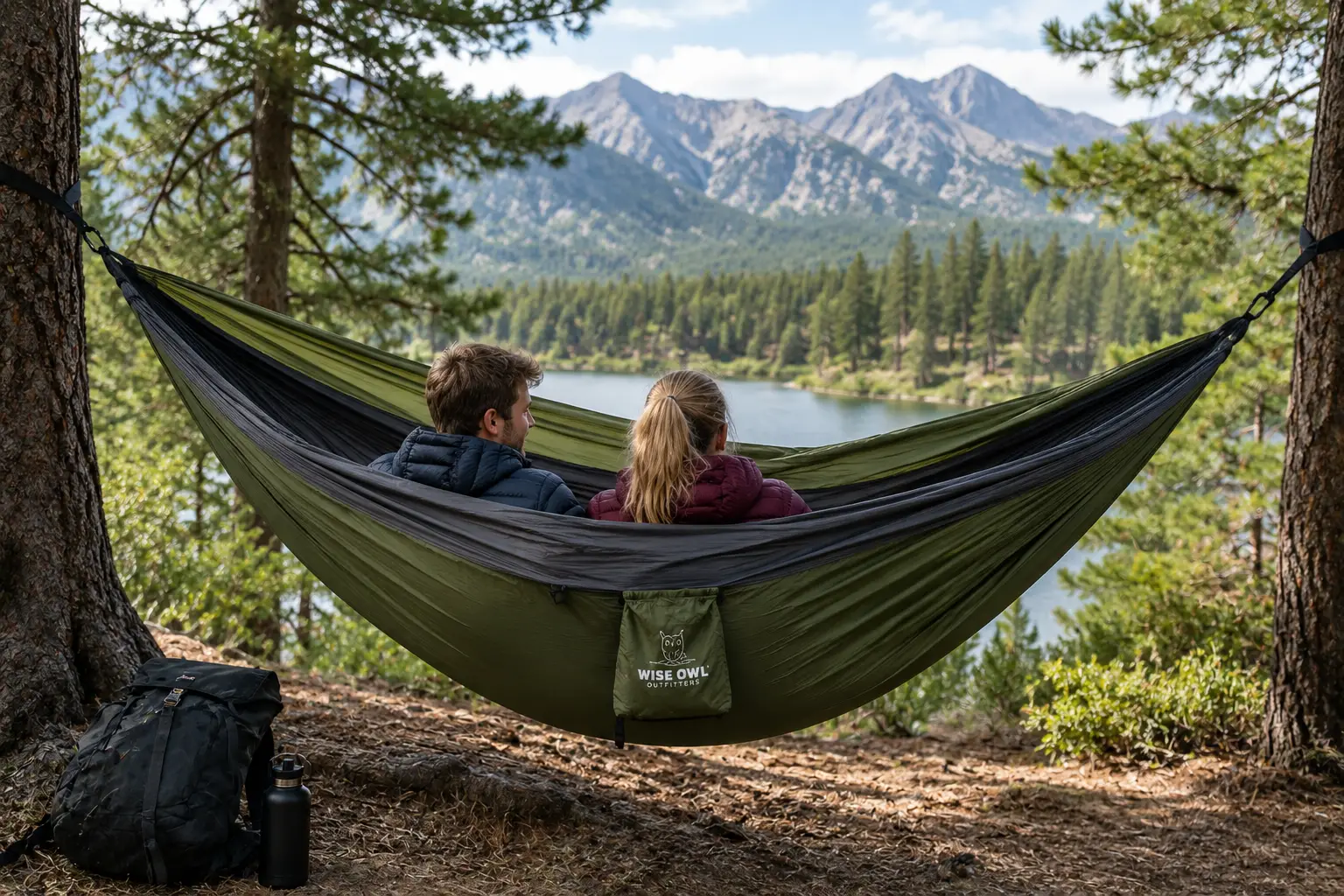
A double camping hammock is a two-person-rated hanging shelter, typically 9-11 feet long and made from ripstop or parachute nylon, designed to hold one sprawled-out sleeper or two people lounging together while suspended between two anchor points. If you’ve ever pitched a tent on a root-riddled slope at 9 p.m. with a headlamp in your teeth, you already understand the appeal. A double camping hammock skips the ground search entirely — you just need two healthy trees.
What most first-time buyers overlook is that “double” doesn’t automatically mean “sleeps two comfortably overnight.” It means extra width and a higher weight capacity, which most solo campers actually use to stretch out diagonally for a flatter, more comfortable lay. That distinction matters more than almost any spec on the label, and it’s one we’ll unpack throughout this guide.
Below, you’ll find seven real, currently available double camping hammocks spanning entry-level to premium, an honest breakdown of what separates them, and practical guidance on setup, safety, and long-term value — the kind of detail a bare Amazon listing simply won’t give you. According to the Consumer Product Safety Commission, hammock-related incidents are almost always tied to hardware failure or improper anchoring rather than the fabric itself, which is exactly why we spend as much time on straps and setup as we do on nylon denier.
Quick Comparison: Double Camping Hammocks at a Glance
| Hammock | Material | Weight Capacity | Straps Included | Price Range | Best For |
|---|---|---|---|---|---|
| ENO DoubleNest | 70D nylon taffeta | 400 lbs | No | $60–$75 | All-around comfort & brand ecosystem |
| Kammok Roo Double | 40D recycled ripstop | 500 lbs | No | $70–$100 | Premium comfort seekers |
| Wise Owl Outfitters Double | Parachute nylon | 500 lbs | Yes | $25–$35 | Budget-conscious beginners |
| Winner Outfitters Double | 210T parachute nylon | 500 lbs | Yes | $20–$30 | Absolute lowest cost |
| Onewind Aerie Double | 70D ripstop nylon | 400 lbs | No | $55–$70 | Bug-heavy climates |
| Kootek Double | 210T–217T parachute nylon | 500 lbs | Yes | $35–$45 | All-in-one bug protection value |
| Grand Trunk Double Deluxe | 210T/70D parachute nylon | 400 lbs | Yes | $35–$50 | Complete ready-to-hang kit |
Looking at this table, a clear pattern emerges: the gap between the cheapest and most expensive double camping hammock here is roughly $70, yet the weight capacity difference is often negligible. What you’re really paying for as you move up the price ladder is fabric softness, recycled or premium materials, and brand-backed warranty support — not necessarily raw durability. Budget picks like the Winner Outfitters Double and Wise Owl Outfitters Double compensate for their lower price by bundling straps and carabiners, which can offset $20–$30 you’d otherwise spend separately on the pricier, strap-free options like the ENO DoubleNest.
💬 Ready to stop overthinking and start hanging? Scroll down to see which double camping hammock fits your trip style.
Top 7 Double Camping Hammocks: Expert Analysis
1. ENO DoubleNest — the industry benchmark for comfort
The ENO DoubleNest earned its reputation the hard way: it’s been the go-to double camping hammock for over a decade, and it still holds up against newer competitors. Made from 70-denier nylon taffeta in a 9-foot by 6-foot-6-inch body, it comfortably fits two people lounging or one person sleeping diagonally with room to spare.
The fabric is noticeably thicker than most competitors in this price bracket, which translates to a more secure, less “swaddled” feel once you’re inside — reviewers consistently note that the extra material also lets you fold a flap over yourself for a makeshift wind and bug barrier on cool evenings. At roughly 19 ounces, it’s not the lightest double hammock around, but it’s light enough to disappear into a daypack without a second thought.
Based on comparing the specs against rivals, this is the pick for buyers who want the most tested, most widely supported ecosystem — ENO sells matching straps, bug nets, and rainflies that snap onto this exact model. Reviews consistently report that the DoubleNest is the easiest camping hammock to hang correctly on the first try, which matters enormously for beginners still learning proper tension and sag angle.
Pros:
- ✅ Widest accessory ecosystem of any hammock on this list
- ✅ Thicker fabric gives a more secure, confident feel
- ✅ Two-year manufacturer warranty against defects
Cons:
- ❌ Straps are sold separately, adding to the total cost
- ❌ Heavier than several newer ultralight competitors
The ENO DoubleNest typically runs in the $60–$75 range before straps. Given its track record and resale value, it’s a strong value pick if you’re willing to buy the suspension system separately.
2. Kammok Roo Double — the premium comfort upgrade
The Kammok Roo Double is the hammock reviewers reach for when comfort, not price, is the deciding factor. It’s built from GravitasX 40-denier diamond ripstop nylon — a recycled fabric that’s noticeably softer to the touch than standard parachute nylon — and it’s rated to an industry-leading 500-pound capacity.
What most buyers overlook with this model is how much the details matter: eight gear loops line each side for attaching a top quilt or hanging small essentials, and the climbing-grade Kanga Claw carabiners are rated to support thousands of pounds of force, well beyond anything a hammock setup would ever generate. At 10 feet long and 5 feet 7 inches wide, it’s genuinely roomy enough for a flat diagonal lay, which is the single biggest comfort factor in any hammock.
On paper, this means the Kammok Roo Double trades a bit of pack weight (it’s heavier than the ENO DoubleNest) for meaningfully better fabric feel and accessory versatility. Reviewers who’ve compared it directly to the ENO DoubleNest often describe the Roo’s fabric as the most premium-feeling in this category, though a few reviewers noted frustration that straps aren’t included despite the higher price tag.
Pros:
- ✅ Highest weight capacity on this list at 500 lbs
- ✅ Recycled, bluesign-approved fabric with a noticeably soft hand feel
- ✅ Eight gear loops per side for accessory attachment
Cons:
- ❌ Heaviest hammock in this roundup at over a pound
- ❌ Straps sold separately, adding another $20–$30
Expect to pay in the $70–$100 range depending on the recycled or standard version. For buyers who prioritize comfort over ounces, the Kammok Roo Double is worth the premium.
3. Wise Owl Outfitters Double — the beginner-friendly value pick
The Wise Owl Outfitters Double has become the default recommendation for first-time hammock campers, largely because it ships as a complete kit. Built from parachute nylon and rated to 500 pounds, it includes tree-friendly hanging straps and carabiners in the box, so there’s no separate purchase required before your first trip.
The parachute nylon is thinner than the DoubleNest’s taffeta, which keeps the packed size small and the overall weight low, but it also means the fabric feels less substantial in hand. What most buyers overlook is that this trade-off rarely affects real-world comfort — reviews consistently report that the hammock holds up fine for weekend car camping and backyard use, with complaints concentrated mainly around long-term durability under daily heavy use.
Based on comparing the specs, this is the clearest “get started without overthinking it” option in this guide. It’s a US-based, family-run company, which some buyers value for customer service responsiveness when a strap loop or carabiner needs replacing under warranty.
Pros:
- ✅ Tree straps and carabiners included in the box
- ✅ Genuinely budget-friendly at under $35
- ✅ Backed by a US-based company with responsive support
Cons:
- ❌ Thinner fabric than premium competitors
- ❌ Some reviewers report fading after months of heavy sun exposure
Priced around $25–$35, the Wise Owl Outfitters Double delivers strong value for anyone testing whether hammock camping suits them before investing further.
4. Winner Outfitters Double — the rock-bottom budget option
If price is your only constraint, the Winner Outfitters Double is difficult to beat. At 118 inches long by 78 inches wide, it’s actually larger than several pricier competitors, and it’s rated to hold up to 500 pounds using 210T parachute nylon with triple-locked stitching at the seams.
The kit includes two tree-friendly straps, two carabiners, and backup ropes, which means you can be hanging within minutes of opening the box — no separate strap purchase needed. What the spec sheet doesn’t say, but reviews reveal, is a split in long-term durability experiences: some owners report years of reliable use, while others note fabric wear or small rips after just a couple months of frequent, rough use, particularly with active kids.
Here’s what to weigh: at this price point, you’re essentially getting a “try hammock camping risk-free” product. If it becomes your primary gear, budget for an upgrade down the line; if it’s for occasional backyard lounging or the occasional weekend trip, it’s genuinely hard to beat the value.
Pros:
- ✅ Lowest price point of any hammock on this list
- ✅ Complete kit with straps, carabiners, and ropes included
- ✅ Larger footprint (118″ x 78″) than several pricier rivals
Cons:
- ❌ Fabric durability reports are inconsistent across reviews
- ❌ Not designed for frequent, heavy-duty backpacking use
Typically priced under $30, the Winner Outfitters Double is the safe entry point for anyone unsure whether hammock camping is worth the investment.
5. Onewind Aerie Double — built for bug-heavy trips
The Onewind Aerie Double takes a different approach: instead of a bare hammock body, it’s built as a single-panel shelter system with integrated bug netting sewn directly into the design. The body measures 11 feet wide by 64 inches long and uses 70-denier ripstop nylon, giving it enough width to sleep diagonally solo or lounge with a partner for an afternoon.
The seamless, single-panel construction is a genuine practical upgrade — it eliminates the stitching seams that can fail or unravel over time on cheaper multi-panel hammocks, and it means less chance of a gap where mosquitoes sneak in. Reviews consistently report that the effective bug netting is the standout feature, particularly for buyers camping in the Southeast or near standing water where insects are a bigger dealbreaker than comfort.
What most buyers overlook is that integrated netting like this saves you from buying a separate bug net accessory, which typically runs $20–$40 on its own — meaning the Aerie Double’s price premium over a bare hammock is often a wash once you account for what you’d otherwise need to add.
Pros:
- ✅ Integrated bug netting eliminates a separate accessory purchase
- ✅ Seamless single-panel build reduces stitching failure points
- ✅ Wide 11-foot body supports a comfortable diagonal lay
Cons:
- ❌ Bulkier packed size than bare hammocks without netting
- ❌ Straps typically sold as a separate bundle
Expect to pay in the $55–$70 range. For anyone camping in bug season, the Onewind Aerie Double likely pays for itself compared to buying netting separately.
6. Kootek Double — the all-in-one mosquito net bundle
The Kootek Double targets the same bug-conscious buyer as the Aerie but at a lower price point, using 210T to 217T parachute nylon rated to 500 pounds, with a mosquito net that hooks directly onto the hammock rather than requiring a separate suspension line. Tree-safe straps and D-shaped carabiners are included in the box.
What the spec sheet doesn’t say, but reviews reveal, is that the hooked-on netting design trades some of the roominess you’d get from a fully separate bug tent for genuine setup speed — you’re not fussing with a second ridgeline in the dark. Based on comparing the specs, this is a smart pick for campers who want mosquito protection but don’t want to manage two separate systems (hammock plus standalone net).
Reviews consistently report that the Kootek performs reliably for weekend and short backpacking trips, with the main critique being that the netting zipper can feel less durable than the hammock body itself after repeated use.
Pros:
- ✅ Bug net hooks directly to the hammock, no separate ridgeline needed
- ✅ Tree-safe straps and carabiners included in the box
- ✅ 500-lb capacity at a genuinely affordable price
Cons:
- ❌ Netting zipper reported as the weakest durability point
- ❌ Netted design feels roomier for one sleeper than two
Priced around $35–$45, the Kootek Double is one of the best value-for-features picks in this entire lineup.
7. Grand Trunk Double Deluxe — the complete ready-to-hang kit
The Grand Trunk Double Deluxe rounds out this list as the most complete out-of-box kit. Made from 210T/70D parachute nylon in a 10-foot-6-inch by 6-foot-6-inch body, it’s rated to 400 pounds and ships with triple-lock stitched seams, two nautical-grade carabiners, and two 5-foot tree-friendly straps wide enough to meet most park regulations that restrict thin rope or cord.
The extra fabric width compared to some rivals means you can achieve a flatter, lower-angle diagonal lay without your gear sliding to the edges — a small detail that reviewers repeatedly cite as the reason they prefer it over similarly priced competitors. What most buyers overlook is that the included 5-foot straps are shorter than premium 9-10 foot straps sold separately, which can limit your tree-spacing options on narrower or wider-set trees.
Here’s what to weigh: reviewers who’ve compared it side-by-side with the ENO DoubleNest often note the Grand Trunk feels just as durable and comfortable while costing noticeably less, largely because the suspension system is bundled rather than sold separately.
Pros:
- ✅ Complete kit with straps and carabiners included
- ✅ Wide body supports a comfortable, flat diagonal lay
- ✅ Competitively priced against strap-free premium rivals
Cons:
- ❌ Included straps are shorter than premium aftermarket options
- ❌ Weight capacity trails the top-rated 500-lb competitors
Typically priced in the $35–$50 range, the Grand Trunk Double Deluxe is a smart middle-ground pick between the ultra-budget and premium tiers.
💬 One click helps other shoppers make an informed choice too! 😊
How to Set Up Your Double Camping Hammock: A First-Timer’s Guide
Getting your hammock hung correctly the first time prevents most of the frustration new campers report. Start by choosing two healthy, living trees spaced roughly 12 to 17 feet apart — closer together and your sag angle gets too steep; farther apart and you’ll run out of strap length. Wrap your tree straps around each trunk at roughly eye level, clip in your carabiners, and connect the hammock so it forms a gentle “smile” curve, not a tight, flat line.
A common rookie mistake is over-tensioning the hammock, thinking a taut line equals more support. In reality, a properly sagged hammock (aim for roughly a 30-degree angle at the suspension point) actually distributes your body weight more evenly and delivers a flatter lay once you’re inside than a tight, banana-shaped setup. Before your first overnight trip, practice the full setup and takedown in your backyard at least once — reviewers who skip this step consistently report frustration fumbling with straps in the dark at a real campsite.
Once you’re in, the biggest comfort trick that most first-timers never discover on their own is lying diagonally rather than straight down the centerline. Because a double camping hammock is wider than a single, sleeping at roughly a 30-degree angle to the ridgeline flattens your body position dramatically, cutting down on the “cocoon” curve that causes shoulder and hip discomfort. For maintenance, rinse your hammock with fresh water after beach or dusty trips, and store it fully dry to prevent mildew — parachute and ripstop nylon dry fast, usually within an hour in direct sun.
Real-World Scenarios: Matching a Double Hammock to Your Trip
The weekend car camper on a budget: If you’re planning two or three trips a year with friends or a partner and don’t want to sink much money in before knowing if you’ll stick with it, the Winner Outfitters Double or Wise Owl Outfitters Double covers you completely, straps included, for under $35.
The bug-season backpacker: If your trips take you through the Southeast, near lakes, or into peak mosquito season, skip the separate bug net purchase entirely and go with the Onewind Aerie Double or Kootek Double, both of which build netting into the core design.
The comfort-first weekend couple: If you and a partner plan to actually spend hours lounging together rather than sleeping solo diagonally, the extra width and softer fabric of the Kammok Roo Double or ENO DoubleNest justifies the higher price — you’ll notice the fabric quality every single time you get in.
The frequent, multi-season adventurer: If hammock camping is becoming your primary shelter system rather than an occasional treat, the ENO DoubleNest‘s accessory ecosystem (rainflies, underquilts, bug nets designed specifically for it) makes it the easiest long-term platform to build on.
Common Double Hammock Problems (and How to Fix Them)
Problem: The hammock feels like it’s squeezing you from both sides. This is almost always caused by over-tightening the suspension. Loosen the straps until the hammock forms a visible curve — a looser hang nearly always feels more comfortable, not less.
Problem: You keep sliding toward the middle and can’t lie flat. This is simply physics — lying straight down the centerline of any hammock creates a curved, banana-like position. Shift diagonally at roughly 30 degrees, and the effect disappears almost entirely.
Problem: Straps are damaging tree bark. Thin rope or cord concentrates force on a small area of bark. Switch to wide, flat tree-friendly webbing straps (1 to 1.5 inches wide is the standard many parks require), which distribute pressure across a much larger surface.
Problem: The hammock feels damp or develops a musty smell. Nylon traps moisture if packed away wet. Always air-dry your hammock fully before stuffing it back into its sack, and avoid storing it in a sealed bag while even slightly damp.
Problem: Bugs are getting in around the edges of a bug net. Check that the net’s zipper is fully closed and that the netting reaches all the way to the hammock’s suspension points — gaps at the ends are the most common entry point reviewers report.
How to Choose a Double Camping Hammock
- Decide your primary use first. Backyard lounging, weekend car camping, and multi-day backpacking each favor different trade-offs between weight, price, and features.
- Check the weight capacity against your combined body weight. Most double hammocks are rated 400-500 lbs, but leave meaningful margin rather than buying right at the limit.
- Consider whether straps are included. Strap-free models like the ENO DoubleNest and Kammok Roo Double require a separate $20-$30 purchase that beginners often forget to budget for.
- Match the fabric to your climate. Thicker taffeta and ripstop fabrics feel more secure but dry slower; thinner parachute nylon packs smaller and dries faster in humid climates.
- Decide if you need integrated bug protection. If you camp in bug-heavy regions, a built-in net like the Onewind Aerie Double or Kootek Double saves both money and setup hassle versus buying one separately.
- Factor in packed size versus your trip type. Car campers can ignore packed weight almost entirely; backpackers should prioritize the lightest option that still meets their comfort needs.
- Read the warranty terms. Established brands like ENO and Grand Trunk back their products with defect warranties, which matters if you plan on years of regular use.
Double Camping Hammock vs. Traditional Tent Camping
A double camping hammock and a two-person tent solve the same core problem — overnight shelter — through fundamentally different approaches, and neither one wins in every category. Hammocks require zero ground prep; you can hang between two trees on a rocky, root-covered, or sloped site that would make tent camping miserable. That flexibility is the single biggest reason hammock camping has grown so quickly in popularity.
Tents, however, still win on weather protection and group size. A rainfly-equipped tent handles sustained downpours and high wind more predictably than most hammock setups (though hammock rainflies exist and work well when added), and tents obviously work regardless of tree availability — a genuine limitation above treeline or in desert terrain. Tents also allow more than two people to shelter together, while even the roomiest double hammock realistically tops out at two.
For colder-weather camping, hammocks need an underquilt or sleeping pad to prevent “cold butt syndrome,” since compressed insulation beneath your body loses most of its warming power — a cost and complexity tents don’t require. If your camping is mostly three-season, tree-available terrain, a double camping hammock is a legitimately lighter, more comfortable alternative; if you camp above treeline, in group settings, or through harsh winter conditions, a tent remains the more dependable choice.
What to Expect: Everyday Comfort and Performance
Getting into a hammock for the first time can feel unstable, and that sensation trips up more new buyers than any spec on a listing. Within a few uses, most people report the initial wobble disappears as their body learns to distribute weight and find the diagonal lay position. Expect a genuine learning curve of two to three uses before it feels intuitive rather than precarious.
Temperature regulation deserves real attention that Amazon listings rarely mention. Because you’re suspended in open air on all sides, a hammock loses heat faster underneath you than a tent floor does, even on a mild night. Reviewers who transition from tents to hammocks consistently underestimate this the first time out, waking up cold despite a warm-rated sleeping bag, simply because the bag’s insulation compresses flat beneath their body weight and stops insulating. An underquilt — a specialized piece of insulation that hangs beneath the hammock rather than compressing under you — solves this completely and is worth budgeting for if you plan on cool-weather trips.
On the comfort side, the diagonal lay technique genuinely delivers on its promise. Reviewers across nearly every model in this guide report that once they learned to lie at an angle rather than straight down the centerline, back and shoulder complaints from the “banana curve” position disappeared almost entirely, regardless of which specific hammock they owned.
Long-Term Cost and Maintenance
The sticker price of a double camping hammock rarely reflects its true cost of ownership. Strap-free models like the ENO DoubleNest and Kammok Roo Double typically add $20-$30 for a quality suspension system, while all-in-one kits like the Wise Owl Outfitters Double, Winner Outfitters Double, Kootek Double, and Grand Trunk Double Deluxe absorb that cost upfront in their listed price.
Beyond the initial purchase, budget for occasional replacement parts — carabiners and strap loops see the most wear over years of use, and most are replaceable individually for a few dollars rather than requiring a whole new hammock. Cold-weather campers should also plan for an underquilt (typically $80-$150) as a one-time investment that dramatically extends how many months of the year the hammock stays usable.
Maintenance itself is minimal and inexpensive: rinse with fresh water after saltwater or dusty use, air dry fully before storage, and inspect stitching and carabiner gates before each trip. Nylon fabrics used across every hammock in this guide typically last several years of regular use when stored dry, meaning the real long-term cost advantage goes to buyers who invest a little more upfront in a durable, well-reviewed model rather than replacing a failing budget option every season.
Safety, Regulations, and Standards for Hammock Camping
Hammock safety comes down almost entirely to hardware and anchor selection rather than the fabric itself, according to incident data tracked by the Consumer Product Safety Commission, which has issued recalls tied to strap buckle failures rather than fabric tears. Always inspect carabiners, stitching, and strap loops before each use, and never exceed the manufacturer’s stated weight capacity.
Tree selection and strap width matter for both safety and environmental compliance. Many public parks and campgrounds now require webbing straps at least 1 to 1.5 inches wide specifically because thin rope or cord can girdle and damage tree bark over repeated use — guidance echoed by university arboretum programs like Coastal Carolina’s tree-safe hammocking guidelines, which also recommend keeping your hammock no higher than roughly 18 inches off the ground in case of a fall.
Before hanging anywhere, look up for dead or hanging branches, and choose trees at least a few inches in diameter that show no signs of disease, insect damage, or root instability. Following straightforward practices — proper strap width, weight limits, and basic site inspection — turns hammock camping into one of the lower-risk outdoor shelter options available, provided you treat the hardware with the same care you’d give any load-bearing gear.
✨ Don’t miss these exclusive deals!
🔍 Take your double camping hammock search to the next level with this carefully curated lineup. Click a highlighted pick to check current pricing and availability. These options will help you get comfortable, bug-free nights outdoors the whole family will enjoy!
Frequently Asked Questions
❓ Is a double camping hammock comfortable for one person to sleep in overnight?
❓ What's the ideal weight capacity for a double camping hammock built for two?
❓ Do I need to buy tree straps separately for a double camping hammock?
❓ Can a double camping hammock be used without trees, like with a stand?
❓ How do I stay warm in a double camping hammock on cool nights?
Conclusion: Finding the Right Double Camping Hammock for You
A double camping hammock isn’t just a wider single — it’s a genuinely different camping experience once you learn the diagonal lay and get your suspension tension right. Across the seven real, currently available models in this guide, the honest takeaway is that there’s no single “best” pick, only the best match for your specific trip style, climate, and budget.
If you want the most tested, most widely supported option with a huge accessory ecosystem, the ENO DoubleNest remains the benchmark. If comfort and premium fabric matter more than price, the Kammok Roo Double delivers a noticeably softer, roomier experience. Budget-conscious beginners are well served by the Wise Owl Outfitters Double or the even more affordable Winner Outfitters Double, both of which include everything needed to hang on your first trip. Campers heading into bug-heavy terrain should look first at the Onewind Aerie Double or Kootek Double, and anyone wanting a complete, balanced kit at a fair price should strongly consider the Grand Trunk Double Deluxe.
Whichever double camping hammock you choose, the fundamentals stay the same: check the weight capacity honestly, use wide tree-friendly straps, practice your setup before a real trip, and give yourself two or three outings to get comfortable with the diagonal lay. Once it clicks, it’s genuinely hard to go back to sleeping on the ground.
💬 One click helps other shoppers make an informed choice too! 😊
Recommended for You
- 7 Best Metal Frame Hammocks of 2026: Sturdy vs. Flimsy Picks
- Hammock Throne: 7 Best Hanging Chairs for Ultimate Relaxation in 2026
- Giant Hammock: 7 Best Extra-Large Hammocks for Relaxing Outdoors in 2026
Disclaimer: This post contains affiliate links. As an Amazon Associate, I earn from qualifying purchases made through these links, at no additional cost to you.
✨ Found this article helpful? Share it with someone who needs it! 💬🤗