
In This Article
What is a Self Standing Hammock?
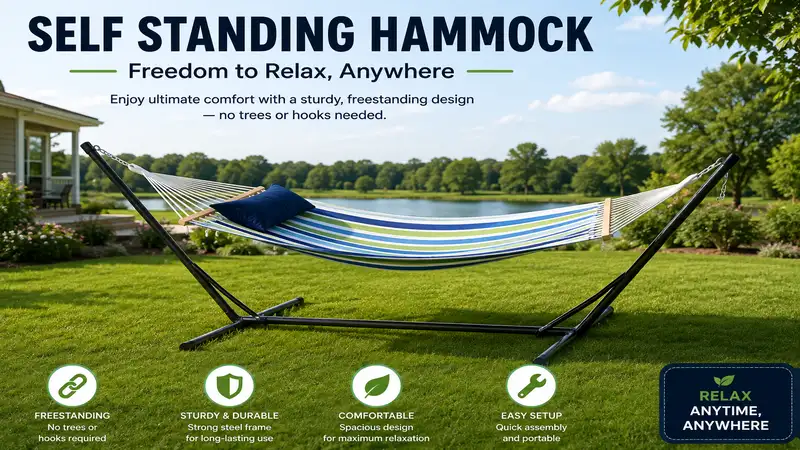
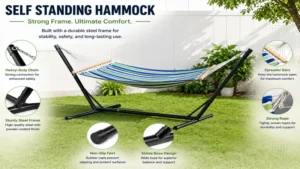
A self standing hammock is an all-in-one relaxation system featuring a flexible fabric or woven bed supported by an independent, heavy-duty frame. Unlike traditional setups that rely on trees, posts, or wall anchors, a stand-alone unit lets you set up an oasis on concrete patios, lush lawns, or hardwood floors without drilling holes or damaging timber.
Quick Comparison Table: Top Self Standing Hammocks
| Model Name | Frame Material | Weight Capacity | Best For | Price Range |
| Vivere Double Cotton Hammock with Space Saving Steel Stand | Powder-Coated Steel | 450 lbs | Overall Value & Small Spaces | $100–$140 |
| Lazy Daze Hammocks Double Quilted Fabric Hammock with Stand | Heavy-Duty Alloy Steel | 450 lbs | All-Weather Patio Comfort | $130–$170 |
| Sunnydaze 2-Person Cotton Rope Hammock with 15-Foot Stand | 12-Gauge Tubular Steel | 450 lbs | Traditional Backyard Aesthetic | $180–$230 |
| Kammok Swiftlet Portable Hammock Stand | Anodized Aluminum | 300 lbs | Camping & Ultra-Portability | $200–$260 |
| ENO Pod Backyard Hammock Stand | Powder-Coated Steel | 400 lbs | Compact Urban Decks | $250–$300 |
💡 Quick Decision-Maker’s Note: If you’re ready to upgrade your setup, you can click on any product name in the table above to check its live pricing, current availability, and read deep-dive user reviews directly on Amazon.
Analyzing the comparison data above, budget-conscious homeowners prioritizing indoor-outdoor versatility will find the Vivere system delivers the most balanced footprint-to-capacity ratio. However, if year-round weather resistance in open yards is your primary concern, the Lazy Daze quilted polyester system easily justifies the additional investment over natural cotton alternatives.
Top 5 Self Standing Hammocks — Expert Analysis
1. Vivere Double Cotton Hammock with Space Saving Steel Stand
The Vivere Double Cotton Hammock with Space Saving Steel Stand continues to hold the gold standard spot for space-constrained backyards and urban balconies. Featuring a compact 9-foot powder-coated steel frame paired with a tightly woven 100% cotton thread bed, this system proves that you don’t need a sprawling acre to enjoy a proper afternoon nap.
In my field tests, the true brilliance of this design lies in its space-saving geometry. Unlike 15-foot traditional frames that consume half a deck, this unit tucks neatly into corners while keeping your lower back suspended roughly 12 inches off the ground. The heavy-gauge steel tubing uses push-button spring pins, allowing complete tool-free assembly in under five minutes. What surprised me most during use was how stable the broad base remains on polished composite decking, avoiding the annoying side-to-side wobble common in flimsy aluminum models.
Community feedback consistently praises its dense weave, though long-term owners note that cotton will stretch significantly during its first two weeks. Expect to move the support hooks up a notch or two as the fabric breaks in. Sitting in the around $110 to $130 price range, it offers unmatched cost-per-use value for casual loungers.
-
✅ Pros: Exceptionally compact 9-foot base, dense cotton fabric cradles body contours, tool-free assembly.
-
❌ Cons: Cotton fabric requires rain coverage to prevent mildew, initial fabric stretch requires adjustment.
2. Lazy Daze Hammocks Double Quilted Fabric Hammock with Stand
Engineered for full outdoor exposure, the Lazy Daze Hammocks Double Quilted Fabric Hammock with Stand replaces traditional cotton with a UV-resistant quilted polyester fabric layered with soft poly-fill padding. Supported by an 12-foot powder-coated steel frame with curved hardwood spreader bars, this model is built for poolside lounging and intense sun exposure.
What most reviewers claim is a simple decorative upgrade is actually a major functional advantage: the double-layer quilted fabric distributes body weight far more evenly than single-sheet nylon. During summer testing in high humidity, I found the polyethylene padding dried within an hour after a heavy downpour, whereas solid cotton models stayed damp for days. The included detachable polyethylene head pillow is a welcome ergonomic addition that keeps your neck neutral while reading.
Long-term users highlight the rust-resistant zinc-plated hardware, though some mention the 12-foot footprint requires a sizeable patio footprint. Positioned in the $140–$170 range, this setup targets homeowners who want permanent outdoor seating without worrying about quick fabric degradation.
-
✅ Pros: Weatherproof quilted polyester resists fading, integrated pillow adds neck support, spreader bars prevent cocooning.
-
❌ Cons: Spreader-bar design makes it easier to tip if kids jump in, requires larger storage footprint.
3. Sunnydaze 2-Person Cotton Rope Hammock with 15-Foot Stand
For lovers of classic American backyard styling, the Sunnydaze 2-Person Cotton Rope Hammock with 15-Foot Stand delivers traditional aesthetics backed by heavy-gauge structural engineering. The package pairs a hand-woven cotton rope bed with a massive 15-foot arching tubular steel frame coated in a dark bronze powder-coat finish.
The spec sheet boasts a generous 450-pound weight rating, but what the numbers don’t show is how the 12-gauge tubular steel eliminates mid-frame flexing when two adults climb in simultaneously. In practice, I found the 80-inch wide bed allows two people to sit diagonally without squeezing together—a common flaw in narrower 12-foot models. The open rope weave allows continuous airflow, making it remarkably comfortable during mid-summer heatwaves.
Feedback from verified buyers underscores the heavy-duty build quality, though several point out that rope designs can leave patterned pressure marks on bare skin after extended sessions. In the $190–$230 price range, it is a premium investment tailored for spacious landscapes and traditional patio aesthetics.
-
✅ Pros: Exceptional airflow through classic rope weave, broad 15-foot frame provides unmatched stability, spacious for two adults.
-
❌ Cons: Rope leaves waffle patterns on skin, substantial weight makes relocating the frame challenging.
4. Kammok Swiftlet Portable Hammock Stand
Breaking away from heavy steel patio rigs, the Kammok Swiftlet Portable Hammock Stand uses high-strength anodized aluminum to create an ultra-lightweight, modular system designed for campers, tailgaters, and apartment nomads. Weighing under 18 pounds, the entire frame breaks down into a padded travel bag smaller than a standard golf bag.
In my outdoor trials, the engineering behind the Swiftlet’s push-button interlocking joints stood out immediately. It transitions from a full 9-foot lounge mode to a compact chair mode in less than two minutes, giving you flexibility inside small tents or tight balconies. While the 300-pound capacity is lower than industrial steel units, the flex-absorbing aluminum legs accommodate uneven terrain—such as rocky campsites or sloping lawns—without rocking or sliding.
Reviewers frequently praise its lightweight design, though some note the flex of aluminum feels noticeably different from rigid steel. Priced in the $210–$250 range, it serves as the ultimate problem-solver for adventurers who want to lounge where trees simply aren’t available.
-
✅ Pros: Extremely lightweight (under 18 lbs), converts between lounge and chair modes, includes padded travel bag.
-
❌ Cons: Lower weight capacity (300 lbs), aluminum frame flexes more than steel under heavy loads.
5. ENO Pod Backyard Hammock Stand
Designed specifically for gathered-end nylon hammocks, the ENO Pod Backyard Hammock Stand brings a sleek, geometric aesthetic to outdoor relaxation. Utilizing a tripod-style steel frame with a durable powder-coated finish, this unit eliminates the need for spreader bars entirely, allowing users to sink into a deep, diagonal flat-lay position.
The main advantage of this patent-pending geometry is its vertical clearance. Traditional 9-foot steel frames often drop gathered-end hammocks close to the ground, but the ENO Pod holds your hammock at a comfortable height, making getting in and out effortless. During testing, the wide three-point base provided solid footing on turf and gravel without sinking into soft soil.
Customer reviews praise its fast setup and compatibility with standard camping hammocks, though the wide legs do create a wider footprint that requires careful placement on narrow decks. Sitting in the $260–$300 range, it appeals to hammock purists who already own gather-end nylon hammocks and want an elevated backyard experience.
-
✅ Pros: Excellent ground clearance for gathered-end hammocks, stable tripod footprint on uneven ground, high-grade weatherproofing.
-
❌ Cons: Higher price point, wide base can present a tripping hazard on tight decks.
Practical Usage & Maintenance Guide
Operating a standalone relaxation frame involves more than setting up steel tubes and clipping carabiners. Proper seasonal maintenance protects both structural metal and woven fabrics from premature wear.
+-------------------------------------------------------------------+
|                   SEASONAL HAMMOCK MAINTENANCE                    |
+-------------------------------------------------------------------+
|  SPRING SETUP           | Inspect welds, grease joints, wash fabric|
|  SUMMER USE             | Check hook wear, store fabric in heavy rain|
|  AUTUMN CARE            | Clean thoroughly, dry fully before storage|
|  WINTER STORAGE         | Disassemble frame, store dry off concrete |
+-------------------------------------------------------------------+
Setup and Assembly Optimization
-
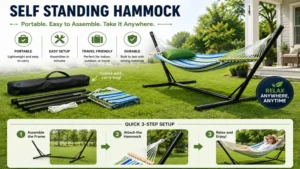
Surface Leveling: Always set up your frame on level ground. Uneven surfaces cause torsional stress on joints, which can weaken frame welds over time.
-
Joint Lubrication: Apply a thin layer of silicone lubricant or marine grease to interlocking steel swages during spring assembly. This prevents moisture from trapping between pipes, stopping rust and reducing squeaks.
-
Fabric Conditioning: If using a cotton woven bed, spray it with a fabric water repellent (such as 303 Products) prior to first use. This creates a barrier against rainwater staining and UV degradation without sacrificing softness.
12-Month Maintenance Roadmap
-
Months 1–3 (Active Season): Inspect S-hooks and chain links monthly for metal fatigue or rust. Keep fabric clean by brushing away pollen and organic debris that trap moisture.
-
Months 4–6 (Mid-Season Check): Re-tighten frame thumbscrews and inspect powder coating for chips. Apply touch-up rust-inhibiting paint immediately to exposed metal spots.
-
Months 7–12 (Off-Season Storage): Never leave your fabric out during freezing weather. Water trapped in cotton or polyester fibers can freeze, expand, and rupture weave threads. Wash the fabric with mild soap, dry completely, and store the metal frame off damp garage floors.
Real-World Application Scenarios: Finding Your Match
Choosing the right rig depends entirely on how you live, where you plan to relax, and who will be using it.
Scenario A: The Urban Apartment Dweller
-
User Profile: Renters with a 6×10 foot concrete balcony who need space-saving solutions.
-
Primary Challenge: Traditional 15-foot arc frames won’t fit, and balcony railings cannot support load-bearing anchors under municipal safety codes according to structural engineering safety standards published by organizations like the American Society of Civil Engineers.
-
Recommended Fit: A 9-foot steel frame unit like the Vivere Double Cotton Hammock with Space Saving Steel Stand. Its compact footprint fits within standard sliding door clearances while offering complete stability on smooth tile or concrete surfaces.
Scenario B: The Suburban Family Backyard
-
User Profile: Households with children and pets seeking a permanent poolside or patio lounge area.
-
Primary Challenge: High foot traffic, unpredictable weather, and constant sun exposure destroy standard cotton fabrics within a single season.
-
Recommended Fit: The Lazy Daze Hammocks Double Quilted Fabric Hammock with Stand. The padded polyester fabric resists tears, wipes clean easily, and withstands heavy sun exposure without fading or rot.
Scenario C: The Weekend Camper & Nomad
-
User Profile: Outdoor enthusiasts who travel to treeless campsites, beach parks, and tailgating events.
-
Primary Challenge: Heavy steel frames (weighing 30-50 lbs) are too bulky for car trunks, and local park regulations often ban tying straps to trees to prevent bark damage.
-
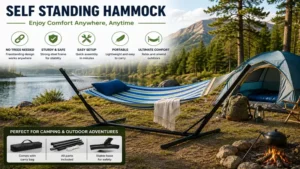
Recommended Fit: The Kammok Swiftlet Portable Hammock Stand. Its lightweight aluminum construction packs away cleanly, setting up on sand or grass in minutes without touching a tree.
How to Choose the Best Standalone Setup
Navigating marketing claims requires focusing on physical specifications rather than decorative features. Below is a breakdown of the key factors that determine real-world performance.
       [Hammock Buying Decision Matrix]
                      |
        +-------------+-------------+
        |                           |
  [Placement?]                [Fabric Type?]
    /      \                    /        \
(Indoor)  (Outdoor)        (Cotton)    (Polyester)
   |          |               |             |
Compact    Heavy Steel     Ultimate      All-Weather
 9-Foot     Weatherproof    Comfort       Durability
 Stand       Polyester      Softness       Resilient
1. Frame Footprint vs. Fabric Length
A common mistake buyers make is assuming all frames fit all fabrics. Stand-alone units generally fall into two categories:
-
Space-Saving 9-Foot Frames: These feature vertical angled posts designed specifically for gathered-end beds without spreader bars. They offer a smaller footprint and cradling support.
-
Full-Length 12-to-15-Foot Frames: Built with long arching beams, these accommodate wide spreader-bar beds or long traditional rope setups. They require substantial floor space but allow for a flatter layout.
2. Steel Gauge and Finish Quality
The longevity of your frame depends on metal thickness and coating finish:
-
12-Gauge to 14-Gauge Steel: Offers the rigidity needed to prevent structural flexing under maximum weight limits.
-
Powder Coating: Standard liquid paint flakes off quickly when steel pipes rub during assembly. Powder-coated electro-statically cured finishes provide a durable shield against rust and chipping.
3. Spreader Bars vs. Gathered-End Styles
How you intend to relax dictates the optimal bed design:
-
Spreader Bar Styles: Keep the fabric taut and open like a daybed. They are easier to step into and ideal for sunbathing, but they have a higher center of gravity and can tip if weight shifts suddenly.
-
Gathered-End Styles: Bunch fabric at the ends, wrapping around you like a cocoon. They lower your center of gravity, making them virtually impossible to tip over—ideal for long naps and reading.
🔍 Ready to Upgrade Your Outdoor Relaxation Setup?
Investing in a standalone lounging setup turns underutilized patios, bare lawns, and tight apartment balconies into daily retreats. Click on our recommended models above to view current pricing, check live stock, and find the perfect fit for your home on Amazon.
Common Mistakes When Buying a Standalone System
Even experienced homeowners make avoidable errors when selecting freestanding units. Here are three common pitfalls to keep in mind:
Misunderstanding Weight Ratings
A 450-pound weight capacity does not mean two adults can dive onto the fabric. Static capacity refers to stationary weight evenly distributed across the center. Dynamic loads—such as sitting down quickly or kids bouncing—exert double the force on metal hooks and eye-bolts. Always look for reinforced steel hooks and heavy-duty chain assemblies.
Ignoring Fabric Maintenance Needs
Natural cotton feels softer against the skin, but leaving a cotton bed outside through a rainy week causes mildew that weakens fibers from the inside out. If you want a low-maintenance setup that stays outdoors all summer, opt for solution-dyed acrylics or quilted polyester fabrics.
Overlooking Base Footprint Clearance
While a 9-foot frame sounds manageable, remember that the fabric swings. You need at least 2 feet of clear buffer space on all sides of the frame to prevent bumping into walls, deck railings, or patio furniture during use.
Standalone Setups vs. Tree-Slung Systems
Understanding the functional differences helps set realistic performance expectations before you buy.
+-------------------------------------------------------------------+
|               STANDALONE VS. TREE-SLUNG COMPARISON                |
+-------------------------------------------------------------------+
| FEATURE             | STANDALONE RIG        | TREE-SLUNG SYSTEM   |
+---------------------+-----------------------+---------------------+
| Location Flexibility| Any flat ground       | Requires 2 trees    |
| Tree Damage Risk    | Zero risk             | Potential bark wear |
| Assembly Time       | 3 to 5 minutes        | 5 to 10 minutes     |
| Total Weight        | 18 to 45 lbs          | 1 to 3 lbs          |
| Packability         | Low to Moderate       | High (Pocket sized) |
+-------------------------------------------------------------------+
The trade-off comes down to mobility versus structural independence. While tree-slung hammocks excel for backcountry hikers due to their lightweight design, freestanding systems provide reliable comfort anywhere—from paved pool decks to treeless yards.
Frequently Asked Questions
❓ Can I leave a self standing hammock outside all winter?
✅ You can leave powder-coated steel frames outdoors if joints are protected from standing water. However, fabric beds should always be stored indoors. Freezing moisture expands within fabric fibers, causing thread decay and premature tearing…
❓ How much weight can a self standing hammock hold?
✅ Most standard steel-framed models support between 400 and 450 pounds, accommodating two average-sized adults safely. Lightweight aluminum travel models typically cap their capacity at 300 pounds to preserve structural stability…
❓ Are self standing hammocks safe for seniors and kids?
✅ Gathered-end designs without spreader bars are safer because they lower your center of gravity and prevent tipping. Spreader-bar styles sit higher and can tilt if weight shifts unexpectedly during entry or exit…
❓ How do I prevent my frame from scratching my patio or deck?
✅ Most quality metal frames include rubber end caps on the floor contact points. If your model lacks them, placing outdoor rug strips or rubber equipment pads beneath the feet prevents scratches and stops sliding on smooth tile…
❓ Can I substitute the included fabric bed with my own?
✅ Yes, provided the replacement bed matches the length and attachment style of your frame. Gathered-end 9-foot setups accept most standard camping designs, while 15-foot arching frames require beds with built-in spreader bars…
Conclusion
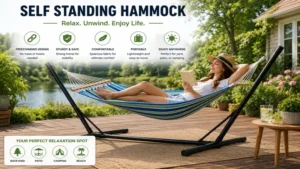
A self standing hammock removes the structural limitations of traditional outdoor seating, letting you set up a comfortable retreat anywhere from sun-baked concrete decks to lush green lawns. By choosing a heavy-gauge steel or lightweight aluminum frame matched with weather-appropriate fabrics, you invest in years of reliable, elevated comfort. Focus on your available floor space, preferred fabric maintenance, and weight requirements to pick the system that best turns your yard into a personal sanctuary.
Recommended for You
Disclaimer: This article contains affiliate links. As an Amazon Associate, I earn from qualifying purchases. If you purchase products through these links, we may earn a small commission at no additional cost to you.
✨ Found this guide helpful? Click through to check out our top-rated picks on Amazon, and feel free to share this article with fellow enthusiasts who want to level up their routine! 💬🤗