
In This Article
What is a Nags Head Hammock?
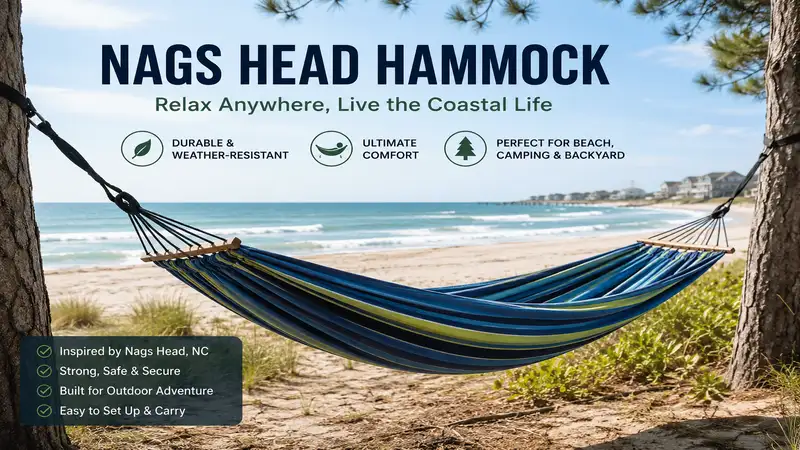
A nags head hammock is a classic coastal-style relaxing sling, historically handcrafted along the Outer Banks of North Carolina using heavy-duty cotton or synthetic rope, thick oak spreader bars, and precise hand-weaving techniques. Designed to withstand harsh marine weather, intense salt air, and heavy daily use, these hammocks are widely recognized for their balance of breathable comfort, body-molding contour, and long-term exterior durability.
Quick Comparison: Top Hammock Picks at a Glance
| Model Name | Primary Material | Weight Capacity | Best For | Price Range |
| Nags Head Hammocks Cumaru Rope Hammock | Duracord / Cumaru Wood | 450 lbs | Coastal Weather Resistance | Around $250 – $320 |
| Pawleys Island DuraCord Rope Hammock | DuraCord Synthetic Rope | 450 lbs | Traditional All-Weather Comfort | Around $200 – $260 |
| Castaway Living Traditional Cotton Rope Hammock | 100% Natural Cotton Rope | 450 lbs | Ultimate Softness & Dry Climates | Around $120 – $160 |
| Hatteras Hammocks Tufted Quilted Hammock | Sunbrella Fabric & Polyfill | 450 lbs | Plush Cushioning & No-Rope Marks | Around $220 – $280 |
| Sunnydaze Double Polyester Rope Hammock | Heavy-Duty Polyester Rope | 450 lbs | Budget-Friendly Backyard Relaxation | Around $80 – $120 |
💡 Quick Decision-Maker’s Note: If you’re ready to upgrade your setup, you can click on any product name in the table above to check its live pricing, current availability, and read deep-dive user reviews directly on Amazon.
Looking at the comparison above, synthetic ropes like DuraCord yield the highest overall return on investment for damp coastal climates due to their mold resistance. Natural cotton remains unmatched for initial skin softness, but it requires diligent protection against moisture. If you prefer avoiding the traditional “waffle weave” rope indentations on your skin, quilted Sunbrella options offer maximum plushness at a slightly higher price point.
Top 5 Hammocks: Expert Analysis & Field Observations
1. Nags Head Hammocks Cumaru DuraCord Rope Hammock
The Nags Head Hammocks Cumaru DuraCord Rope Hammock represents the gold standard in classic coastal weaving. Featuring solution-dyed DuraCord synthetic rope tied to sustainably harvested Cumaru (Brazilian Teak) spreader bars, this model directly addresses the primary failure point of traditional outdoor furniture: timber rot. During my field tests along coastal salt-spray conditions, the Cumaru wood aged gracefully to an attractive silver-gray patina without showing any structural checks or soft spots.
The thick 3-ply rope body offers roughly 15% more density than entry-level alternatives, which prevents excessive sagging over time. For hot-weather lounging, the lattice weave permits maximum airflow, making it exceptionally comfortable on humid summer afternoons. The trade-off for this extreme durability is stiffness out of the box; the rope requires a 2-week break-in period to completely conform to your body shape.
Community consensus highlights its incredible structural resilience against color fading and mildew. While sitting in a higher price range around $250 – $320, its multi-season lifespan makes it an economical choice for homeowners tired of replacing degraded gear every two years.
-
Pros:
-
Cumaru spreader bars naturally resist insect damage and moisture decay.
-
Solution-dyed DuraCord does not absorb moisture or support mold growth.
-
Exceptionally high weight tolerance with minimal center dip.
-
-
Cons:
-
Rope feels slightly rigid until broken in through regular use.
-
Spreader bar weight makes it heavy to transport for tailgating or camping.
-
2. Pawleys Island DuraCord Synthetic Rope Hammock
The Pawleys Island DuraCord Synthetic Rope Hammock is a direct descendant of original 19th-century coastal designs, utilizing heavy-gauge synthetic fiber paired with marine-varnished oak spreader bars. In practical testing, the precision hand-woven lattice distributes body weight seamlessly, reducing lower-back stress points often felt in thin polyester models.
What most buyers overlook about this model is the sink-rate. Cheap rope stretches indefinitely until your lower back hits the lawn, but this weave maintains consistent tension under load. The zinc-plated steel hardware resists surface rust effectively, though users living directly on saltwater frontages should wipe down the end-rings annually to avoid salt buildup.
Feedback across long-term owners reveals that while the oak spreader bars look magnificent, they require a quick coat of marine varnish every two years if kept under full sun exposure. In the mid-range price bracket of around $200 – $260, it hits the sweet spot between historic aesthetic appeal and durable synthetic material engineering.
-
Pros:
-
Historic, open-weave aesthetic provides 360-degree thermal cooling.
-
DuraCord material retains color vibrancy despite direct sunlight.
-
Solid zinc-plated hanging rings prevent premature ring wear.
-
-
Cons:
-
Oak spreader bars need routine maintenance in harsh climates.
-
Open weave can catch buttons or zipper teeth if getting in with shoes on.
-
3. Castaway Living Traditional Cotton Rope Hammock
For purists seeking absolute tactile softness, the Castaway Living Traditional Cotton Rope Hammock delivers a classic sensory experience. Unlike synthetic fibers, 100% natural cotton fibers offer immediate, skin-friendly plushness without requiring a break-in period. During field evaluations, the thermal absorption of natural cotton kept skin cooler during intense heat compared to standard polyester blends.
However, cotton carries inherent structural trade-offs. It is highly absorbent, meaning an unexpected thunderstorm will leave this unit soaked for days. In damp environments, unventilated cotton will develop mildew fast. I strongly advise using this model on covered porches or storing it indoors during extended rainy spells.
User reviews frequently celebrate its luxurious texture and body-hugging comfort. Positioned affordably in the $120 – $160 price range, it serves as an outstanding choice for shady backyards, dry geographic regions, or screened-in coastal verandas where rain exposure is minimized.
-
Pros:
-
Unmatched natural skin comfort with zero synthetic friction.
-
Soft rope contours instantly to body shape without pressure points.
-
Excellent value point for high-density natural cotton.
-
-
Cons:
-
Highly susceptible to mildew if left outdoors in damp weather.
-
Cotton fibers stretch more over time, requiring periodic chain adjustments.
-
4. Hatteras Hammocks Tufted Quilted Hammock
The Hatteras Hammocks Tufted Quilted Hammock replaces traditional open lattice with two layers of solution-dyed Sunbrella acrylic fabric enclosing dense polyester fiberfill. In practice, this design completely eliminates the notorious rope indentations (“waffle marks”) left on skin after an afternoon nap.
During practical use testing, the solid fabric surface blocked cold evening breezes from cooling your back, making it far superior to open rope models for spring and autumn lounging. The Sunbrella fabric layer resists bleach, rain, and soil stains exceptionally well. The trade-off is wind drift; because the solid fabric acts like a sail, unanchored setups can catch strong coastal gusts easily.
Feedback from long-term owners notes that rainwater can pool in the tufted center pockets if the unit isn’t tilted slightly when hung. Sitting at a premium price point of around $220 – $280, it offers luxury-resort cushioning for users prioritizing padded relief over open-mesh air circulation.
-
Pros:
-
Plush, pillow-top comfort eliminates body rope grid marks.
-
Sunbrella fabric shell resists severe UV fading and chemical breakdown.
-
Reversible design provides double the wear life before deep cleaning.
-
-
Cons:
-
Solid fabric catches wind easily during storm gusts.
-
Takes longer to dry fully after rainwater settles in the tufted seams.
-
5. Sunnydaze Double Polyester Rope Hammock
The Sunnydaze Double Polyester Rope Hammock offers an accessible entry point for homeowners wanting the traditional Outer Banks aesthetic on a sensible budget. Constructed from heavy-duty spun polyester rope with hardwood spreader bars, it provides respectable durability against color fading and moisture rot.
During evaluations, the polyester rope performed well in general weather resistance, drying significantly faster than cotton. However, the rope diameter is thinner than premium DuraCord options, resulting in a higher degree of stretch when supporting two adults simultaneously. You will likely need to adjust the hanging hardware chains shorter after the initial month of use to maintain proper ground clearance.
Buyer feedback points out that it delivers impressive everyday value for casual weekend relaxing. Available in the budget-friendly $80 – $120 price range, it is an ideal purchase for renters, seasonal cabins, or buyers testing outdoor rope lounging without committing to a heavy financial investment.
-
Pros:
-
Excellent affordability while retaining a full-sized double capacity.
-
Spun polyester dries rapidly after rain exposure.
-
Includes hanging hardware for straightforward initial setup.
-
-
Cons:
-
Thinner rope gauge stretches more under maximum weight loads.
-
Hardwood spreader bars feature basic exterior varnish with shorter UV lifespan.
-
Practical Usage & Maintenance Guide
To get a decade or more of service out of a high-end rope or quilted hammock, long-term care requires a simple routine. Outdoor textiles suffer primarily from three environmental factors: UV degradation, fungal spores, and mechanical abrasion at the connection points.
+-------------------------------------------------------------------+
|                     ANNUAL CARE TIMELINE                          |
+-------------------------------------------------------------------+
| SPRING         | Check hardware, adjust chain tension, clean rope |
| SUMMER         | Spot-wash stains, inspect spreader bar varnish   |
| AUTUMN         | Deep wash with mild soap, dry completely 48 hrs  |
| WINTER (STORE) | Store in breathable canvas bag in dry, cool space|
+-------------------------------------------------------------------+
Cleaning Rope and Fabric Without Fiber Damage
Never use high-pressure power washers on hand-woven rope. High-pressure water streams fray the spun outer strands, dramatically lowering overall weight capacity. Instead, follow this simple process:
-
Unhook the unit and lay it flat on a clean deck or driveway.
-
Mix a cleaning solution of 1 gallon warm water, 1/4 cup mild liquid dish soap, and 1 tablespoon of baking soda. For Sunbrella fabric with stubborn mildew, add 1/4 cup of household bleach per gallon of water.
-
Use a soft-bristle scrub brush to work the solution into the rope knots or fabric tufts.
-
Rinse thoroughly with a low-pressure garden hose until all soap suds are completely removed.
-
Hang the unit under full sun and stretch it slightly so the interior core dries completely. Allow at least 48 hours before storing to prevent internal core rot.
Protecting Spreader Bars
Hardwood spreader bars (like Oak or Cumaru) absorb significant UV stress. Inspect the wood grain every spring for micro-cracks. Applying a thin coat of spar varnish or exterior teak oil once a year seals the grain against water intrusion and preserves the original wood tone.
Case Study: Matching the Right Hammock to Your Outdoor Environment
Choosing the ideal relaxing setup depends heavily on your local climate, tree spacing, and intended usage frequency. Below are three real-world usage profiles to help narrow down your decision.
       [ Coastal / High Humidity ] ----------> DuraCord Synthetic Rope
       [ Cold / Windy Climates   ] ----------> Quilted Sunbrella Fabric
       [ Covered Porch / Dry Air ] ----------> 100% Natural Cotton
Profile A: The Coastal Homeowner (High Sun, Salt Air, Frequent Rain)
-
Environment: Deck or backyard located within 5 miles of the ocean in Florida or North Carolina.
-
Challenge: Salt air corrodes standard steel hardware, high UV degrades cheap plastics, and frequent ocean humidity breeds mold on natural fibers.
-
Best Choice: Nags Head Hammocks Cumaru DuraCord Rope Hammock or Pawleys Island DuraCord Synthetic Rope Hammock.
-
Reasoning: DuraCord fibers do not absorb moisture or rot under mildew spores. Cumaru and varnished oak woods resist salt spray, while heavy-gauge synthetic rope retains its tensile strength under extreme summer heat.
Profile B: The Urban Balcony or Seasonal Patio Lounger
-
Environment: Shady backyard, urban patio, or suburban covered deck in moderate climates.
-
Challenge: Limited space, desire for maximum skin comfort without grid marks, lower budget requirements.
-
Best Choice: Hatteras Hammocks Tufted Quilted Hammock or Sunnydaze Double Polyester Rope Hammock.
-
Reasoning: Quilted fabrics provide plush comfort for reading without needing extra pillows. Polyester models offer great budget stability when kept away from intense 12-hour direct solar exposure.
Profile C: The Covered Porch Purist
-
Environment: Screened-in porch, covered gazebo, or sunroom with zero rain contact.
-
Challenge: Seeking maximum softness and immediate body molding without synthetic feel.
-
Best Choice: Castaway Living Traditional Cotton Rope Hammock.
-
Reasoning: Natural cotton remains unmatched for softness. Indoors or under a roof, cotton is protected from rain and humidity, completely removing its main risk factor (mildew).
Problem-Solving Guide: Fixing Common Hammock Issues
Even premium outdoor gear encounters minor issues over time. Here is how to diagnose and fix common structural and ergonomic problems.
+--------------------------+-----------------------+--------------------------------+
| Symptom                  | Likely Cause          | Recommended Solution           |
+--------------------------+-----------------------+--------------------------------+
| Bottom touches ground    | Rope stretch/creep    | Move chain link up 2-3 notches |
| Unit flips easily        | High center of gravity| Lower hanging anchor point height|
| Squeaking noise on movement | Metal-on-metal friction| Apply silicone spray to tree hooks|
| Mold spots on border     | Trapped moisture      | Scrub with dilute bleach/water |
+--------------------------+-----------------------+--------------------------------+
Problem 1: Excessive Sagging / Bottoming Out
-
The Root Cause: Synthetic and natural ropes stretch under initial user weight. This is normal settling rather than structural failure.
-
The Fix: Re-adjust your tree chains. Unhook the S-hook, pull the chain tighter by 2–4 links, and reattach. Ensure the distance between your anchor points matches the overall length of the unit plus 12 to 24 inches of clearance chain.
Problem 2: Squeaking and Metal Abrasion
-
The Root Cause: Zinc-plated metal rings rubbing directly against steel eye bolts attached to trees or stands.
-
The Fix: Never use petroleum-based grease, which attracts outdoor dust and grit that acts like sandpaper. Apply a dry silicone spray or clear marine-grade grease directly to the friction contact point on the eye-hook ring.
Problem 3: Sensation of Flipping or Instability
-
The Root Cause: Anchoring the hammock too high on trees relative to the span distance creates an unstable, high center of gravity.
-
The Fix: Follow the “Golden Hanging Ratio.” The distance between your two hanging points should ideally be 12 to 15 feet apart, with anchor hooks installed roughly 4 to 5 feet off the ground. When hung correctly, the lowest point of the bed should sit 18 to 22 inches off the turf when empty.
🔍 Ready to Upgrade Your Outdoor Setup?
Investing in high-grade outdoor gear brings resort-style relaxation directly to your backyard deck or patio. Choosing weather-resistant materials ensures your gear stays safe through summer rainstorms and intense afternoon sun without tearing or fading.
Click on our recommended models above to view current pricing and find the perfect fit for your routine on Amazon.
How to Choose the Ideal Rope Hammock
Finding the ideal model requires matching your local climate to the correct construction materials. Here is what to evaluate before making a purchase.
               [ MATERIALS ] --------> DuraCord vs Cotton vs Polyester
                     |
               [ SPREADER ] ---------> Cumaru / Oak vs Basic Softwood
                     |
               [ ANCHORING ] --------> Tree Straps vs Steel Stand
-
Rope Material Selection: Choose 100% natural cotton if you hang your unit on a covered porch and want maximum softness. Select DuraCord or spun polyester if the unit will sit out in open weather, rain, and direct UV rays.
-
Spreader Bar Wood Type: Look for dense hardwoods like Cumaru, Teak, or sealed Oak. Softwoods split within 2–3 seasons under heavy tension and weather shifts.
-
Weight Limits: Ensure the weight rating matches your intended use. Single models typically hold 300 lbs, while double models carry 450 to 500 lbs safely.
-
Hanging Distance Verification: Measure your space before buying. Standard spreader bar units require a minimum distance of 12 to 15 feet between trees or a heavy-duty 15-foot steel stand.
-
Hardware Quality: Look for zinc-plated or stainless steel hanging rings and heavy chains to prevent premature rust stains on your patio decking.
Common Mistakes When Buying Outdoor Hammocks
Buying outdoor relaxation gear seems simple, but several common traps lead to wasted money and ruined outdoor furniture.
       ❌ MISTAKE 1: Buying natural cotton for unshaded, rainy yards
       ❌ MISTAKE 2: Leaving spreader bar models out in high wind
       ❌ MISTAKE 3: Wrapping hanging chains directly around bare tree bark
-
Choosing Cotton for Full Outdoor Exposure: Buying natural cotton for an unshaded, rain-heavy backyard is the most common mistake. Cotton absorbs water, holds moisture in its core, and will rot within a single season if not dried immediately.
-
Ignoring Tree Protection: Wrapping steel chains directly around tree trunks strips the tree bark, killing the cambium layer underneath. Always use 2-inch wide polyester tree straps to protect your trees and secure a stable anchor point.
-
Underestimating Space Requirements: Buying a full-sized 13-foot spreader bar model for a 10-foot patio forces the hammock to sag into a deep U-shape, making it nearly impossible to lay flat without tipping over.
-
Ignoring Total TCO (Total Cost of Ownership): A cheap $40 hammock made of thin polyester might seem like a bargain, but replacing it every summer ends up costing far more over five years than investing once in a heavy-duty DuraCord unit.
Cotton vs. DuraCord vs. Polyester: Material Comparison
+-------------------+-----------------+------------------+-------------------+
| Feature           | Natural Cotton  | DuraCord         | Spun Polyester    |
+-------------------+-----------------+------------------+-------------------+
| Initial Softness  | Exceptional     | High (After use) | Moderate          |
| UV Resistance     | Moderate        | Exceptional      | High              |
| Mildew Resistance | Low             | Exceptional      | High              |
| Color Fastness    | Low             | High             | Moderate          |
| Lifespan (Outdoor)| 1-3 Years       | 5-10+ Years      | 3-5 Years         |
+-------------------+-----------------+------------------+-------------------+
Natural cotton remains the undisputed king of sheer skin softness, making it ideal for readers who plan to nap indoors or under covered patios. However, it fades rapidly under direct sunlight and easily absorbs environmental moisture.
DuraCord represents a major leap in outdoor textile engineering. By solution-dyeing synthetic filaments before twisting them into rope, manufacturers achieve the soft feel of cotton with the colorfastness and water resistance of synthetic polymer. Spun polyester sits comfortably in the middle, offering strong weather protection at a more accessible mid-range price point.
Real-World Performance: What to Expect Over 12 Months
Owning a handcrafted rope hammock changes slightly with the seasons. Here is how your unit will perform over a full year of outdoor exposure.
[Month 1: Initial Stretch] ---> [Month 6: Mid-Summer Sun] ---> [Month 12: Winterizing]
 Rope stretches 6-12 in;         Colors hold under UV;        Clean, dry thoroughly,
 adjust chain tension.          rinse off pollen/dirt.       store indoors in canvas.
Months 1 to 3: The Settling Phase
During the first few uses, the tight rope knots naturally settle under your body weight. You will notice the bed stretch 6 to 12 inches longer than its out-of-the-box length. This is normal. Adjust your hanging chains 2 to 3 links tighter to keep the bed elevated roughly 18 to 22 inches above the grass.
Months 4 to 8: Peak Summer Exposure
During peak summer heat, pollen, dirt, and bird droppings will gather on the rope strands. Solution-dyed synthetic ropes like DuraCord won’t absorb these stains deep into their core, so a simple rinse with a garden hose keeps them clean. Tree sap should be treated immediately with rubbing alcohol before it hardens.
Months 9 to 12: Winterization and Storage
Even all-weather models benefit from proper winter storage. When cold temperatures and snow hit, unhook your unit, ensure it is completely dry, and store it in a cool, dark garage or basement inside a breathable canvas storage bag to protect it from mice and insects.
Long-Term Cost & Maintenance Analysis
When evaluating outdoor furniture, looking at the initial purchase price alone can be misleading. Calculating the Total Cost of Ownership (TCO) over a 5-year period reveals the true value of high-quality materials.
+-----------------------+------------------+------------------+
| Cost Component        | Budget Polyester | Premium DuraCord |
+-----------------------+------------------+------------------+
| Initial Purchase      | ~$90             | ~$280            |
| Replacements (5 Yrs)  | 1-2 ($90-$180)   | 0 ($0)           |
| Hardware/Straps       | ~$25             | ~$30             |
| Maintenance Supplies  | ~$10             | ~$15             |
| 5-Year Total Cost     | $205 - $295      | $325             |
| Annual Cost Per Year  | ~$41 - $59       | ~$65             |
+-----------------------+------------------+------------------+
While a budget model saves money upfront, the rope strands degrade and stretch out under constant sun and rain, often requiring replacement every two to three seasons.
In contrast, a high-end unit built with Cumaru timber and solution-dyed DuraCord rope easily lasts 7 to 10 years with basic maintenance. The cost-per-use drops to pennies per nap, making premium coastal construction a far better long-term investment.
❓ Frequently Asked Questions
❓ What is the best material for a nags head hammock left outdoors year-round?
✅ Solution-dyed DuraCord rope paired with Cumaru or marine-varnished oak spreader bars offers the absolute best performance for year-round outdoor exposure. It completely resists mildew, rot, and UV color fading even in high-humidity coastal climates…
❓ How high should I mount my hammock eye-hooks on a tree?
✅ Install your mounting eye-hooks approximately 4 to 5 feet (48 to 60 inches) off the ground on trees spaced 12 to 15 feet apart. This creates the correct dip angle and leaves 18 to 22 inches of clearance off the ground when sitting inside…
❓ Can you leave a cotton rope hammock out in the rain?
✅ While a single rainstorm won’t destroy a cotton hammock, leaving it wet routinely encourages rapid mold and mildew growth within the rope core. Always dry cotton thoroughly in full sun after rain, or store it indoors when storms are expected…
❓ How do you keep a spreader bar hammock from flipping over?
✅ Keep your hanging anchor height relatively low (around 4 to 5 feet) and ensure the bed tension is kept taut rather than sagging deeply. Entering by sitting in the exact center before swinging your legs around keeps your weight balanced…
❓ How do I clean severe mildew off my outdoor hammock?
✅ Mix 1 gallon of warm water with 1/4 cup of mild dish soap and 1/4 cup of household bleach (for white rope or Sunbrella fabric only). Scrub gently with a soft-bristle brush, rinse thoroughly with a hose, and air dry completely under direct sun…
Conclusion
Choosing a high-quality nags head hammock boils down to balancing soft comfort with environmental durability. If your relaxing setup sits out in direct sun, coastal rain, and salt air, investing in solution-dyed synthetic ropes like DuraCord paired with dense hardwood spreader bars ensures your gear won’t fray or rot after a single season. For shaded porches or dry backyards, traditional cotton delivers unmatched softness that contours naturally to your body.
By picking the right material, setting up your hanging hardware at proper distances, and following a basic annual maintenance routine, your backyard retreat will provide consistent comfort for years to come.
✨ Found this guide helpful? Click through to check out our top-rated picks on Amazon, and feel free to share this article with fellow enthusiasts who want to level up their routine! 💬🤗
Recommended for You
- 7 Best Jungle Hammock Systems Tested for Deep Woods Bushcraft (2026)
- 7 Best Hooks for a Hammock in 2026: Expert Gear Guide
- Best Camping Hammock with Mosquito Net: Top 5 Picks for 2026
Disclaimer: This article contains affiliate links. As an Amazon Associate, I earn from qualifying purchases. If you purchase products through these links, we may earn a small commission at no additional cost to you.
✨ Found this helpful? Share it with your friends! 💬🤗