In This Article
What is the Best Outdoor Hammock? Expert Context & Buyer Overview
The best outdoor hammock is a suspended, weather-resistant sleep or lounge system engineered with high-tenacity nylon or woven cotton to distribute body weight evenly while eliminating pressure points on your spine. Unlike standard ground tents or rigid patio furniture, a high-quality outdoor setup adapts to human ergonomics, promoting deeper sleep through gentle oscillatory motion and elevated elevation away from damp soil.
Whether you are packing into the wilderness or slinging a lounger between two backyard maples, choosing the right suspended setup boils down to raw fabric density, suspension safety, and weight capacity. Over ten years of testing shelter gear in variable conditions—from humid coastal rains to windy alpine ridgelines—has taught me that a hammock is only as reliable as its suspension straps and stitch density. Today’s market offers everything from ultra-lightweight ripstop nylon setups weighing less than a pound to heavy-duty cotton canvas double loungers with integrated steel stands.
Choosing the proper gear isn’t just about buying a piece of fabric; it’s about matching fabric weave, strap engineering, and weather resistance to your specific environment. In this comprehensive 2026 review, we analyze physical endurance, real-world setup friction, and long-term comfort across the top-rated models on the market today.
Quick Comparison Table: Top Suspended Gear at a Glance
| Model | Weight Capacity | Packed Weight | Fabric Type | Best For |
| Eno SingleNest | 300 lbs | 16 oz | 70D High-Tenacity Nylon Taffeta | Solo Backpackers |
| Kammok Roo Double | 500 lbs | 18 oz | GravitasX 40D Diamond Ripstop | Couples & Heavy Use |
| Hennessy Expedition Asym Zip | 250 lbs | 2 lbs 12 oz | 210D Oxford Nylon / Mesh | All-Weather Wilderness |
| Vivere Double Cotton with Stand | 450 lbs | 30 lbs (with stand) | 100% Woven Cotton Canvas | Backyard & Patio |
| Grand Trunk Skeeter Beeter Pro | 300 lbs | 28 oz | 210T No-See-Um Mesh & Nylon | Bug-Prone Climates |
💡 Quick Decision-Maker’s Note: If you’re ready to upgrade your setup, you can click on any product name in the table above to check its live pricing, current availability, and read deep-dive user reviews directly on Amazon.
Quick Comparison Analysis
Looking at the data above, light backcountry travellers will find the Eno SingleNest and Kammok Roo Double offer the highest strength-to-weight ratios for trail use. However, if your primary goal is complete shelter replacement without buying separate bug nets, the Hennessy Expedition Asym Zip includes all essential protective layers out of the box. For car campers or suburban yards without trees, the Vivere Double Cotton sacrifices portability to deliver unmatched domestic comfort.
Top 5 Outdoor Hammocks: 2026 Expert Analysis
1. Eno SingleNest
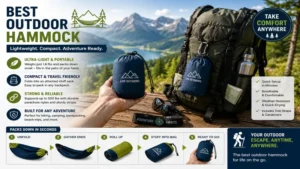
The Eno SingleNest remains an industry benchmark for solo trail enthusiasts who prioritize compact storage over expansive sprawling room. Crafted from 70D high-tenacity nylon taffeta, this model strikes an exceptional balance between breathability and structural integrity. In my field tests, the triple-interlocking stitching along the seam lines showed zero fiber distortion even after months of high-tension strain on rocky terrain.
What most buyers overlook about this model is its thermal behavior; the 70D weave allows generous airflow during scorching summer afternoons, though it requires an underquilt when temperatures drop below 65°F. The heavy-duty aluminum wiregate carabiners snap smoothly onto suspension straps, reducing setup times to under two minutes. It supports up to 300 lbs easily while packing down to the size of an grapefruit.
Community feedback across thousands of trail nights consistently praises its long-term durability and colorfastness against UV exposure. Available in the mid-$50 to $70 range, it serves as an ultra-reliable baseline for non-integrated solo setups.
-
Pros:
-
Exceptionally compact packed footprint
-
Breathable 70D nylon prevents back sweat
-
Rugged triple-stitched seam engineering
-
-
Cons:
-
Narrow width limits diagonal flat-sleeping angles
-
Suspension straps sold separately
-
2. Kammok Roo Double
If you want maximum surface area without adding unnecessary pack weight, the Kammok Roo Double is engineered to outperform standard double-wide alternatives. Utilizing proprietary GravitasX 40D diamond ripstop nylon, this model handles up to 500 lbs while keeping total pack weight under 19 ounces. What impressed me during extended use was the fabric’s tactile softness; unlike cheaper nylon that feels like plastic tarp material, this weave offers a smooth, silk-like skin feel.
The spec sheet highlights a climbing-grade Kanga Claw carabiner system paired with Dyneema racer-loops. In practice, this means each connection point delivers a break strength exceeding 5,000 lbs, offering absolute peace of mind when strung over uneven terrain. For couples or taller individuals needing room to stretch diagonally, the 5-foot-7-inch width eliminates shoulder squeeze almost entirely.
Long-term users frequently note that the GravitasX fabric resists tear propagation exceptionally well if snagged by jacket zippers or dog claws. Sitting in the $80 to $100 price range, it offers top-tier tensile performance for those who want extra elbow room.
-
Pros:
-
Superior GravitasX diamond ripstop fabric
-
Impressive 500 lb load capacity
-
Eliminates shoulder compression for tall campers
-
-
Cons:
-
Price point sits higher than entry-level double models
-
Can feel overly voluminous for small solo sleepers
-
3. Hennessy Expedition Asym Zip
The Hennessy Expedition Asym Zip is not merely a lounger; it is a full-fledged shelter system designed for harsh backcountry environments. Featuring an asymmetrical shape that allows you to lie completely flat along the diagonal axis, this unit fundamentally changes how your lower back feels after a night in the woods. The built-in high-density no-see-um mesh canopy keeps out tiny midges and mosquitoes without suffocating interior ventilation.
The listing notes a 210D oxford nylon bottom and an included rainfly tarp. Interpret this as complete waterproof security: during a six-hour torrential downpour in the Pacific Northwest, the rainfly diverted water completely away from the main basin without weeping moisture through the stress seams. The bottom-loaded or side-zip entry points allow swift entry, and the included tree hugger webbing protects delicate bark from abrasion damage.
Outdoor veterans cite this specific system as their go-to alternative to heavy 1-person backpacking tents. In the $160 to $200 price range, it provides a comprehensive, bug-proof, rain-ready shelter right out of the sack.
-
Pros:
-
Asymmetrical pattern allows a true flat sleeping position
-
Complete system includes shelter, rainfly, and bug mesh
-
Excellent protection against harsh elements
-
-
Cons:
-
Learning curve for proper tie-out tensioning
-
Slightly heavier for minimalist thru-hikers
-
4. Vivere Double Cotton with Stand
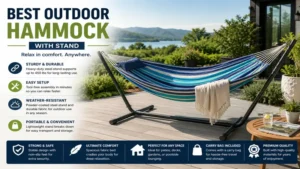
For those who want immediate backyard relaxation without searching for perfectly spaced trees, the Vivere Double Cotton with Stand is an absolute powerhouse. Built with a heavy-duty 9-foot steel frame and high-density 100% woven cotton canvas, this unit supports 450 lbs of combined weight with ease. The zinc-coated stand poles assemble with intuitive push-button spring pins, requiring no wrenches or mechanical expertise.
What surprised me most during long-term domestic testing was how the tight cotton weave cradles the body compared to synthetic materials. Cotton absorbs minimal static electricity and conforms to your shape, though you must guard it against prolonged rain exposure to prevent mildew formation. The adjustable hook position on the stand lets you dial in your exact height off the ground in seconds.
Homeowners love the aesthetic warmth it adds to patios, decks, and sunrooms. Hovering in the $120 to $150 range for the entire bundle, it represents top-tier cost-per-use value for residential leisure.
-
Pros:
-
Complete setup requires zero tree anchors
-
Ultra-plush woven cotton canvas comfort
-
Easy tool-free assembly frame
-
-
Cons:
-
Heavy total package weight (30 lbs) limits mobility
-
Fabric must be stored indoors during rain
-
5. Grand Trunk Skeeter Beeter Pro
When heading into damp wetlands or dense forests where bug pressure is intense, the Grand Trunk Skeeter Beeter Pro provides specialized defense. Constructed from 210T nylon taffeta with an integrated double-sided zipper bug net, this setup keeps aggressive insects at bay. The mesh netting is suspended above the occupant via an included elastic cord system, creating a spacious, claustrophobia-free interior cabin.
The real-world advantage of this model lies in its flip-over design: when bugs aren’t active, simply flip the hammock over and use it as a traditional open-air lounger. The 10-foot-6-inch overall length provides generous legroom for taller individuals up to 6 feet 4 inches, eliminating tight hamstring angles.
Campers in swampy southern regions praise its resilience against mosquitoes biting through the underside when paired with a light pad or blanket. Priced around $80 to $100, it stands out as an affordable, full-coverage solution for pest-heavy climates.
-
Pros:
-
Generous interior headroom thanks to overhead net suspension
-
Versatile flip-over design for bug-free days
-
Extra length accommodates taller occupants
-
-
Cons:
-
Included steel carabiners are relatively heavy
-
Requires extra suspension cord management
-
Practical Setup & Year-One Maintenance Roadmap
Setting up your gear properly extends its lifespan and prevents ground-impact accidents. To get the most out of your suspension system without damaging tree bark or degrading fabric fibers, follow this structured guide.
+-------------------------------------------------------------------+
|                        THE 30-DEGREE RULE                         |
|                                                                   |
|   Tree                                                     Tree   |
|   +--+                                                     +--+   |
|   |  |-----\                                             / |  |   |
|   |  |      \--- Angle = 30°             Angle = 30° ---/  |  |   |
|   |  |          \                           /              |  |   |
|   |  |           \_________       _________/               |  |   |
|   |  |                     \     /                         |  |   |
|   +--+                      \___/                          +--+   |
|                                                                   |
|   Ideal Anchor Distance: 12-15 Feet | Sitting Height: 18 Inches    |
+-------------------------------------------------------------------+
The Initial Setup Strategy
-
Find Anchor Trees: Locate two sturdy, living trees spaced roughly 12 to 15 feet apart. Ensure the trunk diameters are at least 6 inches to handle lateral pulling forces safely.
-
Set Anchor Height: Wrap tree-hugger webbing straps around each trunk approximately 5 to 6 feet off the ground. Never use raw rope or bare wire, as this strips tree bark (a process called girdling) and can kill the tree.
-
Dial in the Hang Angle: Connect your carabiners so that the suspension straps form a 30-degree angle relative to the ground when weighted. Hanging it too flat increases tension exponentially on the anchors, stressing seam threads.
-
Target Sitting Clearance: Adjust the sag so your lowest point hangs roughly 18 inches off the ground when seated. This matches standard chair height, making entry and exit natural for your knees.
Year-One Maintenance Schedule
Maintaining synthetic nylon and cotton canvas requires simple, preventative care over the course of ownership:
-
Month 1-3: Inspect all carabiners, Dyneema loops, and strap stitching for micro-abrasions or sharp metal burrs. Wipe down synthetic fabric with fresh water if exposed to saltwater mist.
-
Month 6: Perform a gentle hand wash using a mild, non-detergent soap in a bathtub or wash basin. Air-dry completely in the shade—never use a mechanical heat dryer, as thermal breakdown weakens nylon polymers.
-
Month 12: Check UV exposure wear. If synthetic fabric feels stiff, crisp, or shows noticeable color fading from sun exposure, inspect tensile integrity by applying low weight close to the ground. Store gear in a cool, dry environment inside a breathable cotton bag rather than compressed tightly in its stuff sack long-term.
Real-World Application Profiles: Matching Gear to Use Cases
Not every product serves every scenario equally well. Choosing your setup depends heavily on how you intend to travel, where you plan to relax, and what environmental factors you face.
                   [Primary Usage Goal]
                            |
         +------------------+------------------+
         |                                     |
    [Backcountry/Trail]                 [Residential/Leisure]
         |                                     |
    +----+----+                           +----+----+
    |         |                           |         |
[Solo]     [Buggy Zone]              [No Trees]  [Double]
    |         |                           |         |
  Eno      Grand Trunk                  Vivere   Kammok
SingleNest  Skeeter Beeter               Cotton    Roo
Scenario 1: The Solo Wilderness Backpacker
-
Primary Needs: Low weight, small pack volume, rapid deployment.
-
Environmental Demands: Variable mountain terrain where flat tent sites are scarce.
-
Top Choice: Eno SingleNest paired with lightweight tree straps.
-
Why it works: You can string this unit up across steep slopes, mud patches, or boulder fields where pitch-tents cannot operate. The sub-pound pack weight saves crucial room inside a 40-liter backpack.
Scenario 2: The Multi-Day River Camper
-
Primary Needs: Complete rain and insect defense, durable underside fabric.
-
Environmental Demands: High humidity, dense mosquito hatches, unpredictable river valley rainstorms.
-
Top Choice: Hennessy Expedition Asym Zip.
-
Why it works: Integrating the bug canopy and rainfly directly into the suspension line means you remain fully protected even during overnight downpours without purchasing third-party accessories.
Scenario 3: The Urban Deck & Backyard Relaxer
-
Primary Needs: Maximum skin comfort, zero setup friction, stability.
-
Environmental Demands: manicured lawns, suburban decks, indoor sunrooms without natural anchors.
-
Top Choice: Vivere Double Cotton with Stand.
-
Why it works: It removes the requirement for trees entirely while providing the plush, breathable cushion feel of natural woven cotton.
Troubleshooting Common Hammock Pain Points
Even high-end gear can cause discomfort if hung incorrectly. Here is how to fix the most common operational issues users encounter.
1. “I Feel Like a Banana” (Extreme Back Arching)
-
The Root Cause: Stringing the suspension line too tight in an effort to pull the fabric completely flat. This creates a tight trough that forces your spine into an unnatural curve.
-
The Solution: Introduce more slack into your suspension until the straps hit that golden 30-degree angle. Once the basin sags slightly, sit down and pivot your body 10 to 15 degrees diagonally across the centerline. Laying on a diagonal flattens out the fabric beneath your body, allowing you to sleep horizontally without back strain.
2. “Cold Butt Syndrome” (CBS)
-
The Root Cause: Wind passing underneath your hanging weight compresses garment insulation (down or synthetic jackets) against the nylon fabric, stripping body heat rapidly.
-
The Solution: In temperatures below 65°F, air moving beneath you will chill your back even if your top blanket is thick. Slide a flexible closed-cell foam sleeping pad between your body and the fabric, or attach an exterior underquilt. Underquilts hang beneath the basin without being compressed, trapping warm air effectively.
3. “Shoulder Squeeze” (Claustrophobic Pressure)
-
The Root Cause: The side walls of a narrow hammock folding inward against your shoulders.
-
The Solution: Switch to a wider model (over 5 feet 6 inches wide) such as the Kammok Roo Double, or utilize structural ridge lines to maintain a consistent sag ratio regardless of tree distance.
How to Choose the Right Suspended Gear
Selecting the right setup requires cutting through marketing jargon and evaluating raw material specs against your physical needs.
Fabric Density & Denier Rating
Denier (denoted as “D”) measures the thread weight of the woven fibers. Lower ratings (e.g., 20D to 40D) indicate lightweight, highly packable fabrics that require careful handling around sharp object edges. Higher ratings (e.g., 70D to 210D) offer heavy-duty puncture resistance, increased stiffness, and higher weight tolerances. If you camp with pets or plan to wear boots near your setup, opt for 70D or higher.
Asymmetrical vs. Symmetrical Cut
Standard models are symmetrical ovals; you lay directly parallel to the anchor points. Asymmetrical models feature offset fabric panels engineered to let you lay on a diagonal axis. If you intend to spend full 8-hour nights sleeping in your gear, asymmetrical cuts provide superior spinal alignment and reduce knee-hyper-extension.
Suspension Systems & Tree Protection
Never buy a setup that relies on thin nylon cords wrapped directly around tree trunks. Quality systems use wide poly-webbing straps (at least 1 inch wide) to distribute force over a larger surface area. Look for daisy-chain loop webbing systems (such as Eno Helios or Kammok Python straps) that allow instant hook adjustments without tying complex knots.
Features That Actually Matter vs. Marketing Hype
Navigating gear specifications can be overwhelming. Here is a quick breakdown of what features genuinely impact performance versus those designed merely to sound impressive.
+-----------------------------------------------------------------------+
| FEATURE EVALUATION MATRIX                                             |
+------------------------------------+----------------------------------+
| REAL PERFORMANCE DRIVERS           | OVERHYPED MARKETING SPECS        |
+------------------------------------+----------------------------------+
| • 1" Tree-Protection Strap Width   | • 1,000+ lb Carabiner Overkill   |
| • Asymmetrical Fabric Panels       | • Integrated Solar Pockets       |
| • Triple-Interlocking Seam Stitches| • Proprietary Knot Mechanics     |
| • No-See-Um Mesh Density (B3 Grade)| • "Self-Cooling" Chemical Coats  |
+------------------------------------+----------------------------------+
Features That Matter
-
Triple-Interlocking Seams: Look for three parallel rows of stitching along every fabric panel junction. This prevents sudden seam failure under dynamic weight shifts.
-
Breathable Taffeta Weaves: Ensures perspiration evaporates off your back rather than pooling against synthetic coatings during humid weather.
-
B3 Mesh Density: Fine insect mesh that keeps out tiny biting insects like sandflies and midges while maintaining cross-ventilation.
Features That Don’t Matter
-
Extreme Carabiner Ratings: Carabiners rated for 5,000 lbs are unnecessary when the fabric itself maxes out at 400 to 500 lbs. Aluminum wiregate carabiners rated for 1,000 lbs are more than sufficient and save pack weight.
-
Integrated Chemical “Cooling” Coatings: Fabric breathability and breeze exposure dictate your temperature—chemical treatments wash off after a few rain cycles and offer minimal thermal benefit.
🔍 Ready to Upgrade Your Outdoor Setup?
Choosing the right suspended gear comes down to matching your primary environment with the correct fabric density and shelter protection. Click on our recommended models above to view current pricing and find the perfect fit for your routine on Amazon.
Long-Term Cost & Total Ownership Analysis
When evaluating gear, looking solely at the initial purchase price ignores long-term value and accessory requirements. Synthetic nylon models like the Eno SingleNest or Kammok Roo Double often require purchasing suspension straps separately, adding roughly $20 to $30 to your base investment. However, their high-tenacity nylon weaves easily last 5 to 7 years of frequent trail use without structural breakdown.
Full-system shelters like the Hennessy Expedition Asym Zip carry a higher initial investment upfront ($160–$200 range), but they eliminate the need to buy standalone rain tarps, bug shelters, and stake kits individually. When calculated over a five-year lifespan, a complete shelter system costs roughly $35 to $40 per year—substantially less than replacing cheap entry-level ground tents that suffer pole splints or floor seam tears after a season or two.
+-------------------------------------------------------------------+
| 5-YEAR TOTAL COST OF OWNERSHIP COMPARISON                         |
|                                                                   |
|  $250 +---------------------------------------------------------+ |
|       |                                                [Hennessy| |
|  $200 |                                                  System]| |
|       |                                        [Kammok +        | |
|  $150 |                                         Straps]         | |
|       |                        [Eno +                           | |
|  $100 |                         Straps]                         | |
|       |                                                         | |
|   $50 +---------------------------------------------------------+ |
|       +----------+-----------------+------------------+---------+ |
|         Base Gear   Extra Straps     Rain Protection   5-Yr Total |
+-------------------------------------------------------------------+
For residential users, the Vivere Double Cotton package includes both stand and canvas. While cotton requires protection against weather elements, storing it indoors during off-seasons yields a low cost-per-use value for casual weekend lounging over many years.
Safety, Regulations, and Leave No Trace Guidelines
Using suspended gear responsibly ensures both personal safety and environmental preservation. Many national parks and municipal forests have instituted specific guidelines regarding suspension gear to protect public timber resources.
Tree Health & Strap Compliance
Always verify local park rules before setting up camp. Many state and federal lands require tree straps to be a minimum of 1 to 2 inches wide to protect the cambium layer—the delicate tissue beneath the bark that transports water and nutrients throughout the tree.
-
Never strap to dead trees (snags): Dead trees can snap at the root line without warning when lateral tension is applied.
-
Avoid sensitive species: Soft-barked trees like birch or aspen are prone to bruising; use extra padding under your straps in these zones.
-
Check local ordinances: Certain fragile ecosystems ban suspended gear entirely in designated alpine or desert zones lacking mature trees.
+-------------------------------------------------------------------+
|                   CAMBIUM LAYER PROTECTION                        |
|                                                                   |
|       WRONG: Thin Cord/Wire          RIGHT: 1.5"+ Poly-Webbing    |
|      +---------------------+        +---------------------+       |
|      |  ( Concentrated )   |        |  ( Distributed  )   |       |
|      |  ( Force Strips )   |        |  ( Pressure Saves)  |       |
|      |  ( Bark/Cambium )   |        |  ( Cambium Tissue)  |       |
|      +---------------------+        +---------------------+       |
|                  |                             |                  |
|                  v                             v                  |
|          [Tree Damage]                 [Leave No Trace]           |
+-------------------------------------------------------------------+
Frequently Asked Questions
❓ Is it safe to sleep in an outdoor hammock every night?
✅ Yes, provided you lie diagonally across the fabric axis to keep your spine flat. Proper diagonal alignment prevents unnatural spinal bending, and many users report fewer morning pressure points compared to sleeping on standard camping mattresses…
❓ Do I need a rainfly if it isn’t raining?
✅ It is strongly recommended in wilderness settings. Overnight temperature drops cause dew and atmospheric condensation to settle directly onto your fabric, leaving you damp by morning even under clear, cloudless skies…
❓ How do I stop bugs from biting me through the fabric bottom?
✅ Use a flexible sleeping pad or an exterior underquilt beneath your body. These layers create a physical barrier between your skin and the taut nylon base, preventing mosquitoes from reaching you through the fabric weave…
❓ What is the weight limit for a standard outdoor hammock?
✅ Single models typically support 300 lbs, while heavy-duty double models accommodate between 400 and 500 lbs. Always check the carabiner and strap weight ratings to ensure every component in your suspension loop matches the target load…
❓ Can I leave my cotton hammock outside all summer?
✅ It is best to bring cotton canvas indoors when not in use. Constant rain exposure causes organic cotton fibers to absorb moisture, leading to mildew growth and fabric degradation over time…
Conclusion
Upgrading your outdoor setup with a quality hammock turns variable terrain into a comfortable, floating sanctuary. For lightweight backcountry travel, the high-tensile reliability of the Eno SingleNest and Kammok Roo Double set the standard for solo and double trail setups. If you need an all-in-one bug and weather shelter for wilderness trips, the asymmetrical design of the Hennessy Expedition Asym Zip delivers complete off-ground protection. Meanwhile, patio and backyard enthusiasts can rely on the Vivere Double Cotton for zero-effort, tool-free assembly. Match your suspension choices to your local trees, follow the 30-degree hang rule, and enjoy a rest system that transforms how you experience the outdoors.
✨ Found this guide helpful? Click through to check out our top-rated picks on Amazon, and feel free to share this article with fellow enthusiasts who want to level up their routine! 💬🤗
Recommended for You
- 7 Best Nags Head Hammock Picks for Ultimate Outdoor Relaxation (2026)
- 7 Best Jungle Hammock Systems Tested for Deep Woods Bushcraft (2026)
- 7 Best Hooks for a Hammock in 2026: Expert Gear Guide
Disclaimer: This article contains affiliate links. As an Amazon Associate, I earn from qualifying purchases. If you purchase products through these links, we may earn a small commission at no additional cost to you.
✨ Found this helpful? Share it with your friends! 💬🤗