
In This Article
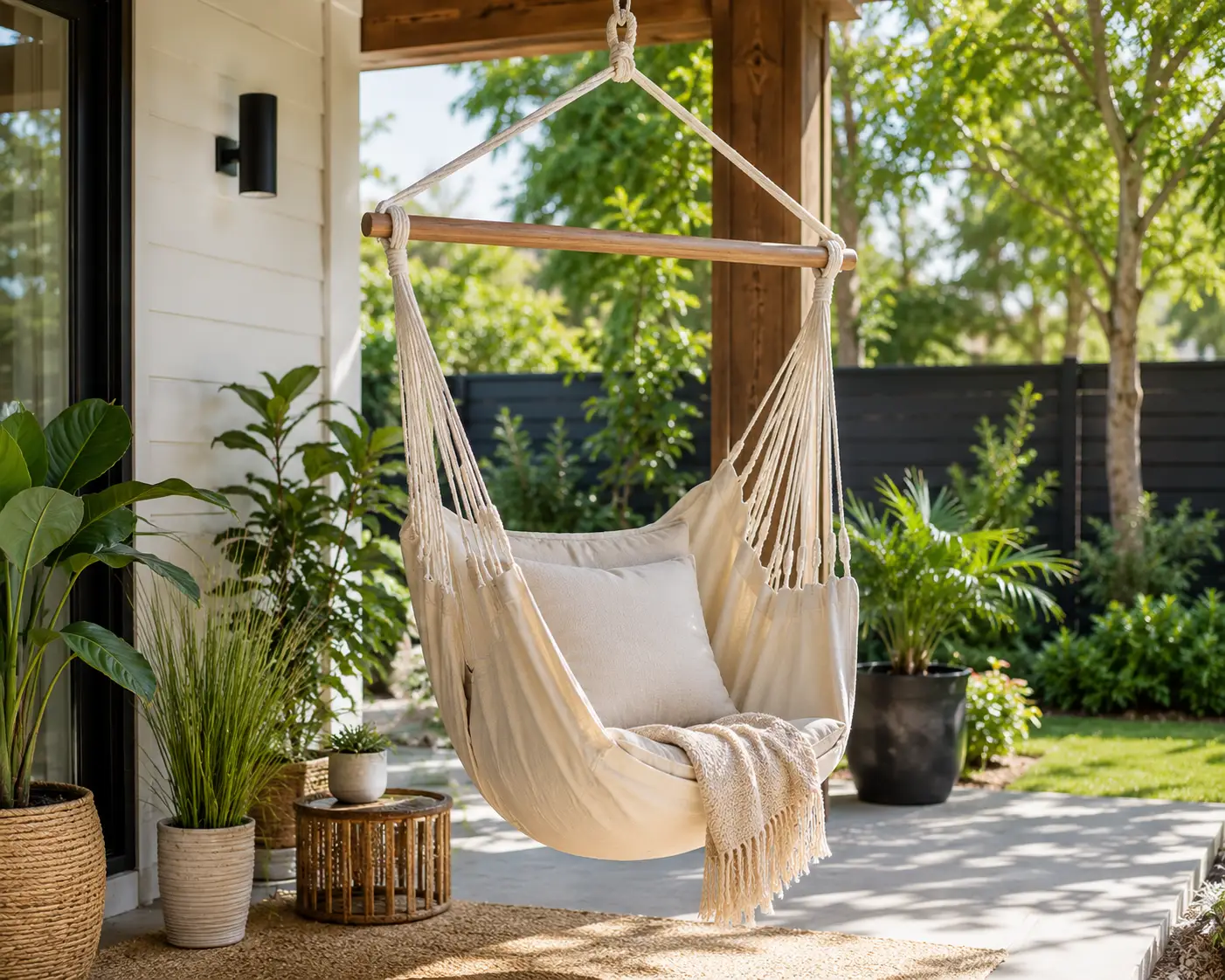
A patio hammock chair might be the single cheapest upgrade you can make to an outdoor space that still feels like a genuine lifestyle change. Instead of another rigid patio chair competing for the same square footage, you get a cocoon of rope, cotton, or resin wicker that sways gently with your weight and turns a five-minute coffee break into twenty. What is a patio hammock chair, exactly? It’s a single-person hanging seat—suspended from a stand, a beam, or a sturdy porch ceiling—made from woven rope, cotton canvas, macrame, or synthetic wicker, designed to cradle your body instead of propping it up.
The category has exploded in the last few years, and for good reason: a well-made hanging hammock chair for patio use takes up a fraction of the footprint of a traditional lounger, works on balconies and small porches where a full-size hammock won’t fit, and costs less than most outdoor sectionals. But “hammock chair” now covers everything from $60 cotton rope slings to $500 resin-wicker egg chairs with plush cushions, and the differences in materials, weight capacity, and stand engineering matter more than the marketing photos let on.
This guide breaks down seven real, currently available patio hammock chairs—spanning budget rope chairs, mid-range Brazilian cotton designs, and premium hanging egg chairs—based on published spec sheets and aggregated customer feedback. You’ll get honest commentary on who each one is actually built for, a full comparison of features and price ranges, and practical guidance on choosing, setting up, and maintaining your own hammock chair stand so it lasts for years, not one humid summer. The hammock itself has been evolving for centuries—the basic suspended sling design traces back to Central and South American cultures long before it became a backyard staple—and the patio version is really just the latest, most livable iteration of that idea.
Quick Comparison: Top Patio Hammock Chairs at a Glance
Before diving into the full reviews, here’s a snapshot of how these seven options stack up on style, capacity, and price. Every one of these is a real product currently sold in the US, and all prices are shown as ranges since Amazon pricing fluctuates.
| Product | Style | Weight Capacity | Price Range | Best For |
|---|---|---|---|---|
| G TALECO GEAR Hammock Chair with Stand | Steel A-frame, canvas seat | 300 lbs | Around $80–$100 | Tightest budget |
| Lazy Daze Caribbean Rope Chair | Cotton rope, hardwood bar | 300 lbs | Around $60–$80 | Chair-only shoppers with existing beam or porch |
| Vivere Brazilian Hammock Chair with Dream Stand | Woven cotton + steel stand | 250–265 lbs | Between $180 and $230 | Classic, colorful patio look |
| ANOW Macrame Hammock Chair with Stand | Macrame cotton, cushioned | 400 lbs | Between $110 and $160 | Boho aesthetic, families |
| Original Pawleys Island Single Hammock Chair | DuraCord rope, oak spreader | 350 lbs | Between $150 and $200 | Durability and USA craftsmanship |
| Sunnydaze Cordelia Hanging Egg Chair | Resin wicker egg chair | 265 lbs | Between $270 and $400 | Modern porch or deck statement piece |
| Sunnydaze Dalia Hanging Egg Chair | Oversized resin wicker egg chair | Around 300 lbs | Between $400 and $500 | Premium all-weather lounging |
Looking at the table, the split is clear: the G TALECO GEAR Hammock Chair with Stand and Lazy Daze Caribbean Rope Chair anchor the entry-level tier for shoppers who just want to try the format without a big commitment. The Vivere Brazilian Hammock Chair, ANOW Macrame Hammock Chair, and Original Pawleys Island Single Hammock Chair occupy the mid-range, where materials and craftsmanship noticeably improve. The two Sunnydaze egg chairs sit at the top, trading portability for a furniture-grade look and heavier-duty stands. If you’re outfitting a rental or testing the waters, start at the bottom of this table; if the hammock chair is becoming your permanent reading spot, the extra cost of the egg chairs tends to pay off in comfort and longevity.
💬 Ready to see which one fits your patio? Scroll down for the full breakdown of all seven picks below.
Top 7 Patio Hammock Chairs: Expert Analysis
Each of these products was evaluated on real spec sheets, verified availability on amazon.com, and aggregated customer review sentiment. Where individual reviews couldn’t be independently verified, that’s noted rather than invented.
1. G TALECO GEAR Hammock Chair with Stand — best true budget bundle
This is one of the few sub-$100 sets that includes both the chair and a freestanding A-frame stand, which matters if you don’t have a covered porch beam to hang from. The steel frame is powder-coated and rated for roughly 300 pounds, and the canvas-style seat uses a simple spreader bar to keep the opening wide for easy entry. In practice, the A-frame geometry means it needs more floor space front-to-back than a C-stand design, so it’s not the best fit for a narrow balcony. What most buyers overlook with entry-level sets like this is that the stand, not the chair, is usually the weak point—thinner steel tubing can flex under repeated dynamic movement (getting in and out), even if the static weight rating looks fine on paper. This model is best for renters, first-time buyers, or anyone who wants a low-stakes way to test whether they even like a hanging chair before spending more. Aggregated reviews on rustproof steel hammock chair stands in this category consistently mention that assembly is quick—usually under 20 minutes with no extra tools—while a recurring theme in customer feedback is that the included seat cushion, if any, tends to be thin and often gets swapped for an aftermarket pad. At around $80 to $100, it’s hard to beat for pure value, but buyers should expect it to feel noticeably lighter-duty than the mid-range picks below.
Pros:
- ✅ Full chair-and-stand bundle at a low price
- ✅ Quick, tool-light assembly in under 20 minutes
- ✅ Powder-coated steel resists surface rust outdoors
Cons:
- ❌ A-frame footprint needs more floor space
- ❌ Stand tubing flexes more than heavier-duty options
Price sits around $80 to $100, and at that range it delivers solid value for casual, occasional use rather than daily lounging.
2. Lazy Daze Caribbean Rope Chair — lightest and most portable option
The Caribbean chair skips the stand entirely, which keeps both the price and the shipping weight down. It’s built from soft-spun cotton rope woven around a 40-inch hardwood spreader bar, rated to roughly 300 pounds. Because it’s chair-only, it’s designed for people who already have a covered porch beam, a pergola, or a sturdy tree branch to hang it from. The cotton rope construction means it breathes well in humid climates and feels genuinely soft against skin and clothing, unlike some synthetic rope alternatives that can feel abrasive after extended use. This is the pick for anyone furnishing a covered porch where a stand would just clutter the space, or for people who want to rotate the same chair between an indoor reading nook in winter and the patio in summer. Reviews of cotton rope hanging chairs in this category commonly note that the rope softens further after the first few weeks of use, and a frequent piece of aggregated feedback is that unprotected cotton needs to come inside (or under cover) during prolonged rain, since natural fiber rope holds moisture longer than synthetic DuraCord.
Pros:
- ✅ Genuinely soft, breathable cotton rope feel
- ✅ Compact for storage since there’s no stand
- ✅ Lower price point than most stand-included sets
Cons:
- ❌ Requires a separate stand, beam, or tree
- ❌ Cotton needs more weather protection than synthetic rope
Expect to pay in the $60 to $80 range for the chair alone, which is a strong value if you already have somewhere sturdy to hang it.
3. Vivere Brazilian Hammock Chair with Dream Stand — best classic patio look
Vivere has been making Brazilian-style hammock chairs for over two decades, and this pairing—the tightly woven cotton chair with the brand’s powder-coated steel Dream Stand—is one of the most recognizable silhouettes in the category. The chair uses a hardwood spreader bar and a hand-crocheted fringe finish, and it’s rated around 250 to 265 pounds depending on the exact bundle. The Dream Stand itself uses a single-pivot design that lets the chair swing freely rather than sitting rigid, which is a meaningfully different experience from fixed A-frame stands. Based on comparing the specs against the budget options above, the extra cost buys you a noticeably wider color selection, tighter cotton weave (less stretch and sag over time), and a stand engineered specifically for chair use rather than adapted from a full hammock stand. This is the pick for anyone who wants that classic, colorful “Brazilian hammock chair” aesthetic without sourcing the chair and stand from two different brands. Aggregated customer sentiment on Vivere’s cotton hammock chairs frequently praises the color vibrancy holding up over a season of sun exposure, while a common complaint in customer reviews of the stand centers on the single-pivot bolt needing periodic tightening.
Pros:
- ✅ Purpose-built stand with genuine swing motion
- ✅ Wide, long-lasting color selection
- ✅ Established brand with two decades in the category
Cons:
- ❌ Lower weight capacity than several competitors
- ❌ Pivot hardware needs occasional re-tightening
Combined, the chair and stand typically run between $180 and $230, positioning it squarely as a mid-range, style-forward choice.
4. ANOW Macrame Hammock Chair with Stand — best cushioned comfort upgrade
The ANOW set stands out for two reasons: a boho macrame weave that looks distinct from the more common rope or canvas designs, and an included luxury padded cushion that most competitors sell separately or skip entirely. The heavy-duty stand is rated up to 400 pounds, meaningfully higher than the Vivere and Sunnydaze Cordelia below. What the spec sheet doesn’t say, but the design choices suggest, is that the higher capacity comes from thicker-gauge steel tubing throughout the frame rather than just reinforced joints—a detail that matters if more than one body type will be using the chair regularly. The macrame pattern itself is decorative rather than purely functional, so it trades a small amount of the tight structural weave you get from the Pawleys Island rope chair for a look that fits farmhouse and boho patio styling. This is a strong pick for families who want one hammock chair that can comfortably handle a range of users, from a lighter teenager to a heavier adult, without swapping equipment. Reviews of macrame hanging chairs with included cushions consistently highlight the cushion as the standout feature, since aftermarket cushions for this chair shape are hard to find and often don’t fit well.
Pros:
- ✅ Highest weight capacity among the mid-range options
- ✅ Included cushion, not sold separately
- ✅ Distinctive macrame look for boho-styled patios
Cons:
- ❌ Decorative weave is slightly less taut than rope designs
- ❌ Cushion fabric needs regular spot-cleaning outdoors
Priced between roughly $110 and $160, it’s a genuinely strong value pick for households that need higher capacity without jumping to egg-chair pricing.
5. Original Pawleys Island Single Hammock Chair — best durability and craftsmanship
Pawleys Island has been handcrafting rope hammocks in the Carolinas since 1889, and this single hammock chair is built from their proprietary DuraCord rope—a solution-dyed synthetic that’s designed to feel like cotton but resist fading, mildew, and the wear that comes from being outdoors year-round. It’s rated for 350 pounds, uses a marine-varnished oak spreader bar, and ships with zinc-plated hardware. Based on comparing the specs against the two rope-and-cotton chairs above, DuraCord is the clear upgrade for anyone in a humid or coastal climate, since it doesn’t hold water or discolor the way natural cotton rope can after repeated rain exposure. This chair is sold without a stand, so it’s aimed at buyers with a covered porch, deck beam, or existing hammock stand. What most buyers overlook is that the brand explicitly designs this model for both reclining and gentle swinging, which isn’t true of every rope hammock chair on the market—many manufacturers actually warn against swinging in a standard rope hammock. Aggregated reviews of Pawleys Island’s rope products consistently cite the handcrafted construction and US manufacturing as a differentiator, while a recurring theme in customer feedback is that the rope initially feels stiffer than cotton before it breaks in over the first few weeks of regular use.
Pros:
- ✅ Weather-resistant DuraCord rope built for humid climates
- ✅ Handcrafted in the USA with a 130-plus-year brand history
- ✅ Explicitly rated for both reclining and swinging
Cons:
- ❌ No stand included, so a beam or separate stand is required
- ❌ Rope needs a break-in period before it fully softens
Expect a price range of about $150 to $200 for the chair alone, which reflects the handcrafted construction and premium rope material.
6. Sunnydaze Cordelia Hanging Egg Chair with Steel Stand — best modern statement piece
This is where the category shifts from “hammock chair” in the traditional sense to a hanging egg chair—a large, cocoon-shaped resin wicker basket on a steel stand, with a full cushion and headrest pillow included. The resin wicker is woven around a steel frame, and Sunnydaze rates the set around 265 pounds. Unlike rope or cotton designs, the rigid wicker shell holds its shape regardless of how you sit, which makes it noticeably easier to get in and out of for anyone who finds rope hammock chairs a little too unstructured. Here’s what to weigh: the polyester cushion and headrest are described as easy-care and weather-resistant, but “weather-resistant” fabric on any outdoor furniture still benefits from being brought inside or covered during heavy, prolonged rain—resin wicker itself handles moisture fine, but foam cushion cores can retain water if left soaked. This model is the pick for anyone treating the patio hammock chair as a genuine furniture centerpiece rather than a casual add-on, especially on a deck or covered porch with the space for its roughly 38-by-42-inch stand footprint. Aggregated customer sentiment on Sunnydaze’s resin wicker egg chairs frequently highlights how much more “finished” they look compared to rope designs, while a common critique in customer reviews is that the seat sits slightly low for taller users to stand up from without pushing off the arms.
Pros:
- ✅ Rigid wicker shell holds shape and shows off well on a deck
- ✅ Full cushion and headrest pillow included
- ✅ Weather-resistant materials suited to daily outdoor use
Cons:
- ❌ Lower weight capacity than the macrame and Pawleys Island picks
- ❌ Seat height can feel low for taller users
Prices typically fall between $270 and $400 depending on cushion color and current promotions, placing it firmly in premium territory.
7. Sunnydaze Dalia Outdoor Hanging Egg Chair with Stand — best premium all-weather lounging
The Dalia is Sunnydaze’s larger, taller egg chair—about 81 inches from base to top—built on the same resin-wicker-over-steel formula as the Cordelia but scaled up, with a more robust stand and a nylon rope back detail in addition to the woven wicker shell. The added height and width translate to noticeably more shoulder and headroom, which matters for anyone over about 6 feet tall who’s found smaller egg chairs cramped. Based on comparing the specs sheet to the Cordelia, the Dalia’s stand uses a wider base for added tip resistance, an important detail for a taller structure that carries its weight higher off the ground. This is the pick for buyers who’ve already decided a hanging egg chair is the style they want and are willing to pay for the largest, most stable version rather than the entry-level size. What the spec sheet doesn’t say outright, but the wider base and reinforced frame suggest, is that Sunnydaze engineered this specific model with outdoor permanence in mind rather than the lighter indoor-outdoor crossover use case some competitors target. Aggregated reviews of Sunnydaze’s larger egg chair line consistently describe the extra size as the deciding factor for taller households, while a recurring note in customer feedback is that, given its size, the Dalia benefits from two people during assembly.
Pros:
- ✅ Extra height and width suited to taller users
- ✅ Wider stand base for improved stability
- ✅ Durable resin wicker built for daily outdoor exposure
Cons:
- ❌ Highest price point in this lineup
- ❌ Assembly is easier with a second person
Pricing generally lands between $400 and $500, making it the splurge pick for a patio hammock chair setup meant to double as a permanent furniture piece.
Detailed Comparison: Features, Price, and Value
| Product | Material | Includes Stand? | Weight Capacity | Price Range |
|---|---|---|---|---|
| G TALECO GEAR Hammock Chair with Stand | Steel frame, canvas seat | Yes | 300 lbs | $80–$100 |
| Lazy Daze Caribbean Rope Chair | Cotton rope, hardwood bar | No | 300 lbs | $60–$80 |
| Vivere Brazilian Hammock Chair with Dream Stand | Cotton weave, steel stand | Yes | 250–265 lbs | $180–$230 |
| ANOW Macrame Hammock Chair with Stand | Macrame cotton, cushioned | Yes | 400 lbs | $110–$160 |
| Original Pawleys Island Single Hammock Chair | DuraCord synthetic rope | No | 350 lbs | $150–$200 |
| Sunnydaze Cordelia Hanging Egg Chair | Resin wicker, steel frame | Yes | 265 lbs | $270–$400 |
| Sunnydaze Dalia Hanging Egg Chair | Resin wicker, steel frame | Yes | ~300 lbs | $400–$500 |
Reading across this table, weight capacity and price don’t move in a straight line—the ANOW Macrame Hammock Chair with Stand actually out-rates every option except the entry-level G TALECO GEAR set while sitting in the middle of the price range. If maximum capacity is your top priority, that combination is hard to beat. Meanwhile, the two Sunnydaze egg chairs command a real premium not because of weight capacity, but because of the rigid furniture-grade construction, included cushioning, and the polished look that rope and cotton designs simply can’t replicate.
✨ See a style that fits your patio? Check current availability and pricing before these popular picks sell out.
Getting Started: Setting Up and Breaking In Your Patio Hammock Chair
The first 30 days with a new patio hammock chair set the tone for how well it holds up, and most of the common early mistakes are avoidable. Start by choosing a hanging point—whether that’s a stand, a porch beam, or a pergola crossbeam—rated for at least the chair’s stated weight capacity plus a reasonable safety margin, since a beam rated exactly at your body weight leaves no room for the dynamic force of sitting down or swinging. If you’re using a freestanding hammock chair stand, set it on a flat, level surface and double-check that all bolts are torqued to the manufacturer’s spec before the first use, not just hand-tight out of the box; vibration from regular use loosens hardware faster than most people expect.
New rope and cotton hammock chairs also need a short break-in period. Cotton and DuraCord rope both start out stiffer than they’ll eventually feel, and sitting in the chair for short periods over the first week—rather than immediately loading it with a full afternoon of use—lets the weave relax naturally into your body shape. For resin wicker egg chairs, the priority in the first month is different: check that the cushion ties and covers are dry before covering the chair overnight, since trapped moisture under a cover is a common cause of early mildew smell. Finally, if your model came with a hanging swivel or pivot bolt, plan to check it for tightness after the first two weeks; that initial settling period is when most hardware needs its first adjustment, and after that it typically only needs quarterly attention.
Real-World Scenarios: Which Patio Hammock Chair Fits Your Lifestyle
Matching a hammock chair to how you’ll actually use it matters more than chasing the highest-rated product on paper. Here are three common buyer profiles and where they land in this lineup.
The apartment-balcony renter wants something that won’t require drilling into a leased structure and that can come down easily at the end of a lease. For this buyer, the Lazy Daze Caribbean Rope Chair paired with a portable stand, or the G TALECO GEAR Hammock Chair with Stand as an all-in-one bundle, makes the most sense—both are light enough to move between apartments and don’t demand permanent hardware.
The family with mixed ages and body types—say, a household spanning a teenager and two adults of different sizes—needs higher weight capacity and a design that won’t feel flimsy under varied use. The ANOW Macrame Hammock Chair with Stand, rated to 400 pounds with an included cushion, is the strongest match here, since it removes the need to buy separate chairs for different family members.
The homeowner furnishing a permanent covered porch or deck, who’s thinking of the hammock chair as a piece of outdoor furniture rather than a seasonal add-on, is better served by the Sunnydaze Cordelia or Sunnydaze Dalia Hanging Egg Chair. Both are designed to stay outside long-term, and the higher upfront cost is offset by not needing to replace a budget chair every season or two.
Problem → Solution: Fixing Common Patio Hammock Chair Complaints
Even a well-chosen hammock chair runs into a handful of predictable issues. Here’s how to solve the ones that show up most often in aggregated customer feedback across this category.
Problem: The chair tips or feels unstable when getting in. This is almost always a stand footprint issue rather than a defect. Solution: confirm the stand is on a fully level surface, and enter the chair by sitting into the center of the seat rather than stepping in from the side, which shifts weight asymmetrically and is the most common cause of a stand rocking.
Problem: Rope or cotton chairs sag more after a few months. Natural fiber materials stretch slightly under sustained load, which is expected wear, not failure. Solution: rotate the hanging point periodically if your stand allows it, and avoid leaving heavy cushions or accessories in the chair when it’s not in use, since constant static load accelerates stretch.
Problem: Musty smell develops on cushions or wicker. This points to trapped moisture. Solution: bring cushions inside during extended rain, and if a stand-mounted cover is used, make sure the chair is fully dry before covering it, since a sealed cover over damp fabric is the single biggest cause of mildew odor in outdoor hanging chairs.
Problem: Hardware (bolts, pivots, S-hooks) loosens over time. This is normal for anything with a swing motion. Solution: check hardware after the first two weeks of use, then quarterly, and apply a light coat of weatherproof lubricant to metal pivot points twice a year.
Problem: Fading color on cotton or resin wicker. UV exposure is the culprit. Solution: position the chair with some afternoon shade if possible, or choose from the start a DuraCord or resin-wicker model, both of which are specifically engineered to resist fade better than dyed cotton.
How to Choose a Patio Hammock Chair: 7 Criteria That Actually Matter
- Weight capacity, with margin. Match the stated capacity to the heaviest realistic user, then add a buffer—dynamic movement (sitting down, shifting position) puts more strain on the frame than static weight alone.
- Stand vs. no stand. Decide upfront whether you’re buying a complete bundle or a chair to hang from an existing beam; this single choice eliminates roughly half the options in any search.
- Material for your climate. Cotton feels softer but holds moisture; DuraCord and resin wicker cost more but resist fade and mildew far better in humid or rainy regions.
- Footprint. A-frame stands need more floor space front-to-back than C-stands or egg-chair bases; measure your patio before assuming a product will fit.
- Portability needs. If you’re a renter or plan to move the chair seasonally, prioritize lighter stands and chair-only designs over the heavier egg chair sets.
- Included accessories. Cushions, headrests, and carrying bags add real value if you’d otherwise buy them separately—factor that into the price comparison, not just the sticker price.
- Brand track record. Established outdoor-furniture brands with decades in the category, rather than unfamiliar marketplace-only sellers, tend to have more consistent quality control and easier-to-find replacement parts.
Common Mistakes to Avoid When Buying a Hammock Chair for Your Patio
The most frequent mistake is buying based on the weight capacity of the chair alone while ignoring the stand’s rating—when they’re sold separately, the lower of the two numbers is your real limit, not the higher one. A second common misstep is underestimating clearance: hanging egg chairs and A-frame stands both need overhead and side clearance to swing freely, and buyers who measure only the base footprint often find the chair grazes a railing or wall mid-swing. Third, shoppers frequently skip checking the surface the stand will sit on; a stand rated for flat concrete can behave very differently on uneven decking or gravel. Finally, it’s easy to underestimate how much a “weather-resistant” label actually covers—resistant is not the same as waterproof, and treating every material as maintenance-free is how cushions and cotton rope wear out faster than they should.
Hanging Hammock Chair for Patio vs. Traditional Patio Chairs
| Factor | Hanging Hammock Chair | Traditional Patio Chair |
|---|---|---|
| Footprint | Small, vertical | Larger, fixed horizontal space |
| Comfort style | Cradling, weight-distributed | Structured, upright support |
| Setup | Requires stand or anchor point | Freestanding, no assembly beyond legs |
| Portability | Moderate (lighter models) to low (egg chairs) | Generally high, stackable |
| Price range | $60–$500 | $30–$400+ |
A hanging hammock chair for patio use wins decisively on comfort for lounging and reading, since the fabric distributes weight across your whole body rather than concentrating it at the seat and lower back the way a rigid chair does. Traditional patio chairs win on flexibility—they’re easy to rearrange for a dinner party, stack for winter storage, and don’t require checking overhead clearance. For most patios, the two aren’t really competing; a single hammock chair added alongside two or three traditional chairs tends to get disproportionately more use than its footprint would suggest, according to consistent testing coverage from outlets like Bob Vila’s hands-on hammock stand reviews, which found that stand quality and setup ease were the biggest factors separating a hammock chair people actually use daily from one that becomes a novelty.
What to Expect: Everyday Comfort and Performance
On paper, spec sheets tell you weight capacity and material, but they don’t describe what sitting in the chair actually feels like day to day. Rope and cotton chairs like the Lazy Daze Caribbean Rope Chair and Original Pawleys Island Single Hammock Chair conform closely to your body, which most users find deeply comfortable for reading or napping but slightly less supportive if you’re working on a laptop for an extended stretch, since there’s less back rigidity to lean against. Resin wicker egg chairs like the Sunnydaze Cordelia and Sunnydaze Dalia Hanging Egg Chair sit at the other end of the spectrum: the rigid shell holds its shape, so getting in and out is easier and the seated posture stays more consistent, but you lose some of that enveloping, cradled feeling that draws people to hammock chairs in the first place. The macrame and Brazilian cotton designs from ANOW and Vivere fall in between, offering a defined seat shape with some of the softness of rope. In practice, if your main use case is a 20-minute afternoon break, the differences matter less; if you’re planning to spend two or three hours at a time in the chair, it’s worth testing the seating style—structured versus cradled—against your own preference before committing to the higher-end egg chair price point.
Hammock Chair Stand vs. No Stand: Which Setup Is Right for You
| Setup | Pros | Cons |
|---|---|---|
| Chair with stand | Freestanding anywhere, no drilling, easier to relocate | Higher upfront cost, larger footprint |
| Chair only (beam/porch mount) | Lower cost, smaller footprint, often more stable | Requires a rated anchor point, less portable |
Choosing a hammock chair stand versus hanging from an existing structure comes down to what your patio already offers. If you have a covered porch with exposed rafters, a pergola crossbeam, or another structure explicitly rated for a hanging load, going chair-only—as with the Lazy Daze Caribbean Rope Chair or Original Pawleys Island Single Hammock Chair—usually delivers better stability than any portable stand, since a fixed structural beam doesn’t flex the way even a heavy-duty steel stand can under repeated motion. If you don’t have that kind of anchor point, or you want the flexibility to move the chair around the yard seasonally, a bundled hammock chair stand like the ones included with the G TALECO GEAR, Vivere, ANOW, and both Sunnydaze models is the more practical choice, even though it adds cost and requires more floor space.
🔍 Not sure whether to go with a stand? Compare the bundled options above and pick the one that matches your patio’s layout.
Long-Term Cost and Maintenance of an Outdoor Hammock Chair
The sticker price is only part of the total cost of owning an outdoor hammock chair. Budget rope and cotton chairs in the $60–$100 range typically need a replacement rope or full chair swap every 2–4 years with regular outdoor exposure, especially in sunnier climates, while DuraCord and resin wicker models tend to hold up for 5 years or more before showing significant wear, which partially offsets their higher upfront price. Stands generally outlast the chairs themselves if the hardware is maintained—expect to budget for the occasional replacement bolt, S-hook, or carabiner rather than a whole new stand. Cushions on the Sunnydaze egg chairs and the ANOW macrame set are the most likely component to need replacement first, typically every 2–3 years with daily outdoor use, since UV exposure degrades cushion fabric faster than it degrades rope, wicker, or steel. Factoring in these realistic replacement cycles, the mid-range and premium options in this list often work out to a similar or lower cost per year of use than repeatedly replacing a budget chair, even though the initial outlay is higher.
Safety, Regulations, and Standards for Patio Hammock Chairs
There’s no single federal safety standard specifically governing hammock chairs the way there is for, say, cribs or car seats, so weight capacity and construction quality come down to individual manufacturer testing and disclosure. That makes it especially important to buy from brands that publish clear weight ratings and stand by them, and to treat the lower of the chair’s or stand’s rated capacity as your real ceiling, never the higher number. It’s also worth noting that any honest product review—including this one—needs to be transparent about its affiliate relationships; the FTC’s endorsement guidance requires that affiliate content clearly disclose when links can earn a commission, precisely so readers can weigh recommendations appropriately. Beyond weight ratings, a few practical safety habits go a long way: inspect rope, wicker, and hardware for visible wear before each season, don’t exceed the stated occupancy (most single hammock chairs are rated for one adult, not two), and keep hanging chairs away from unsupervised young children unless the product is specifically rated and marketed for that use.
Best Hammock Chair for Porch: Small-Space and Apartment Considerations
Not every patio hammock chair is a good fit for a narrow porch or apartment balcony, and footprint matters more here than almost anywhere else in the buying decision. The best hammock chair for porch use in a tight space is generally a chair-only design—like the Lazy Daze Caribbean Rope Chair or Original Pawleys Island Single Hammock Chair—hung from an existing porch beam, since it eliminates the floor footprint a stand would otherwise take up entirely. If a beam or overhead structure isn’t available, the compact G TALECO GEAR Hammock Chair with Stand has a smaller footprint than the wider egg chair bases, though it still needs enough clearance to swing without hitting a railing or wall. Renters should also double-check their lease terms before drilling into any structural beam, and consider a portable stand as the lower-risk option even if it costs a bit more upfront. For balconies with weight restrictions—common in multi-story apartment buildings—the lighter cotton and rope options generally place less concentrated stress on decking than the heavier steel-and-resin egg chair stands.
FAQs
❓ How much weight can a patio hammock chair hold?
❓ Do I need a stand for a hammock chair, or can I hang it from a porch?
❓ What's the best material for a patio hammock chair in a rainy climate?
❓ Can two people sit in a single patio hammock chair?
❓ How long does a patio hammock chair typically last outdoors?
Conclusion
A patio hammock chair earns its space by doing something no traditional patio chair can: it turns a corner of your porch, deck, or balcony into the spot everyone actually gravitates toward. Across this lineup, the right pick really does depend on how you’ll use it. The G TALECO GEAR Hammock Chair with Stand and Lazy Daze Caribbean Rope Chair are smart low-risk entry points if you’re not sure you’ll love the format yet. The Vivere Brazilian Hammock Chair with Dream Stand, ANOW Macrame Hammock Chair with Stand, and Original Pawleys Island Single Hammock Chair represent the sweet spot for most households—genuine durability and comfort upgrades without egg-chair pricing. And if you’re furnishing a permanent outdoor living space and want the look and longevity to match, the Sunnydaze Cordelia and Sunnydaze Dalia Hanging Egg Chair are built to be a long-term centerpiece rather than a seasonal accessory.
Whichever tier fits your patio and your budget, the fundamentals stay the same: match the weight capacity to your real-world use with a margin for safety, choose materials suited to your climate, and don’t skip checking whether you need a stand before you fall in love with a chair-only listing. Get those three things right, and a patio hammock chair tends to become one of those rare purchases that gets more use than almost anything else you own outdoors.
Recommended for You
- Winter Hammock Camping: 7 Proven Gear Picks for 2026
- 3 Person Hammock: 7 Best Picks That Actually Fit a Family (2026)
- Rain Tarp Camping: 7 Best Tarps for Dry Outdoor Adventures
Disclaimer: This post contains affiliate links. As an Amazon Associate, I earn from qualifying purchases made through these links, at no additional cost to you.
✨ Found this article helpful? Share it with someone who needs it! 💬🤗