
In This Article
Do It Yourself Hammock: Everything You Need to Build One That Actually Holds Up
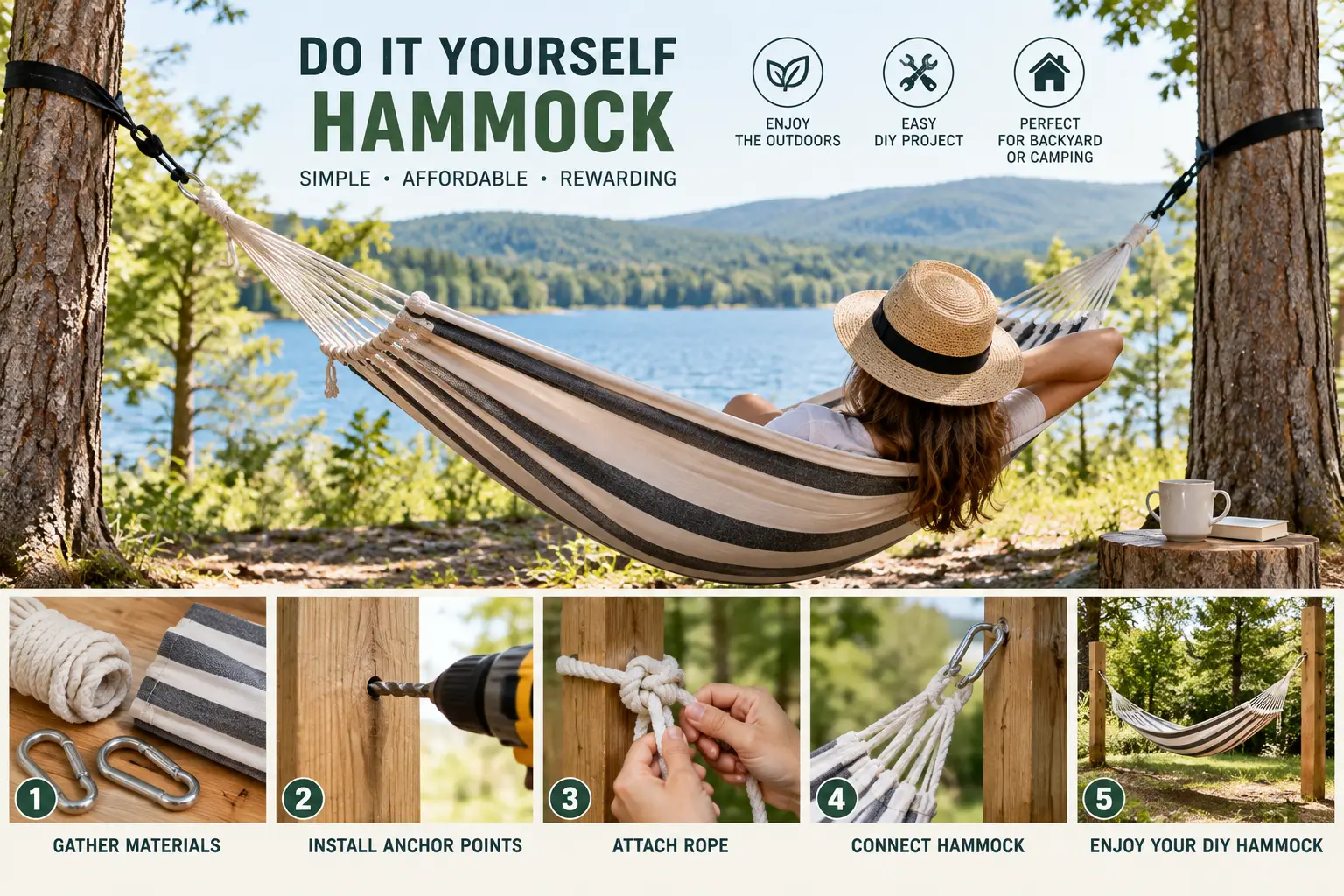
So you’re thinking about a do it yourself hammock. Maybe you’ve priced out a fancy woven hammock at a home goods store and choked on the number. Maybe you just like the idea of swinging in something you made with your own two hands, knots and all. Either way, you’re in good company — DIY hammock projects have quietly become one of the most popular weekend builds for backyard renovators, van-lifers, and dorm-room decorators alike.
What is a do it yourself hammock? A do it yourself hammock is a hand-built sleeping or lounging hammock made from raw materials — cotton rope, macrame cord, wooden dowels, or ripstop nylon fabric — rather than bought pre-assembled. Builders typically knot, weave, or sew the body themselves, then add hardware to hang it safely.
The appeal isn’t just the price tag, though a do it yourself hammock genuinely can cost less than a comparable store-bought one once you shop smart. It’s also the customization: your color, your length, your knot pattern, your call. This guide walks through seven real materials and kits you can order today, exactly how much of each you’ll need, the mistakes that trip up first-timers, and the safety details that matter once you’re actually hanging your body weight off a tree branch or a porch beam.
One quick note before we dive in: this article contains Amazon affiliate links. As an Amazon Associate, we may earn from qualifying purchases, at no extra cost to you — more on that in the disclaimer below.
Quick Comparison: DIY Hammock Materials and Kits at a Glance
Before the deep dive, here’s a snapshot of how the seven picks stack up on price range, best use, and skill level required.
| Product | Best For | Skill Level | Price Range |
|---|---|---|---|
| SGT KNOTS Cotton Rope | Budget rope-style hammocks | Beginner | Around $25–$35 |
| Woodpeckers Hardwood Dowels | Chair frames & spreader bars | Beginner | Around $20–$30 |
| Incraftables Macrame Kit | All-in-one starter bundle | Beginner | Around $20–$30 |
| Ravenox USA-Made Cotton Rope | Premium, odor-free rope hammocks | Beginner–Intermediate | Around $25–$50 |
| emma kites Ripstop Nylon Fabric | Sewn camping-style hammocks | Intermediate | Around $12–$18 per yard |
| MalloMe Tree Straps | Suspension hardware | Beginner | Around $20–$30 |
| Hammaka Air Chair (Wooden Dowels) | Ready-made frame, no build | Beginner | Around $150–$220 |
Looking at the table, the pattern is pretty clear: if you’re working with a tight budget, SGT KNOTS Cotton Rope and Woodpeckers Hardwood Dowels together will get a basic macrame chair or hammock built for less than the cost of dinner out. If you want everything bundled so you’re not guessing at quantities, the Incraftables Macrame Kit removes that friction. And if the whole “building a frame from scratch” part sounds like more weekend than you have, the Hammaka Air Chair gives you that handmade wood-and-rope look without picking up a drill.
💬 One click helps other shoppers make an informed choice too! 😊
Top 7 Do It Yourself Hammock Kits and Materials for 2026
We dug into real product listings, verified specs, and aggregated customer feedback to put together this lineup. It spans true budget rope (entry-level), premium USA-made cordage and all-in-one kits (mid-range), and a ready-made frame for anyone who wants the aesthetic without the woodworking (high-end). Every price below is a range, since Amazon pricing shifts constantly — always check the current price before you buy.
1. SGT KNOTS Twisted 100% Cotton Rope — cheapest way into a real rope hammock
If you just want to try knotting a hammock without a big investment, this is where most first-timers start. The rope comes in a 5/16-inch by 100-foot spool of genuine twisted cotton, which matters more than it sounds — a lot of “cotton” rope on Amazon is secretly blended with polyester or acrylic, and that changes how it knots and how it feels against skin.
For practical purposes, 100 feet of 5/16-inch rope is enough for a small rope hammock or several macrame plant hangers, but a full adult-sized woven hammock will likely need two or three spools depending on your pattern’s density. The twist holds a square knot well without slipping loose the way some braided cords do, which is exactly what you want when the knot in question is holding up a person.
Reviews of SGT KNOTS’ cotton rope consistently mention that it’s genuinely 100% cotton (not a cotton-poly blend marketed as “natural”), and that the veteran-owned company ships quickly. A recurring critique is that raw, undyed cotton rope sheds a bit of lint the first few uses — normal for natural fiber, but worth a quick brush-down before you sit in your finished project.
This rope is best for beginners building their first small rope hammock, plant hangers, or a chair seat rather than a full-size camping hammock, where synthetic cordage handles UV and moisture better.
Pros:
- ✅ Genuinely 100% cotton, not a synthetic blend
- ✅ Twist holds knots securely under load
- ✅ Multiple lengths and thicknesses available
Cons:
- ❌ Sheds lint on first few uses
- ❌ Not UV- or moisture-resistant for outdoor camping use
At around $25–$35 for a 100-foot spool, it’s one of the most affordable ways to test-drive a do it yourself hammock project before committing to pricier cordage.
2. Woodpeckers 1-1/4″ Hardwood Dowel Rods — sturdiest frame for a chair-style build
Most macrame hammock chairs (as opposed to a flat rope hammock) need a rigid frame at the top to keep the seat open and the weight evenly distributed. These pre-sanded birch/poplar dowels, sold in a 1-1/4-inch by 36-inch, two-piece pack, are the exact size that most free macrame chair patterns call for.
The practical payoff of the 1-1/4-inch diameter is stiffness — thinner dowels (under an inch) tend to bow under an adult’s weight over time, which is a real complaint in cheaper pre-made hanging chairs. Because these arrive pre-sanded, you skip the sanding step entirely and go straight to drilling your corner holes and lark’s-head-knotting your cord onto the frame.
Buyers highlight that the dowels arrive straight (not warped from humidity in transit) and uniform in diameter, which matters if you’re drilling matched holes on both ends. The main trade-off compared to metal spreader bars is that wood needs to stay dry — leaving a wood-framed chair out in the rain all summer will eventually warp or rot it, something metal hardware doesn’t have to worry about.
This is the right call if you’re building a hanging chair rather than a flat hammock, or if you want a wood-and-rope aesthetic instead of the more “outdoorsy” nylon-and-carabiner look.
Pros:
- ✅ Pre-sanded, ready to drill immediately
- ✅ 1-1/4″ diameter resists bowing under adult weight
- ✅ Straight, uniform dowels for matched drilling
Cons:
- ❌ Not weatherproof — needs a sealant for permanent outdoor use
- ❌ Only two dowels per pack, so most chair patterns need two packs
Expect to pay around $20–$30 per two-pack, and budget for two packs if your pattern calls for both a top and bottom frame dowel.
3. Incraftables 120-Piece Macrame Kit — most complete beginner bundle
If measuring out rope, hunting down wooden rings, and separately ordering beads sounds like too many browser tabs, this bundle solves that in one purchase. It includes roughly 109 yards of 3mm cotton macrame rope, wooden rings, wooden sticks, beads, and S-hooks — genuinely everything most beginner macrame hammock or plant-hanger patterns call for.
What this kit gets right in practice is proportion: the ring and bead counts are sized for multiple projects, not just one small hanger, so you can build a mini plant-hammock and still have leftover cord for a wall hanging or two. The instructions included are basic (a handful of core knots), so pair this with a free online video tutorial if you’re attempting a full seat-sized hammock chair rather than a decorative piece.
Customer feedback on kits like this one is generally positive on completeness and value, with the most common critique being that the cord thickness (3mm) is on the thinner side for a full adult hammock seat and works better for smaller hanging projects, wall art, or a child’s swing than a full-size adult chair.
Beginners who want a low-commitment way to learn macrame knots — square knots, half hitches, lark’s head — before scaling up to a full hammock project will get the most value here.
Pros:
- ✅ All materials bundled — no separate ordering
- ✅ Enough cord for multiple small projects
- ✅ Beginner-friendly instruction booklet included
Cons:
- ❌ 3mm cord is thin for a full adult-sized seat
- ❌ Best suited to smaller projects, not heavy-duty hammocks
Priced around $20–$30, this is the pick for anyone who wants to learn the craft before scaling up to a bigger, sturdier build.
4. Ravenox 100% USA-Made Twisted Cotton Rope — the premium, odor-free upgrade
Once you’ve decided a rope hammock is really your project, upgrading the cordage itself makes a noticeable difference — and Ravenox is the name that keeps coming up among serious macrame builders. Made in a North Carolina factory from American-grown cotton and certified through the Seal of Cotton program, it’s a step above generic imported cotton rope in both consistency and feel.
In practice, that manufacturing consistency means less variance in diameter from one order to the next, which matters if you’re knotting a symmetrical pattern and need every strand to behave the same way. Available in multiple diameters (from thin macrame cord up to thicker 9.5mm rope), it flexes to whatever pattern density your hammock design calls for.
Aggregated customer feedback for Ravenox skews heavily positive, with reviewers specifically calling out that the rope has no petroleum odor — a common complaint about cheaper synthetic-cotton blends — and that repeat orders arrive with identical color and thickness. A small number of reviews flag shipping delays during high-demand periods, a logistics issue rather than a product one.
This rope earns its higher price for builders who want a heirloom-quality finished piece — something meant to last years on a porch, not just survive one summer.
Pros:
- ✅ Made in the USA from American cotton
- ✅ No petroleum smell, unlike many imported blends
- ✅ Consistent diameter and color across orders
Cons:
- ❌ Costs noticeably more than generic cotton rope
- ❌ Longer lengths can take longer to ship during peak season
Expect to pay in the $25–$50 range depending on diameter and length — a reasonable premium for a rope that’s built to be the permanent version of your project, not the practice one.
5. emma kites 40D Ripstop Nylon Fabric — the go-to for a sewn camping-style hammock
Not everyone wants a knotted rope hammock — a lot of DIYers actually want to sew the classic “parachute” camping hammock, the kind that packs into a stuff sack the size of a grapefruit. That’s where ripstop nylon fabric comes in, and emma kites’ 40-denier option is one of the most commonly recommended fabrics for exactly this project.
The reinforced grid weave (that’s what “ripstop” means — a crosshatch pattern that stops small tears from spreading) makes this thin, ultralight fabric surprisingly strong. According to the manufacturer’s own testing, a single layer of this 40D fabric can hold up to 250 pounds when sewn into a hammock — plenty for one adult, though a two-layer or double-stitched build is the safer call for anyone over that weight or for two-person hammocks.
Reviewers consistently describe the fabric as easy to cut and sew once you account for its slipperiness (painter’s tape or pins, rather than clips, hold seams best), and note that the pre-cut yard pieces arrive true to their listed width. The trade-off for that light weight is that it’s water-resistant, not waterproof, so a rain fly is still worth adding for overnight camping use.
Sewing enthusiasts and backpackers who want an ultralight hammock that stuffs down small are the ideal audience here — this isn’t the material for a heavy-duty backyard swing.
Pros:
- ✅ Ultralight and packs down small
- ✅ Ripstop weave resists small tears from spreading
- ✅ Easy to cut and sew with basic tools
Cons:
- ❌ Water-resistant only, not fully waterproof
- ❌ Slippery fabric needs pins or tape to hold seams while sewing
At roughly $12–$18 per yard, and needing 3–4 yards for a single-layer adult hammock, this remains one of the more affordable entry points into sewn (rather than knotted) DIY hammocks.
6. MalloMe Hammock Straps for Trees — the suspension system that actually protects your trees
However beautifully you knot or sew a hammock body, none of it matters if the hanging hardware fails — and this is the step first-timers most often skip or cheap out on. MalloMe’s tree strap set solves the two biggest suspension problems at once: bark damage and rope stretch.
Each strap in the two-pack is roughly 10 feet long with multiple stitched loops (commonly called a “daisy chain”), which lets you adjust hang height without tying a single knot — you just clip a carabiner into whichever loop gets you the right sag. The wide flat webbing spreads pressure across a much larger patch of bark than a thin rope ever could, which is exactly what arborists and park services recommend for tree-friendly hammock hanging.
Reviews of straps in this category consistently praise how much faster setup is compared to rope-and-knot suspension — most buyers report a full hang in under five minutes once they know their spacing — while some lower-cost competitors’ straps drew complaints about weaker stitching at the loop reinforcement points. Buying from a brand with a stated weight rating and reinforced stitching, like this one, is the safer move.
This is a must-buy addition for any of the rope or fabric hammocks above, whether you’re hanging between two trees in the backyard or a porch beam.
Pros:
- ✅ No-knot adjustable loop system for fast setup
- ✅ Wide webbing protects tree bark from damage
- ✅ Aluminum carabiners included
Cons:
- ❌ Not rated for extremely wide tree spacing without an extension
- ❌ Carabiners are aluminum, not steel, so avoid dragging them across rock or concrete
Priced around $20–$30 for the pair, this is genuinely non-negotiable hardware — the one item on this list you shouldn’t substitute with plain rope if you’re hanging between trees you want to keep healthy.
7. Hammaka Hanging Hammock Air Chair (Wooden Dowels) — the ready-made option for non-builders
Not every reader wants to drill, knot, and sew from a blank slate — and that’s a completely reasonable place to land. The Hammaka Air Chair gives you the same wood-dowel-and-woven-rope look as a from-scratch macrame chair, already assembled and tested, for anyone who wants the aesthetic on a Saturday afternoon rather than after a full weekend project.
What sets this apart from a generic pre-made hanging chair is the visible wooden dowel spreader bar at the top and bottom, echoing the exact DIY macrame chair silhouette this whole article is about — it’s the finished-product version of projects #2 and #3 combined. It ships with mounting hardware, so you’re not separately sourcing an eye bolt or S-hook rated for the load.
Aggregated customer sentiment on hanging chairs in this style is generally strong on comfort and visual appeal, with the most common critique being that assembly instructions for the hanging hardware (not the chair itself) can be vague about ceiling stud placement, so first-time installers should double-check their mounting point can handle body weight before fully committing.
This is the pick for gift-givers, renters without a workshop, or anyone who wants the DIY hammock chair look without the DIY part — a legitimate, honest alternative for readers this deep into a “how do I build one myself” article who’ve decided building isn’t for them after all.
Pros:
- ✅ Same wood-and-rope look, zero building required
- ✅ Ships with mounting hardware included
- ✅ Consistent factory-tested construction
Cons:
- ❌ Significantly pricier than any single from-scratch build
- ❌ Ceiling/beam mounting instructions can be vague for first-timers
At around $150–$220, it’s the most expensive item here by a wide margin — but for context, that’s still often less than a comparable finished designer hanging chair from a home goods retailer.
Side-by-Side: How the 7 Picks Compare
| Product | Material Type | Skill Needed | Ideal Project |
|---|---|---|---|
| SGT KNOTS Cotton Rope | Twisted cotton | Beginner | Small rope hammock |
| Woodpeckers Dowels | Hardwood | Beginner | Chair frame |
| Incraftables Macrame Kit | Cotton + hardware | Beginner | All-in-one starter project |
| Ravenox Cotton Rope | Twisted cotton, USA-made | Beginner–Intermediate | Heirloom-quality rope hammock |
| emma kites Ripstop Nylon | Ripstop nylon | Intermediate | Sewn camping hammock |
| MalloMe Tree Straps | Polyester webbing | Beginner | Suspension for any hammock |
| Hammaka Air Chair | Assembled wood + rope | None | Ready-made alternative |
Read across the table and a natural project path appears: pair SGT KNOTS Cotton Rope or Ravenox Cotton Rope with Woodpeckers Dowels for a from-scratch chair, add MalloMe Tree Straps no matter which body style you build, and reach for emma kites Ripstop Nylon instead of rope if a sewn camping hammock is more your speed. The Incraftables Macrame Kit is the fastest way to test the hobby, and the Hammaka Air Chair is there if you decide, halfway through reading this, that buying is genuinely the better call for your weekend.
How to Build Your First DIY Hammock: A Step-by-Step Starter Guide
Building your first do it yourself hammock is far more forgiving than it looks in tutorial photos. Here’s the realistic beginner path, whether you’re going the macrame-chair route or the sewn-fabric route.
Start with a pattern, not a blank slate. Free macrame hammock chair patterns are widely available online, and they’ll tell you exact cord lengths — for a typical adult chair, expect to cut 16 pieces of cord around 16 to 26 feet long, depending on your chosen pattern’s knot density. Trying to eyeball this leads to running out of cord halfway through a knot row, which is the single most common beginner frustration.
Build the frame before touching a single knot. If you’re doing a chair, drill your dowel holes first, dry-fit the frame, and only then start looping cord with lark’s head knots. Hang the frame temporarily at sitting height while you knot — working on a wall-mounted or floor-level frame makes even tension nearly impossible to achieve.
Maintain consistent tension, not maximum tension. New macrame builders often pull every knot as tight as physically possible, assuming tighter equals stronger. In reality, uneven tension creates a lumpy, uncomfortable seat and doesn’t add meaningful strength — consistent, moderate tension across every knot row matters far more.
In the first 30 days, do a weight test before full use. Sit gently, then add weight gradually, checking that no knot is slipping and that your frame isn’t flexing more than expected. This single habit catches 90% of construction mistakes before they become a fall.
✨ Ready to start your own build? 🔍 Grab the rope, cord, and hardware from our top picks above and have your first do it yourself hammock project underway by this weekend.
Which DIY Hammock Project Fits Your Life? 3 Real-World Scenarios
Not every do it yourself hammock project fits every lifestyle. Here’s how three common reader profiles tend to land.
The apartment dweller with a small balcony. Someone working with limited outdoor space and a modest budget (under $60 total) is usually best served by the Incraftables Macrame Kit paired with the Woodpeckers Dowels — a compact hanging chair uses less material than a full hammock and fits a balcony’s footprint. Because indoor and covered-balcony use means no UV or rain exposure, standard cotton cord holds up fine for years.
The weekend backyard host who wants something that lasts. For someone hanging a piece permanently between two trees or porch posts, and entertaining guests of varying weights, the Ravenox USA-Made Cotton Rope with MalloMe Tree Straps is the sturdier, longer-lasting combination — the premium rope resists UV and moisture degradation noticeably better than budget cordage, and the straps protect the trees you’re going to want shading that yard for years to come.
The weekend backpacker who wants to sew their own gear. A hiker prioritizing pack weight over decoration should skip rope entirely and go with emma kites Ripstop Nylon Fabric, sewn into a single-layer hammock body, hung with the same MalloMe Tree Straps. Total finished weight comes in well under a pound, which matters far more on a 10-mile trail day than aesthetics do.
Common DIY Hammock Problems (and How to Fix Them)
Even careful builders run into a handful of predictable snags. Here’s how to solve the most common ones.
Problem: The finished hammock sags unevenly on one side. This almost always traces back to inconsistent cord tension during knotting, not a material defect. The fix is to re-tension the loose section by working the specific knots looser, then re-tying with matched tension — annoying, but far easier than starting over.
Problem: Rope feels rough and scratchy against skin. Natural cotton rope like SGT KNOTS Cotton Rope softens with use and washing, but you can speed this up by running the finished piece through a gentle wash cycle before first use, which relaxes the fibers.
Problem: Wood dowels warped after a rainy week outside. Untreated hardwood dowels, including Woodpeckers Dowels, need a coat of outdoor sealant or spar varnish before permanent outdoor installation — this is a 20-minute prep step that’s easy to skip and expensive to regret.
Problem: Carabiners are wearing a groove into tree bark. This means the tree straps are too narrow or improperly wrapped. Switching to a wider webbing strap like MalloMe Tree Straps, wrapped flat rather than twisted, distributes pressure and stops bark damage.
How to Choose Materials for a DIY Hammock
Picking the right materials up front saves you from a mid-project trip back to the hardware store. Work through these in order:
- Decide rope vs. fabric first. Rope and macrame cord (like SGT KNOTS Cotton Rope or Ravenox Cotton Rope) suit chair-style and decorative hammocks; ripstop nylon (like emma kites Ripstop Nylon Fabric) suits sewn, packable camping hammocks.
- Match cord thickness to your pattern. Thinner 3mm cord, like what’s in the Incraftables Macrame Kit, suits smaller decorative pieces; go with 5/16-inch or thicker rope for a full adult seat.
- Prioritize USA-made or brand-verified cotton if the piece stays outdoors. Imported blended “cotton” rope can hide synthetic fibers that behave unpredictably in sun and rain — a verified source like Ravenox removes that guesswork.
- Budget separately for suspension hardware. Too many first-timers spend their whole budget on the body and improvise the hanging system — set aside the cost of proper straps like MalloMe Tree Straps from the start.
- Factor in your actual DIY time. If a full weekend build genuinely isn’t realistic right now, a ready-made frame like the Hammaka Air Chair isn’t “giving up” — it’s an honest, valid choice.
Common Mistakes to Avoid When Building a DIY Hammock
Even motivated first-timers make a handful of repeat mistakes. Watch for these.
Underestimating rope quantity. Most beginners order one spool, run out mid-project, and end up ordering a second spool in a slightly different dye lot that doesn’t quite match. Order 15–20% more cord than your pattern calls for.
Skipping the weight test. A finished hammock that looks solid can still have one weak knot buried in the pattern. A gradual weight test, as covered above, is the cheapest insurance you’ll ever buy.
Ignoring the hanging structure’s own rating. A gorgeous hammock chair means nothing if it’s hung from a ceiling joist that isn’t rated for the load. Locate real studs or structural beams, not drywall alone, before mounting any indoor hanging chair.
Choosing decorative cord for a load-bearing project. Thin 2–3mm decorative macrame cord, fine for a plant hanger, is genuinely the wrong material for a seat someone’s full body weight will rest in. Save it for wall hangings and reach for actual rope-weight cordage for anything you’ll sit or lie in.
DIY Hammock vs Store-Bought Hammock
The honest comparison most affiliate content skips: is building actually worth it compared to just buying one?
| Factor | DIY Hammock | Store-Bought Hammock |
|---|---|---|
| Upfront cost | Around $40–$90 for materials | Around $60–$200+ depending on style |
| Customization | Full control over color, length, pattern | Limited to available designs |
| Time investment | A few hours to a full weekend | None — arrives ready to hang |
| Repairability | Easy — you know exactly how it’s built | Harder — proprietary weaves are tough to fix |
| Best for | Hobbyists, gift-makers, budget-conscious buyers | Buyers short on time or DIY confidence |
The analysis holds up: a from-scratch build using SGT KNOTS Cotton Rope or Ravenox Cotton Rope genuinely comes in cheaper than most comparable store-bought woven hammocks, and it’s dramatically easier to repair a snapped cord you tied yourself than to fix a factory-woven pattern. Where store-bought wins is pure convenience — something like the Hammaka Air Chair splits the difference, giving you the DIY look with none of the time commitment.
What to Expect: Everyday Comfort and Durability
Specs only tell part of the story — here’s what living with a DIY hammock is actually like day to day.
A cotton rope hammock chair, whether built with SGT KNOTS Cotton Rope or the pricier Ravenox Cotton Rope, tends to feel firmer underneath you than a woven fabric hammock, since your weight rests directly on individual cords rather than a continuous surface. Most builders address this with a seat cushion, which also extends the rope’s lifespan by reducing direct friction wear at pressure points.
A sewn nylon hammock made from emma kites Ripstop Nylon Fabric feels closer to a fabric cocoon than a net — softer against skin, but it does trap a bit more heat on warm nights since there’s less airflow through a solid weave than through open knotwork. Campers often solve this by choosing lighter colors, which reflect rather than absorb heat.
Durability-wise, cotton rope left outdoors year-round will show its age within two to three years without maintenance — fading, minor fraying — while the same rope stored indoors or under a covered porch can easily last five-plus years. Ripstop nylon holds up better against UV but is more prone to snagging on sharp branches or zippers if stored carelessly.
Price and Value: Is a DIY Hammock Actually Cheaper?
| Build Type | Estimated Total Material Cost | Comparable Store-Bought Price |
|---|---|---|
| Budget rope chair (SGT KNOTS + Woodpeckers) | Around $45–$65 | Around $80–$130 |
| Premium rope hammock (Ravenox + MalloMe) | Around $50–$80 | Around $120–$250 |
| Sewn camping hammock (emma kites + MalloMe) | Around $60–$90 | Around $50–$100 |
| Ready-made alternative (Hammaka Air Chair) | Around $150–$220 | Around $150–$300 |
The value math shifts depending on which path you take. A budget rope build using SGT KNOTS Cotton Rope undercuts a comparable store-bought chair by a meaningful margin, and the premium Ravenox route still comes out ahead of designer alternatives while delivering noticeably better material quality. The one category where DIY doesn’t clearly win on price is a sewn camping hammock — mass-produced parachute nylon hammocks are manufactured at a scale individual fabric buyers can’t match, so build one of those for the sewing experience and the packability, not necessarily to save money.
✨ Don’t miss these exclusive deals! 🔍 Take your do it yourself hammock project to the next level with this carefully curated lineup. Click a highlighted item to check current pricing and availability. These picks will help you build a hammock the whole family will enjoy!
Do It Yourself Hammock Projects for Beginners vs Experienced Crafters
A true beginner should start small and low-stakes: the Incraftables Macrame Kit teaches core knots on a forgiving, inexpensive project before you commit real money to a full-size build. Expect your first attempt to take longer than any tutorial estimates and to include at least one re-do row — that’s normal, not a sign you’re doing it wrong.
An experienced crafter who’s already comfortable with square knots and half hitches gets more value from upgrading straight to Ravenox USA-Made Cotton Rope, since the consistency pays off most in complex, symmetrical patterns where a single inconsistent strand stands out. Experienced sewers, meanwhile, are the ideal audience for emma kites Ripstop Nylon Fabric, since working with slippery technical fabric is genuinely easier once you’ve handled a few other synthetic materials.
Long-Term Cost and Maintenance of a DIY Hammock
A do it yourself hammock isn’t a one-and-done purchase — factor ongoing care into your real cost of ownership. Cotton rope pieces, whether SGT KNOTS Cotton Rope or Ravenox Cotton Rope, benefit from an occasional gentle hand wash and full air-dry to prevent mildew, especially in humid climates; budget zero dollars but a few minutes a season for this.
Wood-framed pieces built with Woodpeckers Dowels need a re-application of outdoor sealant roughly every one to two years if left exposed to weather, which runs a few dollars in sealant cost but prevents the far more expensive problem of a cracked, unsafe frame. Suspension hardware like MalloMe Tree Straps should be inspected each season for fraying at the stitched loops — webbing typically lasts several years before replacement is warranted, making it one of the lowest ongoing costs in the entire project. Sewn nylon pieces made from emma kites Ripstop Nylon Fabric need almost no maintenance beyond spot-cleaning, though any small tears should be patched with ripstop repair tape promptly, before they spread along the seam.
Hammock Safety, Weight Ratings, and Standards
Safety is where DIY projects most often go wrong — not from bad intentions, but from skipping steps that look optional and aren’t. Rigging and lifting industries rely on a documented concept called the “safety factor” or “working load limit,” where equipment is rated to hold far less than its actual breaking point specifically to account for wear, dynamic loading, and material fatigue over time — a principle worth borrowing even for a backyard project. The Occupational Safety and Health Administration’s rigging equipment standard requires that load-bearing rigging never exceed its manufacturer-recommended safe working load, and that same logic applies directly here: don’t load a rope or strap anywhere close to its listed breaking strength, and inspect it regularly for fraying.
The U.S. Consumer Product Safety Commission has recalled multiple commercial wooden hammock stands over the years due to weather-related wood deterioration causing collapse — a useful reminder that even professionally manufactured wood hardware isn’t immune to this failure mode, which is exactly why sealing and inspecting your own wood dowels matters just as much for a DIY build. Practically speaking: choose hardware and cord rated well above your household’s heaviest expected user, avoid mounting into drywall alone, and re-test knots and stitching each season rather than assuming a piece that held up fine last summer is automatically still safe this year.
FAQ: Do It Yourself Hammock Questions
❓ What's the cheapest way to make a do it yourself hammock at home?
❓ How much rope do I need for a DIY hammock?
❓ Is a DIY hammock as strong as a store-bought one?
❓ What's the best rope for a DIY hammock?
❓ Can I make a DIY hammock without sewing?
Conclusion
A do it yourself hammock rewards patience more than skill — the knots themselves aren’t complicated, but getting comfortable tension, matched cord lengths, and properly rated hardware takes a little trial and error on your first attempt. Whichever of the seven picks above you start with, the fundamentals stay the same: buy slightly more material than you think you need, don’t skimp on suspension hardware, and weight-test gradually before you trust a finished piece with a full afternoon of lounging.
Whether you land on the budget-friendly SGT KNOTS Cotton Rope, the heirloom-quality Ravenox Cotton Rope, the beginner-proof Incraftables Macrame Kit, or decide the ready-made Hammaka Air Chair fits your weekend better than a build does, you’ll come out the other side with a hammock that fits your space, your budget, and your patience level — which is really the whole point of going the DIY route in the first place.
✨ Ready to build your own hammock this weekend? 🔍 Browse the full lineup above, grab the rope, dowels, and hardware that fit your project, and start knotting your do it yourself hammock today.
Recommended for You
- Hammock Weight Limit: 7 Best Heavy-Duty Picks for 2026
- Hammock Bug Net and Rain Fly: 7 Best Combos for 2026
- Hammock With Bug Net and Rainfly: 7 Best Picks for 2026
Disclaimer: This post contains affiliate links. As an Amazon Associate, I earn from qualifying purchases made through these links, at no additional cost to you.
✨ Found this article helpful? Share it with someone who needs it! 💬🤗