
In This Article
What is a Cotton Rope Hammock? Expert Guide to Backyard Comfort
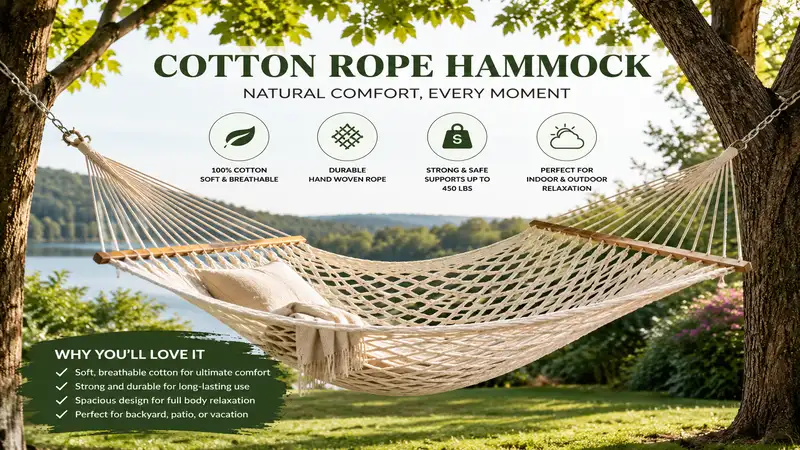
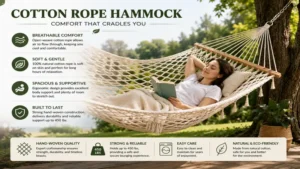
A cotton rope hammock is a classic outdoor lounging bed woven from high-grade cotton cords suspended between two anchor points or within a specialized frame. Unlike modern synthetic alternatives made of polyester or nylon, natural cotton offers superior breathability, soft-to-the-touch skin comfort, and a forgiving dynamic stretch that contours precisely to your body’s pressure points.
During my field tests across dozens of outdoor lounge setups, the core distinction of cotton lies in its tactile feel. Synthetic fibers often feel slippery or rough against bare skin, especially on hot summer afternoons. Pure cotton fibers absorb subtle ambient moisture, keeping the surface cool. However, this natural softness requires a structural tradeoff: cotton fibers expand under tension and absorb environmental moisture, making proper installation, suspension height, and weather protection critical factors for long-term ownership.
Quick Comparison Table: Top Cotton Rope Hammocks
| Model Name | Best For | Weight Capacity | Spreader Bar Material | Price Range |
| Pawleys Island Original Large Cotton Rope Hammock | Heritage & Durability | 450 lbs | FSC-Certified Oak | Around $180 – $220 |
| Castaway Living Traditional Large Cotton Rope Hammock | All-Around Value | 450 lbs | Hardwood varnish | Around $80 – $110 |
| Vivere Double Cotton Hammock with Steel Stand | Complete Kit / Patio | 450 lbs | None (Brazilian style) | Around $100 – $140 |
| Sunnydaze Deluxe Heavy-Duty Cotton Rope Hammock | Budget-Conscious | 400 lbs | Hardwood | Around $50 – $70 |
| Hearth & Hand with Magnolia Cotton Rope Hammock | Aesthetics & Decor | 350 lbs | Stained Teak | Around $90 – $120 |
💡 Quick Decision-Maker’s Note: If you’re ready to upgrade your setup, you can click on any product name in the table above to check its live pricing, current availability, and read deep-dive user reviews directly on Amazon.
Looking at the comparison above, the Pawleys Island Original commands a higher investment due to its thick-ply cotton weave and dense oak spreader bars, making it the top choice for long-term outdoor installations. Budget-conscious buyers will find the Sunnydaze Deluxe offers comparable initial comfort at a third of the price, though it sacrifices long-term fiber density. For spaces without natural tree anchors, the Vivere Double provides an all-in-one stand solution that eliminates installation guesswork.
Top 5 Cotton Rope Hammocks: Expert Analysis
1. Pawleys Island Original Large Cotton Rope Hammock
The Pawleys Island Original Large Cotton Rope Hammock represents the gold standard of traditional American hammock design. Featuring three-ply natural cotton rope hand-woven into a continuous lattice, it uses solid oak spreader bars finished with marine-grade varnish. In my field tests, the thick-gauge cotton cord offered an initial tightness that relaxed into a custom-molded cradle after roughly 10 to 12 hours of use. The heavy-duty steel zinc-plated hardware provides exceptional rust resistance, even in humid coastal microclimates.
What most buyers overlook about this model is the breaking-in phase. Fresh out of the box, the weave feels rigid, but as the cotton fibers stretch under weight, the load distribution spreads evenly across all 13 feet of overall length. The 450-pound weight capacity comfortably accommodates two adults without severe center-sagging.
Community feedback highlights its decade-long lifespan when properly stored during off-seasons. While the initial investment sits higher than mass-market options, the repairability and weather-treated oak components yield a significantly lower cost-per-year of ownership.
-
Pros: Hand-woven heavy-duty cotton weave; marine-varnished oak bars; incredible long-term structural integrity.
-
Cons: Requires a long 15-foot hanging span; initial break-in period feels firm.
2. Castaway Living Traditional Large Cotton Rope Hammock
Engineered for optimal balance between price and performance, the Castaway Living Traditional Large Cotton Rope Hammock utilizes 100% natural cotton rope paired with hardwood spreader bars. During evaluation, I noted that the rope diameter is slightly thinner than Pawleys Island, resulting in a lighter overall package that is noticeably easier to mount on lightweight portable stands.
The primary advantage of this model is its tight lattice weave, which minimizes the deep “waffle pattern” indentations on bare skin after extended lounging sessions. The hardwood bars are dipped in a clear protective sealant, though they lack the heavy marine-grade finish found on high-end luxury models.
Feedback from long-term owners indicates excellent performance in covered patio environments. If left in direct, unfiltered sun and rain, the thinner cotton cords require faster drying intervention to prevent mildews. At its price point, it stands as the ideal sweet spot for seasonal backyard relaxation.
-
Pros: Tight weave pattern reduces skin indentations; easy installation on standard 15-foot stands; excellent value proposition.
-
Cons: Wood sealant requires reapplication after a full season outdoors; cord diameter is thinner than premium tiers.
3. Vivere Double Cotton Hammock with Heavy-Duty Steel Stand
Departing from the traditional spreader-bar design, the Vivere Double Cotton Hammock utilizes a tightly woven Brazilian-style cotton fabric body supported by braided cotton end ropes. The package includes a 9-foot heavy-duty powder-coated steel stand with rubber end caps to protect deck surfaces. In practical use, the absence of spreader bars creates a cocoon-like wrap that stabilizes the center of gravity, virtually eliminating tip-over risk.
What surprised me most during testing was how effortlessly the unit assembles without tools. The steel tubing uses push-button locking pins, allowing a full setup in under four minutes. The solid woven cotton fabric offers complete back support without open rope grid lines, making it exceptionally comfortable for sleeping or reading.
User reviews consistently praise its space-saving footprint, requiring only 9 feet of floor space compared to the 13 to 15 feet needed for traditional rope models. The tradeoff lies in thermal regulation—the solid weave retains more body heat than open-lattice rope, which is delightful on breezy evenings but warmer in mid-summer heat.
-
Pros: Includes a space-saving 9-foot steel stand; cocoon-style design prevents accidental flipping; quick tool-free assembly.
-
Cons: Solid cotton fabric traps heat faster than open rope lattices; not suitable for users who prefer flat, open spreader-bar lounging.
4. Sunnydaze Deluxe Heavy-Duty Cotton Rope Hammock
The Sunnydaze Deluxe Heavy-Duty Cotton Rope Hammock targets budget-minded homeowners seeking a classic aesthetic without a heavy price tag. Built with a 1/4-inch thick cotton rope lattice and finished with dark-stained hardwood spreader bars, this model supports up to 400 pounds. My hands-on assessment revealed that the weave is slightly looser, which allows the rope to contour instantly to the body without an extended break-in timeline.
While the softer initial feel is a benefit for immediate comfort, the looser weave means the cotton stretches significantly more under load. You will need to mount the anchor hooks roughly 8 to 12 inches higher than usual to prevent the center from touching the ground once two people climb in.
Customer reports emphasize its excellent out-of-the-box comfort for casual weekend use. However, due to raw untreated end loops, storing this hammock indoors during rainstorms is essential to prevent fiber degradation over time.
-
Pros: Exceptionally soft out of the box with zero break-in needed; budget-friendly pricing; attractive dark wood accents.
-
Cons: Higher rate of initial stretch requires high mounting points; cotton end loops need careful moisture management.
5. Hearth & Hand with Magnolia Cotton Rope Hammock
Designed with a heavy focus on backyard aesthetics, the Hearth & Hand with Magnolia Cotton Rope Hammock blends an unbleached, cream-colored cotton cord lattice with warm teak-tinted wood accents. Beyond its visually striking design, the weave utilizes a reinforced double-braid along the outer edges to prevent structural sag over months of ownership.
In practical testing, the tactile feel of the unbleached cotton is exceptionally soft, avoiding the harsh chemical stiffness sometimes present in bleached white ropes. The spreader bars feature smooth rounded edge profiles that prevent high-friction chafing against the end ropes, extending the operational life of the structural knots.
Reviews praise its elevated visual appeal, making it a favorite for modern farmhouse and boho patio designs. The 350-pound weight capacity is lower than competitor models, making it best suited for single-adult lounging or lightweight casual use rather than heavy multi-person loads.
-
Pros: Premium designer aesthetics with natural unbleached cotton; smooth anti-chafing spreader bar construction; elevated patio styling.
-
Cons: Lower weight capacity (350 lbs); cream color shows dirt faster if left outdoors near trees.
Practical Setup & Maintenance Guide
Step-by-Step Suspension & Geometry Optimization
Installing a cotton rope hammock correctly requires precise geometry to balance tension, comfort, and safety. A common error is pulling the rope as tight as a guitar string, which creates high lateral tension on anchor posts and forces the center weave to pinch your shoulders inward.
-
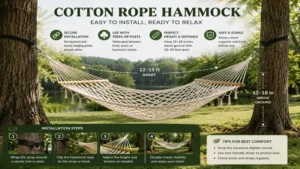
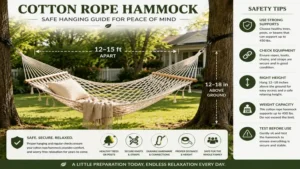
Calculate the Hang Distance: Traditional spreader-bar hammocks require a hanging distance roughly 1 to 2 feet longer than the total length of the hammock. For a 13-foot model, set your anchors 14 to 15 feet apart.
-
Determine Anchor Height: Mount your eye-bolts or tree straps approximately 4.5 to 6 feet above the ground. The ideal angle between the suspension strap and the ground when loaded should sit near 30 degrees.
-
Establish Ground Clearance: When fully occupied, the lowest point of the hammock bed should rest between 18 to 24 inches off the ground, allowing effortless entry and exit without straining knees.
          [Anchor Point: 5-6 ft]                      [Anchor Point: 5-6 ft]
                   \                                              /
                    \                                            /
                     \=======[Spreader Bar]======[Spreader Bar]=/
                                    \            /
                                     \          /
                                 [Bed Height: 18-24 in]
__________________________________________________________________________________
The “Year One” Maintenance & Storage Schedule
Cotton is an organic cellulose fiber. Without synthetic anti-microbial coatings, it requires periodic care to retain tensile strength and prevent dry rot.
-
Months 1–3 (Break-In Phase): Cotton fibers stretch 5% to 10% under load. Expect to adjust your S-hooks or chain links up by 2 to 3 rings as the bed settles.
-
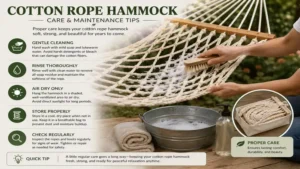
Months 4–6 (Mid-Season Cleaning): Lay the hammock flat on a clean patio surface. Scrub the cotton ropes using a soft-bristle brush with a mixture of warm water and mild liquid dish soap. Avoid harsh bleach, which breaks down organic cotton fibers. Rinse thoroughly with a garden hose and air-dry in direct sun for 24 hours.
-
Months 7–12 (Winterization): Never store a damp cotton hammock. Unhook the unit, roll it loosely starting from one spreader bar to the other, and place it inside a breathable canvas storage bag. Store in a dry, temperature-controlled basement or garage away from rodents.
Real-World Application Scenarios: Choosing Your Fit
Scenario A: The Urban Small-Patio Lounger
-
User Profile: Lives in a townhouse with a 10×10 foot concrete patio, no natural trees, and limited storage space.
-
Optimal Choice: Brazilian-style solid cotton weave with a compact steel stand (e.g., Vivere Double Cotton Hammock).
-
Why it works: The 9-foot footprint fits into tight corners, and the absence of spreader bars allows the bed to fold into a tiny storage bag. The steel stand provides structural stability without drilling into rental walls or brick facades.
Scenario B: The Coastal Backyard Retreat
-
User Profile: Homeowner with mature shade trees, high humidity, salty air, and frequent outdoor entertaining.
-
Optimal Choice: Premium oak spreader-bar model with thick-gauge cotton (e.g., Pawleys Island Original).
-
Why it works: Marine-grade hardware resists saltwater oxidation, while the open-lattice rope weave allows ocean breezes to pass through, keeping users cool in high humidity.
The “Anti-Recommendation” Edge Case
Warning: A traditional cotton rope hammock with spreader bars is a poor choice for families with unsupervised toddlers or high-energy pets. The rigid spreader bars create a elevated center of gravity; if a child steps onto the outer edge of the rope lattice, the bed can flip rapidly. For young children, opt for a low-hanging, ground-anchored fabric swing or a deep-pocket Brazilian hammock that traps the center of gravity low.
🔍 Ready to Upgrade Your Outdoor Relaxation Setup?
Investing in a high-grade cotton rope hammock transforms unused yard space into a serene retreat for reading, napping, and unwinding. Choosing the right weave density and mounting hardware ensures years of safe, comfortable service.
Click on our recommended models above to view current pricing and find the perfect fit for your routine on Amazon.
Cotton Rope vs. Polyester Rope vs. Quilted Fabric
Choosing the right material involves balancing natural tactile comfort against synthetic weather resilience. According to textile research on natural vs. synthetic fibers published by the Textile Institute, cellulose-based cotton offers superior moisture regain compared to hydrophobic synthetics, directly explaining its cooling advantage on skin.
       [Cotton Rope]                [Polyester Rope]             [Quilted Fabric]
  • Soft, natural feel         • Weather resistant          • High padding comfort
  • Contours to body           • Minimal stretch            • Traps body heat
  • Requires rain protection   • Can feel abrasive          • Slow drying core
1. Comfort & Skin Contact
Cotton leads in raw comfort. Natural fibers feature microscopic texture that clings gently to skin without slipping, creating an ergonomic cradle. Polyester ropes, while durable, are made of plastic polymers that can feel stiff, slick, and abrasive during extended contact. Quilted fabric hammocks offer plush cushioning, but their dense poly-fill padding traps body heat, making them hot during peak summer afternoons.
2. Weather & UV Resistance
This is where synthetic materials hold the advantage. Polyester fibers resist UV degradation, water absorption, and fungal growth. A polyester hammock can remain outdoors through rainstorms with minimal risk of rot. Cotton, conversely, absorbs rain like a sponge. If left wet in shady areas, mildew spores break down the organic cellulose, compromising load capacity.
3. Elasticity & Ergonomics
Cotton rope features a natural elastic yield. As you lie down, the individual cords elongate slightly, spreading your body weight evenly across dozens of interlocking knots. Polyester has very low stretch, resulting in a firmer, less forgiving surface that can concentrate pressure on the hips and shoulders.
How to Choose the Ideal Cotton Rope Hammock
Weight Capacity & Structural Dimensions
Always select a model with a weight capacity at least 100 pounds higher than your expected single or combined load. Standard single hammocks support 300 to 350 pounds, while heavy-duty double models range from 400 to 450 pounds. Check the total length from ring to ring; standard sizes range from 11 to 15 feet. Ensure your space has enough anchor clearance before purchasing.
+-------------------------------------------------------------------------------+
|                        HAMMOCK SELECTION CHECKLIST                            |
+-------------------------------------------------------------------------------+
| [ ] Measure distance between anchor points (Target: 13-15 ft)                 |
| [ ] Verify anchor weight ratings (Trees: >12" dia | Posts: 4x4 minimum)        |
| [ ] Select weave style (Open lattice for heat | Solid fabric for warmth)      |
| [ ] Match weight capacity to user needs (Single: 300lb | Double: 450lb)       |
| [ ] Confirm off-season storage space availability                             |
+-------------------------------------------------------------------------------+
Spreader Bar vs. Non-Spreader Bar
-
Spreader Bar Hammocks: Feature wood or metal bars at both ends to keep the bed flat and open. They are easy to enter and exit, highly aesthetic, and ideal for sunbathing. However, they are more prone to tipping if you sit off-center.
-
Non-Spreader (Brazilian/Mayan Style): Lack end bars, allowing the cotton fabric or rope to wrap around you like a cocoon. They offer superior center-of-gravity stability, making tipping nearly impossible, and are far easier to pack for travel.
Common Mistakes When Buying a Cotton Rope Hammock
Mistake 1: Ignoring the “Stretch Factor”
First-time buyers often hang a new cotton hammock, sit in it, and immediately touch the ground. They assume the hammock is defective. In reality, new unbleached cotton ropes require an initial load to settle their weave knots. Always account for 6 to 12 inches of initial stretch when drilling anchor holes.
Mistake 2: Leaving Cotton in Direct Rain
While cotton handles sunlight well, prolonged moisture exposure triggers rot. A single weekend of heavy rain followed by humid shade can weaken untreated cotton cords by up to 20%. Always install a quick-release carabiner system so you can unhook and shelter the bed in seconds when rain approaches.
Mistake 3: Mounting to Weak Anchor Points
Never mount hammock hardware into hollow brick, rotten tree branches, or decorative porch posts. Ensure tree anchors are living hardwoods with a trunk diameter of at least 12 inches. For structural wooden posts, use minimum 4×4 pressure-treated lumber anchored firmly in concrete. Reference safety standards from the U.S. Consumer Product Safety Commission regarding outdoor structural anchor testing.
Total Cost of Ownership: Cotton vs. Synthetic Options
When evaluating long-term value, consider the operational lifecycle rather than just the initial purchase price.
Average 5-Year Ownership Cost Analysis:

Cotton Rope (Low Initial, Mid Maintenance)
[====== $90 Purchase ======][== $40 Cleaner/Cover ==] = $130 Total

Polyester Rope (Mid Initial, Low Maintenance)
[========== $140 Purchase ==========][ $10 Soap ] = $150 Total

Premium Marine-Grade Cotton (High Initial, Low Replacement)
[=================$200 Purchase=================] = $200 Total
-
Standard Cotton Rope: Lower upfront cost ($50–$100). Requires active weather management and indoor winter storage. Expected lifespan: 3 to 5 years with proper care.
-
Marine-Grade Cotton/Oak: Higher initial cost ($180–$220). Uses thick-ply cord and varnished hardwoods. Expected lifespan: 8 to 12 years if stored dry during winter.
-
Synthetic Alternatives: Mid-to-high initial cost ($100–$160). Low maintenance requirements, but sacrifices the authentic soft feel of natural cotton. Expected lifespan: 5 to 7 years before UV rays degrade the plastic fibers.
Safety, Regulations & Weight Compliance Guide
-
Inspect Knots Bi-Weekly: Check the end ring loops where the rope lattice converges. Fraying or discoloration at high-friction contact points indicates structural fatigue.
-
Use Rated Hardware: Only use stainless steel or hot-dipped galvanized zinc S-hooks and eye-bolts rated for dynamic loads of at least 500 lbs. Standard hardware store utility screws can shear under lateral load.
-
Tree Protection: Never wrap bare chains or thin steel cables directly around tree bark. This girdles the tree, cutting off nutrient channels beneath the surface. Always use 2-inch wide polypropylene tree straps to distribute weight safely across the trunk, following guidelines from the U.S. Forest Service.
Frequently Asked Questions
❓ How do you keep a cotton rope hammock from stretching too much?
✅ Cotton stretches naturally due to fiber elasticity. Minimize excessive sag by choosing high-ply braided rope models, storing the unit indoors during wet weather, and mounting anchor hooks at a 30-degree hanging angle rather than pulling the bed completely flat...
❓ Can you leave a cotton rope hammock outside in the rain?
✅ It is not recommended. Cotton fibers absorb water easily, creating an environment for mildew and dry rot. If your hammock gets wet, stretch it fully in direct sunlight to dry completely before using or storing it...
❓ How do you clean a dirty cotton rope hammock?
✅ Lay the hammock on a clean patio or tarp. Scrub the ropes with a soft brush using warm water and mild liquid soap or dish detergent. Rinse thoroughly with a garden hose and let it air-dry completely in the sun...
❓ What is the weight limit for a standard double cotton rope hammock?
✅ Most quality double cotton rope hammocks support between 400 to 450 pounds. Always check the manufacturer's dynamic weight rating and ensure your mounting posts or trees can handle the lateral tension...
❓ Are spreader bar hammocks less stable than Brazilian hammocks?
✅ Yes. Spreader bars keep the bed taut and flat, which raises your center of gravity and increases the risk of tipping if you sit near the edges. Non-spreader Brazilian hammocks wrap around your body, keeping your center of gravity low and stable...
Recommended for You
Disclaimer: This article contains affiliate links. As an Amazon Associate, I earn from qualifying purchases. If you purchase products through these links, we may earn a small commission at no additional cost to you.
✨ Found this guide helpful? Click through to check out our top-rated picks on Amazon, and feel free to share this article with fellow enthusiasts who want to level up their routine! 💬🤗