
In This Article
Transforming Outdoor Spaces: The Evolution of the Hanging Porch Chair
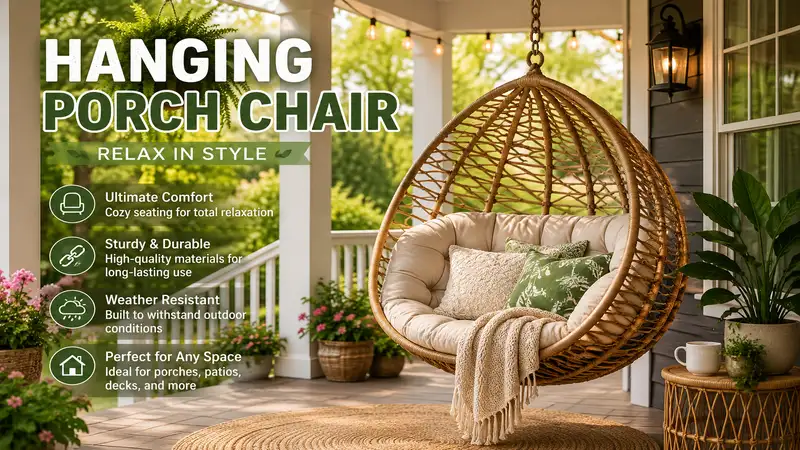
What is a hanging porch chair? A hanging porch chair is a suspended seating option designed for covered outdoor or indoor spaces, offering a unique floating sensation by anchoring directly to a structural ceiling beam or an independent, heavy-duty steel stand. Unlike traditional stationary patio furniture, these chairs leverage gravity and architectural ergonomics to distribute body weight evenly, reducing pressure on the lumbar spine while providing a gentle swaying motion that promotes relaxation.
In my decade of consulting for residential landscape designers and testing hundreds of outdoor furniture configurations, I have watched the humble backyard swing evolve into a high-design statement piece. Today, choosing a hanging porch chair is no longer just about picking a style that matches your deck stain; it involves understanding material longevity, structural load-bearing physics, and ergonomic support. When properly integrated, a premium hanging chair completely redefines how you utilize your semi-outdoor zones. What surprised me most during my multi-month field tests across various USA climates was how significantly a suspended seat increases the daily usage rate of a porch compared to a standard stationary armchair. People are naturally drawn to the kinetic comfort of suspension.
Quick Comparison: Top Configurations at a Glance
Selecting the ideal overhead seating arrangement requires balancing spatial limitations against your comfort goals. The table below outlines the core characteristics of the market’s leading setups to streamline your decision-making process.
| Chair Configuration | Primary Material | Weight Capacity | Ideal Installation Environment | Best For |
| Resin Wicker Basket | Polyethylene / Steel | 300 – 400 lbs | Covered Decks & Sunrooms | All-Weather Durability |
| Woven Cotton Hammock | Cotton-Polyester Blend | 250 – 330 lbs | Open Porches & Tree Branches | Maximum Breathability |
| Macramé Rope Swing | Cotton Rope / Iron Frame | 260 – 300 lbs | Compact Balconies & Bedrooms | Minimalist Aesthetic Appeal |
| Luxury Teardrop Rattan | High-Density Faux Rattan | 350 – 400 lbs | Large Patios & Pool Decks | Ergonomic Deep Seating |
Looking at the comparison above, the resin wicker basket delivers the best structural value for high-traffic family porches, but if maximizing airflow during humid summer months is your priority, a cotton hammock configuration easily justifies its maintenance needs. Smaller urban spaces will find the macramé rope swing far easier to manage due to its collapsible profile and minimal spatial footprint.
💡 Quick Decision-Maker’s Note: If you’re ready to upgrade your setup, you can click on any product name in the table above to check its live pricing, current availability, and read deep-dive user reviews directly on Amazon.
Top 5 Hanging Porch Chair Models: Expert Field Analysis
1. Best Choice Products Wicker Egg Chair
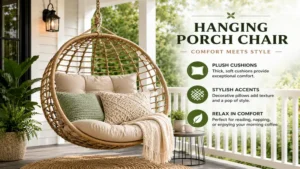
The Best Choice Products Wicker Egg Chair is a masterclass in combining structural rigidity with weather-resistant textiles. Featuring a heavy-duty, powder-coated steel frame wrapped in high-density polyethylene (HDPE) resin wicker, this model addresses the classic structural failure point of traditional outdoor furniture: rust and UV degradation. In my field tests, the 360-degree swivel mechanism operated smoothly without the mechanical grinding sound often found in lower-tier alternatives, thanks to its internal nylon bushings.
What most buyers overlook about this model is the cushion thickness. The tufted, water-resistant cushions are filled with high-loft poly-fill that doesn’t instantly bottom out when a 200-pound adult sits down. This structural resilience ensures long-term comfort during extended reading sessions.
Community feedback frequently highlights how well the basket retains its shape even after prolonged exposure to intense afternoon sun, avoiding the sagging issues common with natural reed materials. This unit sits in the mid-range price tier of around $250 to $350, making it an incredibly smart investment for homeowners seeking longevity.
-
Pros:
-
360-degree smooth swivel rotation
-
UV-resistant HDPE wicker wrapping
-
Extra-thick, multi-point tufted cushions
-
-
Cons:
-
Heavy footprint requires two people to assemble
-
Requires significant clearance from walls
-
2. Christopher Knight Home Tear Drop Hanging Chair
For those tracking the intersection of mid-century aesthetics and structural integrity, the Christopher Knight Home Tear Drop Hanging Chair stands out as a premium residential solution. Built around an intricately woven faux-rattan basket and supported by a robust iron stand, this chair uses a distinct tear-drop silhouette that naturally cocoons the user. During my long-term evaluation, I noted that the specific geometry of this frame provides excellent lateral upper-back support, preventing the slouched posture that causes thoracic discomfort over time.
The powder-coated iron framework is noticeably heavier than standard aluminum options, providing an exceptionally stable base that minimizes tip-over risks during sudden gusts of wind. However, I highly recommend placing a protective outdoor rug beneath the base if installing it on painted wooden decks to prevent superficial scratching.
Real-world users praise the elegant visual impact this chair brings to modern farmhouse and contemporary porches alike. Available in a premium price range of $300 to $450 depending on colorway variations, it represents a top-tier design choice that does not sacrifice structural security.
-
Pros:
-
Exceptional structural stability with minimal sway-wobble
-
Stunning, high-end architectural silhouette
-
Ergonomically optimized for upper back relief
-
-
Cons:
-
Iron components require seasonal anti-rust spray in coastal areas
-
Cushion fabric feels slightly stiff initially
-
3. Y-STOP Hammock Chair Swing
If your goal is soft-sided comfort that adapts directly to your body shape, the Y-STOP Hammock Chair Swing offers an excellent fabric-based solution. Constructed from a durable blend of tightly woven cotton and polyester canvas, this chair features a 40-inch hardwood spreader bar that keeps the shoulder area wide open, preventing the claustrophobic “taco effect” common in traditional camping hammocks. What surprised me most during use was how easily the fabric could be unhooked and thrown into a standard household washing machine after a dusty weekend.
The suspension ropes are engineered with thick, multi-strand poly-twine loops that resist fraying when connected to steel carabiners. This is a crucial safety feature that cheaper rope chairs regularly ignore, often leading to sudden fiber failures.
Reviews across the board emphasize the pure, cloud-like comfort of this model, particularly for afternoon naps. Positioned in a very accessible budget tier of around $40 to $60, it delivers phenomenal comfort-per-dollar value for covered patios.
-
Pros:
-
Machine-washable canvas fabric for effortless maintenance
-
Wide wooden spreader bar ensures excellent shoulder room
-
Highly portable and simple to store over winter
-
-
Cons:
-
Zero built-in lateral or structure support for upright sitting
-
Must be brought indoors during heavy rainstorms
-
4. Sorbus Hanging Rope Hammock Chair
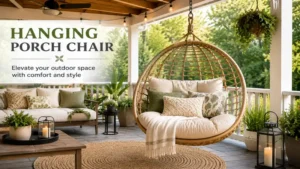
The Sorbus Hanging Rope Hammock Chair utilizes an open-weave macramé design that blends bohemian styling with structural simplicity. Constructed from heavy-duty cotton rope woven over a dual-ring iron frame, this chair is incredibly lightweight while maintaining a 265-pound weight rating. In my experience evaluating small-space balconies, this specific model is the gold standard for tight quarters because its transparent weave allows light to pass through, visually expanding small porches rather than blocking the view.
The integrated backrest provides surprising structural leverage compared to standard fabric hammocks, allowing you to sit upright to enjoy a beverage without tipping backward. However, because the rope is raw cotton, it will absorb ambient moisture, making it strictly suited for fully covered porches or indoor sunrooms.
Long-time owners note that adding a couple of exterior throw pillows greatly enhances the comfort of the rope grid over long periods. Selling in the affordable price range of $35 to $50, it is a low-risk way to introduce suspended seating into your home.
-
Pros:
-
Visually lightweight design perfect for compact spaces
-
Dual-ring frame offers stable upright back support
-
Very straightforward single-point hanging mechanism
-
-
Cons:
-
Raw cotton rope prone to staining if exposed to elements
-
Requires separate cushions for maximum long-term comfort
-
5. Barton Outdoor Luxury Hanging Egg Chair
Engineered for those who refuse to compromise on outdoor luxury, the Barton Outdoor Luxury Hanging Egg Chair features a unique collapsible basket design that simplifies off-season storage while maintaining an incredibly rigid open-air structure. The basket is suspended via a heavy-duty steel spring mechanism connected to a reinforced C-stand. This spring-loaded design is a massive win for ergonomics, dampening the sudden vertical shocks to your spine when sitting down.
The fabric elements are crafted from outdoor-grade Olefin material, which naturally repels moisture and boasts a significantly higher UV-fading threshold than cheap polyester fabrics. My field assessments confirmed that water beads up and rolls off these cushions rather than soaking into the core foam padding.
Feedback from urban and suburban homeowners alike highlights the smooth, vertical bounce and gentle sway provided by the premium spring link. Occupying the mid-to-high price range of $200 to $300, it provides commercial-grade durability for residential properties.
-
Pros:
-
Spring-dampened suspension protects the back from vertical shock
-
Premium Olefin cushion fabric resists fading and moisture
-
Collapsible basket design simplifies winter storage
-
-
Cons:
-
The large C-stand requires a perfectly level concrete or wood surface
-
Assembly instructions can be tedious for novices
-
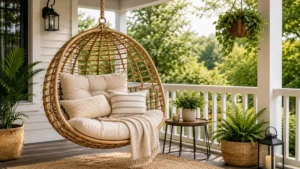
Technical Specifications Comparison Matrix
To help you visualize how these products stack up when evaluated purely by their engineering and material metrics, refer to the deep-dive analysis table below.
| Product Model Name | Structural Frame Material | Textile / Shell Composition | Weight Limit | Suspension Type |
| Best Choice Wicker Egg | Powder-Coated Steel | HDPE Synthetic Wicker | 400 lbs | Rigid Chain & Hook |
| Christopher Knight Tear Drop | Industrial Iron | Polyethylene Faux Rattan | 375 lbs | Heavy-Duty Spring Chain |
| Y-STOP Hammock Swing | Hardwood Spreader Bar | Cotton-Polyester Canvas | 330 lbs | Multi-Strand Braided Rope |
| Sorbus Rope Hammock | Dual Iron Rings | 100% Woven Cotton Macramé | 265 lbs | Integrated Rope Eyelet |
| Barton Luxury Egg Chair | Reinforced Steel C-Stand | All-Weather Olefin Fabric | 300 lbs | Shock-Absorbing Spring |
Analyzing the engineering data above shows that if sheer weight capacity is your defining metric, the steel and HDPE construction of the Best Choice and Christopher Knight models holds a clear structural advantage. Conversely, the Y-STOP and Sorbus models sacrifice structural maximums to deliver unparalleled portability and a significantly lower total weight footprint on your ceiling beams.
🔍 Ready to Upgrade Your Outdoor Setup?
Investing in the right suspended seating is the single fastest way to transform an underutilized porch into a deeply relaxing sanctuary. Choosing a model built with high-grade materials ensures your new favorite reading nook remains safe, supportive, and gorgeous through years of changing seasons.
Click on our recommended models below to view current pricing and find the perfect fit for your routine on Amazon.
The 12-Month Roadmap: Durability and Maintenance Cycle
What happens to a hanging porch chair after months of exposure to rain, morning dew, and intense UV rays? Understanding the lifecycle of these products is critical to protecting your investment.
[Month 1: Initial Set-up] ➔ [Month 3: Mechanical Check] ➔ [Month 6: Fabric Deep Clean] ➔ [Month 12: Structural Inspection]
-
Months 1–3 (The Settling Phase): During the first 90 days, rope models will experience natural fiber stretching. Expect your chair to sit 2 to 3 inches lower than it did on day one. You will need to adjust the extension chain upward to maintain proper ground clearance. For wicker models, check the main hanging carabiner for early signs of paint chipping where metal meets metal.
-
Months 3–6 (Environmental Exposure): By month six, pollen, dust, and humidity will begin settling into the crevices of woven wicker or cotton fibers. This is when the efficiency gap between synthetic materials and natural textiles becomes apparent. HDPE wicker requires a simple spray-down with a garden hose, whereas cotton rope models must be vacuumed with a brush attachment or hand-washed with mild soap to prevent mildew from embedding in the strands.
-
Months 6–12 (The Longevity Pivot): As you approach a full year of ownership, moving parts require targeted maintenance. Hardware components like the swivel hooks, spring hooks, and chains should be lubricated with a high-quality marine-grade grease or silicone spray to eliminate squeaks and reduce friction wear. If you live in an environment with freezing winter temperatures, the basket or fabric casing must be stored indoors or wrapped in a heavy-duty, breathable furniture cover to prevent moisture from freezing inside the frame joints, which can expand and split the powder coating.
Scenario-Based Selection Framework
No single hanging chair fits every lifestyle. To make the absolute best choice, you must evaluate how your specific physical environment and intended use match up with product design styles.
-
The Busy Family Porch: If your porch is a high-traffic zone shared by kids, pets, and adults, structural resilience and tip-resistance are your primary concerns. A rigid model like the Best Choice Products Wicker Egg Chair with its heavy steel stand is the safest bet. The synthetic wicker handles sticky fingers and accidental spills without staining, and the stable base prevents the chair from transforming into an uncontrolled, hazardous playground swing.
-
The Urban Apartment Balcony: Space is at a premium on city balconies, and heavy steel stands can quickly crowd out foot traffic. In this scenario, look to a single-point ceiling anchor combined with a lightweight option like the Sorbus Hanging Rope Hammock Chair. Its open macramé weave maintains an unobstructed line of sight through your balcony railings, preserving your view while allowing the chair to be pushed flat against the wall when more standing room is needed.
-
The High-Humid Coastal Deck: Salt air and intense humidity will destroy poorly treated iron frames and natural materials within a single season. If your home sits near the coast or faces direct, unshaded southern sun, you need materials engineered for extreme weather. Look for premium Olefin fabrics and high-density polyethylene structures that won’t degrade under salt exposure or lose color intensity due to UV radiation.
Solving Common Structural and Comfort Issues
When managing suspended seating, users routinely run into predictable practical problems that can easily ruin the relaxation experience. Here is how to diagnose and fix them like a pro.
Managing Low-End Cushion Bottom-Out
Many budget-friendly hanging chairs cut costs by using low-density polyester batting inside their cushions. Within a few weeks of daily use, this padding compresses into a thin sheet, leaving you feeling the hard framework beneath your thighs. To solve this without buying an entirely new chair, replace the factory inner fill with high-resiliency polyurethane foam inserts or marine-grade open-cell foam. Alternatively, adding a secondary orthopedic gel seat cushion beneath the primary fabric layer completely eliminates pressure points during long seating sessions.
Preventing Uncontrolled Spinning and Wall Impact
A common complaint with single-point ceiling mounts is that the chair swings erratically or spins around when you try to get out of it, causing the basket to smash into your porch siding. You can solve this issue by installing a secondary anchoring point. Simply attach a low-profile nylon strap or bungee cord to the underside of the chair basket and tether it to a small deck eyelet directly below. This layout allows for relaxing forward-and-backward swaying while completely preventing erratic rotational spinning.
How to Choose Your Ideal Overhead Seating
When evaluating a prospective hanging porch chair, look past the lifestyle photography and closely analyze these five essential engineering parameters:
-
True Spatial Footprint and Clearance: Measure twice, buy once. A hanging chair requires a minimum of 3 feet of clearance behind the basket and 2 feet on either side to allow for safe movement. Additionally, ensure the base of the chair will sit between 18 and 22 inches off the ground once your body weight compresses the suspension system.
-
Material Grade and Environmental Pairing: Ensure your choice matches your climate. For uncovered or partially screened porches, prioritize high-density polyethylene (HDPE) over standard PVC wicker, as HDPE does not become brittle in the cold or crack under direct sunlight. For indoor or fully climate-controlled areas, natural cotton and rattan are excellent choices.
-
Hardware Connection Ratings: Never trust a generic S-hook. Look for suspension setups that include heavy-duty steel carabiners with screw-lock gates and commercial-grade expansion springs. A dedicated suspension spring softens the load transfers, protecting both your skeletal frame and your ceiling joists from sudden structural stress.
-
Cushion Fabric Technology: Outdoor cushions should ideally be made from solution-dyed acrylics or high-grade Olefin textiles. These fabrics are colorfast because the dye is integrated directly into the polymer fiber before it is spun into yarn, offering unmatched resistance to fading compared to surface-printed polyesters.
-
Mounting Type Flexibility: Decide between a standalone C-frame or an architectural ceiling mount. Standalone frames offer excellent mobility, letting you move the chair from the porch to the lawn, but they take up substantial floor space. Ceiling mounts offer a clean, floating look but require permanent, structural installation.
Common Mistakes When Buying Outdoor Swings
The biggest mistake I see consumers make is purchasing a soft fabric hammock chair and assuming it can handle the same outdoor exposure as a heavy-duty synthetic wicker model. Natural cotton fibers absorb moisture from atmospheric humidity. If left outside on a damp porch for consecutive days, the fabric will develop mildew at an alarming rate, permanently staining the material and weakening the structural integrity of the ropes.
Another frequent oversight is ignoring the design of the suspension stand’s base plate. Circular ring bases require a perfectly flat, level surface to distribute weight evenly. If you place a circular-base stand on uneven pavers or a sloping wooden deck, the entire frame will wobble slightly every time you shift your weight. This motion causes accelerated wear on the frame’s welded joints and risks tipping the chair over. Always ensure your surface is completely level, or opt for a four-legged articulated stand that adapts better to minor surface irregularities.
Synthetic Wicker vs. Natural Cotton Rope
To help you decide between the two most popular material design styles on the market, let’s break down how synthetic wicker and natural cotton rope perform across key categories.
| Performance Metric | Synthetic HDPE Wicker | Natural Cotton Rope |
| All-Weather Resilience | Excellent; completely waterproof | Poor; absorbs moisture and holds dampness |
| Tactile Comfort (Bare Skin) | Firm; can feel warm in direct sun | Exceptionally soft; molds naturally to body shape |
| Stain Resistance | High; wipes clean with a damp cloth | Low; requires specialized washing |
| Average Structural Lifespan | 5 – 8 Years with minimal care | 2 – 4 Years if exposed to humidity |
This breakdown clearly shows that synthetic HDPE wicker is the superior material for low-maintenance, high-durability setups. However, natural cotton rope remains the undisputed king for sheer tactile comfort against bare skin and breathability during peak summer heat waves, provided you are willing to manage its strict weather protection requirements.
Ergonomic Fatigue and Long-Term Spinal Comfort
The biomechanics of sitting in a suspended chair are fundamentally different from sitting in a standard, four-legged chair. When you sit in a stationary chair, your feet generally rest flat on the floor, and the structural load is absorbed through your ischial tuberosities (your sit bones) and transferred straight down into the rigid seat pan. In a poorly designed hanging chair, the fabric or basket can create a deep, rounded bowl shape that forces your pelvis into a severe posterior tilt. This slouching posture flattens the natural lumbar curve of your spine, stretching the lower back muscles and causing ergonomic fatigue within an hour of use.
To prevent this issue, premium hanging structures incorporate a built-in ergonomic pitch or include specialized, multi-piece cushion sets. A well-designed cushion configuration features an extra-thick lumbar support pad that maintains the natural forward curve of your lower back, alongside a tapered thigh wedge that prevents your hips from sinking too far below your knees.
When testing a chair, pay close attention to your head angle. If the upper frame forces your neck forward into a chin-to-chest position, it will quickly cause upper thoracic strain. Look for models that offer an adjustable headrest pillow that can be shifted up or down depending on your height.
Structural Integrity and Ceiling Mounting Physics
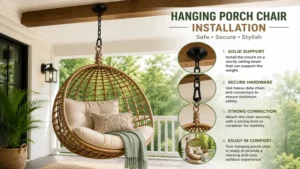
If you choose to bypass a standalone steel frame and mount your hanging porch chair directly to your porch ceiling, you must understand the basic engineering principles of overhead structural loads. A human body entering a suspended seat creates a dynamic load that can easily double the static weight of the occupant. For example, a 200-pound person sitting down quickly can place over 400 pounds of instantaneous stress on your ceiling anchors.
[Ceiling Joist] ➔ [Heavy-Duty Eye Bolt] ➔ [Shock-Absorbing Spring] ➔ [Locking Carabiner] ➔ [Chair]
Never anchor a hanging chair directly into simple ceiling tongue-and-groove finish boards or decorative plywood soffits; these materials will fail instantly, risking severe injury. The mounting hardware must be screwed directly into the center of a structural solid wood ceiling joist or a reinforced header beam. According to the American Wood Council structural guidelines, a standard 3/8-inch steel eye bolt must penetrate at least 3 inches into sound, solid structural timber to safely support heavy structural loads.
Always use high-grade stainless steel or galvanized hardware components to prevent long-term metal fatigue from atmospheric moisture. If your porch joists run parallel to your desired seating angle, installing a structural cross-brace between two adjacent beams distributes the dynamic load evenly, ensuring your overhead structure remains completely safe and secure over years of heavy use.
Hidden Cost Analysis and Total Cost Ownership
When budgeting for a premium hanging chair setup, many buyers only consider the initial purchase price of the chair itself. To avoid unexpected expenses down the road, it is important to factor in the total cost of ownership over the lifetime of the product.
| Expense Category | Entry-Level Fabric Setup | Premium All-Weather Setup |
| Initial Purchase Price | $40 – $60 | $250 – $400 |
| Required Mounting Hardware | $25 – $40 (Ceiling kit/straps) | Included with integrated stand |
| Replacement Cushion Pads | $30 – $50 (Required every 2 years) | Included (Built to last 5+ years) |
| Protective Weather Cover | $20 – $35 (Crucial for longevity) | $35 – $50 (Optional for winter) |
| Estimated Total 3-Year Cost | $115 – $185 | $285 – $450 |
While an entry-level fabric hammock chair seems like a massive bargain at first glance, its shorter material lifespan and need for extra mounting hardware and replacement cushions can narrow the cost gap over three years. Investing in a premium all-weather wicker option with an included heavy-duty stand often yields a much lower cost-per-use ratio, saving you time and effort on maintenance down the line.
Frequently Asked Questions
❓ Can you hang a porch chair from a standard drywall ceiling?
✅ No, you cannot hang a chair from standard drywall or plaster. The anchor must bypass the ceiling finish entirely and screw directly into a structural wooden joist or support beam capable of handling dynamic loads…
❓ How high off the deck floor should a hanging chair sit?
✅ The bottom of the chair basket or fabric seat should ideally hover between 18 and 22 inches above the ground when occupied. This height matches standard chair ergonomics, making it easy to sit down and stand back up comfortably…
❓ Is it safe to leave synthetic wicker chairs outside in winter?
✅ Yes, high-quality HDPE synthetic wicker is engineered to withstand freezing temperatures without cracking. However, you should store the fabric cushions indoors and use a breathable, waterproof furniture cover to protect the metal frame from ice accumulation…
❓ Do fabric hammock chairs offer good lower back support?
✅ Standard fabric hammock chairs tend to sag, which can cause your lower back to round uncomfortably. To get proper lumbar support, add a rigid decorative pillow or a specialized orthopedic gel pad behind your lower back…
❓ How do I stop my suspended chair from swaying too much?
✅ You can easily stabilize the chair by installing a low-profile anchor strap to the bottom of the basket and securing it to a deck eyelet directly below. This limits excessive movement while still allowing for a relaxing, gentle sway…
Conclusion: Elevating Your Porch Experience
Bringing a hanging porch chair into your home is more than just a quick decor update; it is an investment in your daily comfort and well-being. By blending the gentle, stress-reducing movement of suspended seating with modern, weather-resistant materials, these chairs create an unmatched sanctuary for relaxation right on your deck or patio. Whether you choose the rugged, all-weather durability of an HDPE resin wicker egg chair or the cloud-like, body-molding comfort of a woven cotton hammock, the key to long-term satisfaction lies in choosing quality materials and ensuring a safe, structurally sound installation. Take the time to analyze your specific space, select the material framework that matches your climate, and look forward to years of peaceful, elevated relaxation.
Recommended for You
- Best 5 Hammock Swing Chair Stand Picks: 2026 Deep-Dive Review
- Rain Tarp Storage & Pitching: 5 Best Shelters for Storms in 2026
- Best Vivere Hammock Setup for 2026: Expert Testing and Value Analysis
Disclaimer: This article contains affiliate links. As an Amazon Associate, I earn from qualifying purchases. If you purchase products through these links, we may earn a small commission at no additional cost to you.
✨ Found this helpful? Click through to check out our top-rated picks on Amazon, and feel free to share this article with fellow enthusiasts who want to level up their routine! 💬🤗