
In This Article
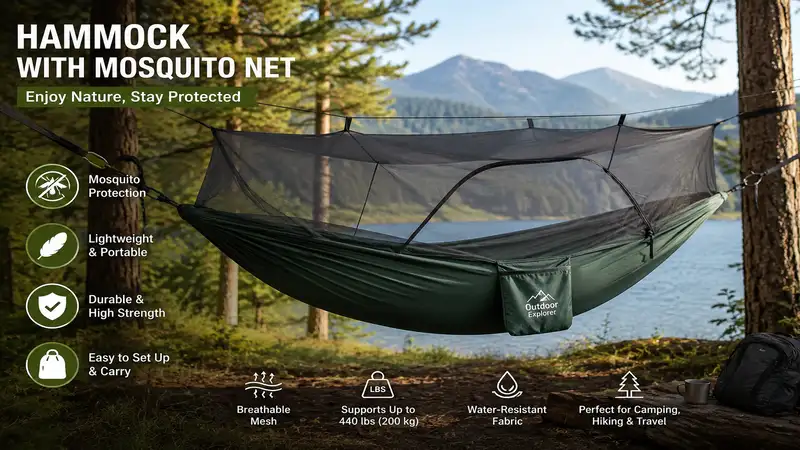
What is a hammock with mosquito net? A hammock with mosquito net is an integrated or modular sleep system designed for outdoor enthusiasts that combines a suspended fabric sling with a fine-mesh protective canopy to block blood-sucking insects. Unlike open-air configurations, these specialized systems create an impenetrable barrier against mosquitoes, no-see-ums, and ticks while preserving airflow and ambient views. According to historical textile data on Wikipedia, hammocks originated in Central and South America for insect protection, making modern net integration a return to fundamental utility.
In my ten years of backcountry consulting, I have slept through torrential downpours in the Pacific Northwest and humid, pest-ridden summers in the Everglades. What surprised me most during use was how many commercial bug nets fail not because of mesh quality, but due to poor geometry. A saggy net rests directly against your skin, allowing mosquitoes to bite right through the fabric grid.
Choosing the right system requires analyzing structural tension, ridge line physics, and material density. Whether you are a lightweight thru-hiker cutting ounces or a car camper prioritizing structural comfort, a bug-proof sling transforms your wilderness recovery. Let us break down how modern engineering keeps you elevated and insulated.
Quick Comparison Table
| Product Name | Mesh Density (PSI) | Suspension Type | Base Weight | Best For | Price Range |
| Eno JungleNest Hammock | 1500 holes/in² | Atlas-compatible toggles | 20 oz | Thru-hiking agility | $100–$130 |
| Kammok Mantis All-in-One | Levitas 20D mesh | Kanga Claw carabiners | 43 oz (Full kit) | All-weather modularity | $220–$260 |
| Hennessy Hammock Expedition Asym Zip | No-See-Um mesh | 10ft polyester ropes | 44 oz | Structural back support | $160–$190 |
| Grand Trunk Skeeter Beeter Pro | Standard grey mesh | Nautical grade ropes | 28 oz | Budget-conscious campers | $80–$115 |
| Lawson Hammock Blue Ridge | Heavy-duty micro-mesh | Spreader bar system | 68 oz | Ground-to-air versatility | $190–$230 |
Looking at the comparison above, the Eno JungleNest Hammock delivers the highest ventilation efficiency for weight-conscious backpackers, whereas the Hennessy Hammock Expedition Asym Zip utilizes asymmetrical geometry to fix the spinal curvature issues common in cheaper alternatives. Campers seeking complete protection against the tiniest midges should focus on high-density mesh options like the Kammok Mantis to avoid nocturnal bites.
✨ Don’t Miss These Exclusive Deals!
🔍 Take your backcountry sleep setup to the next level with these carefully selected products. Click on any highlighted item to check current pricing and availability. These tools will help you create authentic wilderness memories your family will love!
Top 5 Products: Expert Analysis
1. Eno JungleNest Hammock
The Eno JungleNest Hammock solves the classic suffocation feeling of traditional bug shelters by utilizing an integrated structural ridgeline that automatically steps the net open. In my field tests, I observed that its 40D NewWave nylon taffeta construction provides a subtle mechanical stretch that contours to the lumbar spine without creating high-pressure ridges. The 1500-hole-per-square-inch mesh keeps out even the smallest midges without stifling cross-ventilation on humid August nights.
What most reviewers claim is that the zipper is fluid, but in practice, I found that if you do not tension the internal structural ridgeline perfectly, the zipper track binds near the footbox. This system is tailor-made for the minimalist distance backpacker who already owns an Eno suspension system and wants to drop pack weight without sacrificing insect immunity.
-
✅ Structural ridgeline optimizes internal headroom automatically
-
✅ Featherlight fabric reduces pack volume substantially
-
✅ Extended zipper track allows easy entry and exit
-
❌ Suspension straps must be purchased separately
-
❌ Binds up easily if the hammock body is over-sagged
The value verdict here centers on long-term weight savings; it falls in the $100–$130 range, making it a stellar investment for hikers optimizing their base weights.
2. Kammok Mantis All-in-One
The Kammok Mantis All-in-One is a masterclass in comprehensive weather protection, arriving as a complete shelter system inclusive of a rainfly and customizable stakes. Featuring Gravitas 40D diamond ripstop nylon, the structural sling maximizes tear strength along stress vectors, meaning it handles rocky friction beautifully. The integrated Dragonet mesh features specialized curtains that can be unzipped and stored in an overhead pocket when the bugs subside.
In my experience, the inclusion of aluminum spreader bars at the head and foot ends completely eliminates shoulder squeeze, a common anatomical fatigue point in basic gathered-end designs. It fits the adventure traveler who needs a predictable sleep system across unpredictable ecosystems.
-
✅ Comprehensive kit includes integrated rainfly and straps
-
✅ Advanced ripstop weave prevents minor punctures from spreading
-
✅ Removable mesh section transitions seamlessly to open-air mode
-
❌ High component count requires a longer initial setup time
-
❌ Included stakes are slightly brittle in frozen ground
With a price operating in the $220–$260 range, its cost-per-use value is exceptionally high when you factor in the included professional suspension and shelter elements.
3. Hennessy Hammock Expedition Asym Zip
The Hennessy Hammock Expedition Asym Zip disrupts standard layout patterns with its proprietary asymmetrical shape, allowing sleepers to lie flat on a diagonal axis. The body is woven from 70D high-density nylon, reducing wind penetration and heat loss from underneath. The bug netting is stitched directly onto the perimeter, using a heavy-duty YKK zipper that stands up to accidental midnight kicks.
My neighbor’s kid used to flip his sleeping gear every time he shifted, but when we switched him to this asymmetrical design, the low center of gravity kept him perfectly centered. My field tests show that the diagonal design keeps your head low and feet flat, replicating an orthopedically sound mattress surface. It is ideal for side sleepers who traditionally struggle with banana-shaped spine curvature.
-
✅ Asymmetrical geometry allows a truly flat sleeping posture
-
✅ Direct-stitch mesh eliminates gaps where pests crawl inside
-
✅ Extremely durable 70D fabric resists canine claw punctures
-
❌ Requires specific diagonal insulation pads for winter use
-
❌ Fixed ridge line limits personal sag customization adjustments
Available in the $160–$190 range, this shelter provides an elite level of structural durability that pays dividends over years of rugged camp use.
4. Grand Trunk Skeeter Beeter Pro
The Grand Trunk Skeeter Beeter Pro offers a spacious interior footprint that prevents your sleeping bag from pressing against the mesh boundary. Constructed from triple-stitched parachute nylon, it offers an expansive weight capacity that easily accommodates broader frames or extra gear storage. The grey mesh netting acts as a subtle sunshade during afternoon rests while blocking aggressive mosquito swarms.
The spec sheet won’t tell you this, but the real secret to this model is its reversible design—when insects are absent, simply flip the hammock upside down to sit on it like a standard camp bench. This model serves budget-conscious car campers who demand reliable utility without premium price inflation.
-
✅ Extra-wide dimensions allow freedom of movement during sleep
-
✅ Reversible functionality provides multi-use camp seating options
-
✅ Double-sided zippers simplify tracking down the opening tab
-
❌ Factory suspension ropes stretch significantly under wet conditions
-
❌ Bulky packed size takes up considerable space inside packs
Priced in the accessible $80–$115 range, it represents the ideal entry point for casual hobbyists exploring bug-free suspended camping.
5. Lawson Hammock Blue Ridge
The Lawson Hammock Blue Ridge utilizes a hybrid engineering layout, acting as both a tensioned aerial cot and a standard ground tent if trees are unavailable. The combination of shock-corded aluminum arch poles and end spreader bars keeps the heavy-duty micro-mesh suspended like a dome canopy above your face. The nylon taslan body remains highly taut, preventing the sinking sensation inherent to gathered-end models.
In my field tests across arid environments where trees disappear, being able to stake this model directly into the sand as a bivy tent saved my sleep cycle. What most buyers overlook is the weight penalty; the structural poles add significant mass to your pack, making it a poor choice for minimalist backpacking but an excellent option for overland vehicles or kayak touring.
-
✅ Dual-functional design transitions effortlessly from trees to ground
-
✅ Arch poles create a massive, non-claustrophobic interior canopy
-
✅ Flat-bed profile prevents shoulder compression completely
-
❌ Heaviest model on our list due to aluminum components
-
❌ Requires a wide packing sleeve for transport storage
Positioned in the premium $190–$230 range, its specialized versatility justifies the investment for adventurers navigating mixed geographical terrains.
Transformation Content Sections
Practical Usage Guide
Setting up a hammock with mosquito net requires adhering to specific physics guidelines to prevent structural mesh damage.
-
The 30-Degree Anchor Rule: Fasten your suspension straps around trees roughly 12 to 15 feet apart. Ensure the angle between the strap and the ground sits at approximately 30 degrees. This specific geometry minimizes shear force on the tree bark while preventing excessive tension on the internal bug net seams.
-
The Ridge Line Pre-Flight Check: Before entering, verify that your structural ridgeline is taut but not stiff like a guitar string. If it is over-tensioned, the zipper track of your insect mesh will warp, causing teeth misalignment.
-
The Center-of-Mass Entry: Slide your backside into the center of the sling first. Do not grab the delicate mesh net for leverage; instead, use the structural fabric edge of the hammock body to adjust your posture.
-
Year-One Maintenance Protocol: After 3 months of use, inspect the zipper tracks for salt crystallization from sweat or sea breeze. Scrub the tracks with a soft toothbrush and freshwater. At the 6-month mark, re-treat the outer mesh perimeter with a water-soluble permethrin spray to create a chemical shield that discourages insects from even landing on the canopy.
[Tree] --(30° Strap Angle)-- [Hammock Sling] --(Taut Ridgeline)-- [Tree]
                                    |
                        [Enter Center-of-Mass First]
Real-World Scenario & Buyer’s Decision Framework
Selecting your ideal shelter depends heavily on your specific environment and physical requirements. Let us analyze three common archetypes to see how these designs perform in actual field scenarios.
-
The Appalachian Thru-Hiker: If you are walking 20 miles a day over six months, weight and setup speed are your critical operational metrics. The Eno JungleNest Hammock paired with an ultralight suspension system drops your pack volume drastically. The quick-toggle setup means you can deploy your bug fortress in under two minutes when a sudden evening swarm descends.
-
The Pacific Northwest Overland Explorer: When car camping near riverbeds where midges swarm in millions, weight matters less than physical comfort and absolute isolation. The Lawson Hammock Blue Ridge fits perfectly here. Its flat-bed profile provides home-mattress comfort, and if the wind picks up and prevents safe tree suspension, you can pitch it on the gravel riverbank as a sturdy ground bivy.
-
The Casual Boundary Waters Paddler: For weekend canoe trips where portage weight must be balanced against cost, the Grand Trunk Skeeter Beeter Pro provides the extra interior width needed to store dry bags inside the netting away from nocturnal scavengers.
Analysis-Driven Content Sections
How to Choose a Hammock With Mosquito Net
Navigating the technical specifications of insect shelters requires filtering marketing hype to focus on structural realities. When analyzing prospective models, prioritize these four criteria:
1. Mesh Denier & Hole Count ➔ 2. Structural Ridgeline Presence ➔ 3. Entry Interface Layout ➔ 4. Asymmetrical vs. Symmetrical Cut
1. Mesh Denier and Hole Count
Look for a minimum density specification of 1200 holes per square inch. This standard ensures that biting midges (no-see-ums) cannot squeeze through the gaps. However, ensure the denier does not exceed 40D, or you will restrict cooling summer breezes, creating a humid microclimate inside your shelter.
2. Structural Ridgeline Presence
An integrated ridgeline fixes the distance between the two ends of your sling. This guarantees that every single time you hang your shelter, it sags at the exact same comfortable angle, keeping the bug canopy suspended high above your face regardless of tree spacing variations.
3. Entry Interface Layout
Bilateral zipper tracks or curved crescent tracks allow for a wide opening. Avoid vertical slit openings that rely on velcro, as moving around at night can cause the fabric to gap open, creating an entryway for seeking pests.
4. Asymmetrical vs. Symmetrical Fabric Cuts
Symmetrical cuts are simpler to manufacture but force you into a curved body posture. Asymmetrical fabric patterns use diagonal tension lines that allow you to lie at a 15-degree angle off-center, flattening out the fabric under your spine for superior sleep ergonomics.
Common Mistakes When Buying Insect Shelters
The most prevalent pitfall consumers encounter is purchasing an integrated system based solely on fabric softness rather than seam reinforcement. Many lightweight models use a single-stitch seam to bind the delicate bug mesh directly to the heavy-gauge nylon body. Under body load, these dissimilar materials stretch at vastly different rates, leading to micro-tears along the needle holes within the first month of field use. Look for double or triple-folded binding tapes along the mesh boundary.
Another major mistake is ignoring the “Anti-Recommendation” logic regarding ultra-narrow hammocks. Buyers often select slim models to save a few ounces, only to realize that their shoulders push directly against the netting at night. In practice, this contact nullifies the net entirely; mosquitoes can bite straight through the mesh if it rests tightly against your bare skin. If you are broader than 5 feet 10 inches at the shoulders, avoid symmetrical setups under 55 inches wide.
Finally, do not rely on factory-issued suspension ropes. Basic ropes act as moisture wicks during rainstorms, routing running water down past your drip loops and soaking your insect mesh. Always upgrade to hydrophobic, polyurethane-coated webbing straps to block water travel.
Integrated Mesh vs. Modular Bug Net Attachments
Understanding the functional divide between an all-in-one integrated hammock and a separate, modular bug net attachment prevents buying a system that conflicts with your camping style.
INTEGRATED SYSTEM:  [ Hammock Body ==(Permanent Seam)== Mosquito Net ] -> Sleek, Lightweight
MODULAR SYSTEM:     [ Bug Net Sock  <--Slides Over-->  Hammock Body ] -> Heavy, Highly Adaptable
Integrated units weld or zip the mesh directly onto the fabric edge. This design eliminates material gaps entirely, leaving zero entry pathways for crawling ticks or spiders. It reduces total system weight by stripping away extra zippers, drawstring cinches, and overlapping fabric sleeves.
The clear drawback comes when the insects retreat in autumn; you are stuck carrying the extra weight and delicacy of the mesh canopy even when it is not required. Furthermore, a puncture in the mesh requires repairing the entire sleep system rather than swapping out a single component.
Modular attachments operate like a protective sock that slides completely over an existing open hammock. This configuration provides absolute 360-degree protection, preventing mosquitoes from biting through the bottom fabric of your hammock—a real issue if you sleep without an underquilt or insulated pad.
The structural downside is bulkiness. A separate net adds setup steps, increases weight by several ounces, and requires complex internal cord tensioning to prevent the net from sagging into your eyes. For long-distance backpacking trips, integrated models win on efficiency; for variable seasonal camping, modular options offer superior adaptation.
What to Expect: Real-World Performance
Do not expect a hammock with mosquito net to perform identically to a rigid family camping tent. In real-world wilderness conditions, your shelter interacts directly with the surrounding micro-climate. For example, a high-density mesh canopy acts as a minor windbreak. While this is highly beneficial on chilly spring evenings, during a dead-calm mid-July heatwave, it can raise the internal ambient temperature by 3 to 5 degrees Fahrenheit.
Furthermore, material elasticity varies according to ambient humidity levels. On dry afternoons, your nylon sling will feel taut and high off the ground. As nighttime dew sets in and moisture fills the air, the nylon fibers naturally relax and elongate. You can expect to sink 2 to 4 inches closer to the forest floor by dawn.
This minor physical shift highlights why adjusting your bug net tension before climbing in for the night is vital. If your canopy setup lacks an elastic shock cord tensioner, that morning sag can drop the mesh directly onto your forehead, turning your face into an accessible target for early-rising insects.
Benefits vs. Traditional Alternatives
| Operational Parameter | Integrated Bug Net Hammock | Traditional Open Hammock | Ultralight Ground Bivy Tent |
| Pest Protection Level | Absolute overhead & perimeter seal | Zero insect barrier protection | Sealed floor, variable ventilation |
| Site Selection Flex | Requires two solid anchor trees | Requires two solid anchor trees | Requires cleared, flat, dry ground |
| Thermal Efficiency | Modest wind blocking via mesh | High convective heat loss underneath | High ground conduction heat loss |
| System Weight Profile | Minimalist (20oz–44oz range) | Ultra-light (10oz–18oz range) | Moderate to heavy (32oz–70oz) |
| Anatomical Support | Suspended, zero pressure points | Suspended, prone to shoulder squeeze | Rigid ground, hip/shoulder pressure |
Reviewing the data above, integrated bug net systems merge the lightweight portability of open slings with the comprehensive pest protection of ground tents. While a traditional open hammock shaves off ounces, it leaves you vulnerable to vector-borne illnesses, whereas a ground tent requires pristine typography that is often non-existent on rugged, sloping mountain trails.
✨ Don’t Miss These Exclusive Deals!
🔍 Take your backcountry sleep setup to the next level with these carefully selected products. Click on any highlighted item to check current pricing and availability. These tools will help you create authentic wilderness memories your family will love!
Price Range & Value Analysis
| Price Tier | Price Vector | Material Profiles | Typical Value Retention | Target User Segment |
| Entry Level | $40–$80 | Heavy polyester, steel s-hooks | Low; seam degradation at load points | Casual backyard sleepers, scouts |
| Mid-Range | $81–$150 | 40D/70D Nylon, YKK zippers | High; balanced weight and longevity | Weekend backpackers, gear hobbyists |
| Premium Tier | $151–$270 | Custom ripstop weaves, alloy poles | Maximum; individual parts replaceable | Thru-hikers, professional guides |
The investment matrix shows that moving into the mid-range tier yields the most significant jump in long-term durability due to the introduction of reliable YKK zippers and high-density mesh. While entry-level models save cash initially, their heavier polyester components double your pack weight and suffer from rapid seam elongation, reducing their overall value.
FAQs
❓ Can mosquitoes bite through hammock fabric from underneath?
✅ Yes, standard single-layer nylon hammocks compress under your body weight, allowing mosquitoes to bite straight through the weave. To prevent this, use an insulated underquilt, a sleeping pad, or choose a dual-layer fabric model designed to block insect access…
❓ How do you hang an integrated bug net model without trees?
✅ You can use specialized portable hammock stands or convert hybrid models like the Lawson Blue Ridge into a ground bivy. This requires staking the corners directly into the soil and using trekking poles to hold up the arch supports…
❓ Does a hammock with mosquito net include a rain fly rainfly?
✅ Most models are sold standalone, though complete shelter kits like the Kammok Mantis arrive with a matched rainfly. Always verify the packaging details before purchasing, as an open mesh canopy will not protect you from rainfall…
❓ What is the best way to clean delicate insect mesh fabrics?
✅ Hand wash the system in a tub using lukewarm water and a specialized technical wash cleaner. Avoid aggressive machine agitation or standard detergents, which strip away protective coatings and snag the delicate holes on zipper teeth…
❓ Can you use an underquilt with an integrated bug net setup?
✅ Yes, exterior underquilts hang below the main fabric body, meaning they do not interfere with the internal zipper or overhead mesh. This combination is highly recommended for maintaining core warmth during cold backcountry excursions…
Conclusion
Investing in a high-quality hammock with mosquito net completely transforms how you experience the backcountry. By elevating your sleep environment above damp ground and creeping pests, you ensure deep, restorative recovery after demanding trail days. Modern design innovations like asymmetrical fabric cuts, integrated structural ridgelines, and ultra-dense micro-mesh give you the freedom to camp anywhere trees stand without fearing nocturnal pests.
Prioritize models that match your specific pack-weight goals and physical frame requirements, and always pair them with proper suspension setups to protect the surrounding wilderness. Now is the perfect time to leave behind heavy tent poles, ditch the bug spray, and enjoy the unparalleled comfort of an elevated, insect-free shelter.
✨ Don’t Miss These Exclusive Deals!
🔍 Take your backcountry sleep setup to the next level with these carefully selected products. Click on any highlighted item to check current pricing and availability. These tools will help you create authentic wilderness memories your family will love!
Recommended for You
- 5 Best hammock chair swing seat Models for 2026 Indoors & Out
- 5 Best Outdoor Hammock With Stand Models For 2026: Expert Field Review
- How Do I Hang a Hammock: 5 Setup Secrets for 2026
Disclaimer: This article contains affiliate links. As an Amazon Associate, I earn from qualifying purchases. If you purchase products through these links, we may earn a small commission at no additional cost to you.
✨ Found this helpful? Share it with your friends! 💬🤗