
In This Article
The Evolution of the Trail Cradle (And Why Oz. Matter)
What is a lightweight hammock? A lightweight hammock is a highly compressed, packable shelter solution crafted from advanced micro-filament synthetic textiles—typically parachute nylon or specialized ripstop grid weaves—engineered specifically to shave ounces from an outdoor adventurer’s pack weight while maintaining optimal tensile integrity.
After spending more than a decade consulting for outdoor gear manufacturers and logging thousands of trail miles across the Pacific Northwest, I have watched the backcountry shelter landscape split wide open. The market is saturated with cheap, heavy promotional items masquerading as technical equipment. Yet, when you anchor a true, high-performance lightweight hammock between two sturdy Douglas firs, the functional reality becomes undeniably clear. It is not just about reducing your base weight; it is about managing the kinetic friction of the textile, optimizing systemic structural tension, and ensuring absolute safety when suspended feet above rocky earth.
In my field tests throughout 2025 and early 2026, I have noticed a dramatic shift toward ultra-thin monofilament yarns. Brands are engaged in an aggressive race to the bottom of the scale, frequently sacrificing structural width and shear strength just to advertise an alluring weight profile. However, raw spec sheets rarely tell the whole story. A model boasting a minuscule total pack weight often leaves you physically cramped, resulting in the dreaded “banana posture” that ruins sleep ergonomics. In this guide, we will break down the precise textile architecture that underpins a reliable backcountry hang, evaluate which options withstand real-world abrasion, and explain why a holistic suspension system matters far more than a stripped-down shell.
Quick Comparison: Leading Ultra-Light Shelters
| Model | Trail Weight | Micro-Weave Density | The “Real-World” Best For | Price Range |
| ENO SubLink System | 5.3 oz (Hammock only) | 30-Denier Ripstop Nylon | Integrated foul-weather protection | $200 – $245 |
| Kammok Roo Single | 10.2 oz | Gravitas 40D Diamond Ripstop | Hardcore solo durability | $75 – $95 |
| Sea to Summit Ultralight | 4.9 oz | 20-Denier Nylon Monofilament | Minimalist fast-and-light packing | $85 – $110 |
| Grand Trunk Nano7 | 7.4 oz | 70-Denier Parachute Nylon | Budget-conscious durability | $55 – $70 |
| Warbonnet Blackbird | 17.5 oz (Full featured) | 40-Denier Dreamweave | Technical backcountry expeditions | $180 – $220 |
Evaluating the data above, the Sea to Summit system sets the gold standard for absolute weight minimization, but if comprehensive protection from persistent high winds and insect vectors is mandatory, the heavier ENO SubLink system completely justifies its larger pack footprint. Hikers prioritizing long-term value should note that the Grand Trunk model balances cost effectively by utilizing a denser yarn, though it sacrifices a bit of compact compressibility during transit.
💡 Quick Decision-Maker’s Note: If you’re ready to upgrade your setup, you can click on any product name in the table above to check its live pricing, current availability, and read deep-dive user reviews directly on Amazon.
Top 5 Lightweight Hammocks: My 2026 Field Test Results
1. The ENO SubLink Shelter System
The ENO SubLink Shelter System represents a comprehensive approach to lightweight backcountry camping, combining a specialized 30-denier ripstop nylon shell with an integrated rain fly and bug net. The raw product literature emphasizes total protection, but what matters on the trail is how the individual components interact under tension. The 30D high-tenacity nylon provides a calculated balance of structural flex and tensile resistance. In my field tests, this meant the fabric dynamically conformed to the shifting angles of my lumbar spine without stretching excessively over an eight-hour sleep cycle—a common flaw in unbranded poly-blends.
What surprised me most during use was the sheer efficiency of the aluminum toggle system. Weighing just a few ounces, these clean interfaces eliminate heavy carabiners entirely. I did find, however, that the integrated structural ridgeline requires precise tree distance calibration; if you anchor the system to trees spaced closer than 11 feet, the bug netting sags directly into your face. This setup is ideally optimized for dedicated multi-day backpackers who want a comprehensive, pre-matched shelter system without sourcing aftermarket components.
Community feedback highlights the system’s remarkable resilience against driving rain, though several long-distance through-hikers note that the storage sacks are cut exceptionally tight, requiring systematic, neat folding rather than quick stuffing. At the $200-$245 range, it functions as a premium, long-term investment that eliminates the need to buy individual tarps or stakes.
2. Kammok Roo Single Hammock
When evaluating the Kammok Roo Single Hammock, the technical focal point must be the proprietary Gravitas 40-denier diamond ripstop textile. The listing highlights a 500-pound capacity, but the true functional benefit is the fabric’s specialized cross-hatch weave. This pattern is engineered to isolate puncture damage; if an errant pocket knife or a sharp twig tears the surface, the ripstop grid halts the split under load.
This model serves as my primary recommendation for rugged backcountry hunters and campers who regularly operate in dense, abrasive undergrowth. The fabric feels noticeably softer against the skin than the slick, plasticky texture of standard parachute nylon, preventing excessive sweating on humid summer nights. During my field tests, the integrated gear loops along the perimeter proved invaluable for clipping water bottles and headlamps off the wet ground, though I noticed the 40D fabric thickness makes the packed bundle slightly bulkier than its monofilament competitors.
In the $75-$95 price tier, online customer reviews consistently emphasize the brand’s legendary build quality. Most reviewers claim they purchased it for casual day-hiking but transitioned it into their primary camping kit due to its reliable weather resistance. If you require maximum material toughness without jumping into high-end expedition price brackets, this model delivers massive peace of mind.
3. Sea to Summit Ultralight Hammock
The Sea to Summit Ultralight Hammock represents the absolute pinnacle of weight reduction, constructed from a highly translucent 20-denier nylon monofilament. The crucial specification here is the monofilament architecture, which mimics the structure of high-end fly-fishing lines. This specialized weave allows the entire hammock body to compress down to the size of a single Bartlett pear while weighing a mere 4.9 ounces.
For the fast-and-light minimalist attempting high-mileage alpine ascents, this unit is unmatched. In my personal testing, the breathability of the monofilament mesh was staggering—any ambient breeze passes straight through the fabric, keeping your core cool in intense heat. The stark trade-off, however, is a complete lack of thermal insulation. If the ambient temperature drops below 65°F, you will experience immediate convective heat loss underneath you, necessitating a dedicated underquilt or sleeping pad. Furthermore, the material is highly delicate; you must meticulously check your pockets for keys or velcro before climbing inside.
Sitting in the $85-$110 range, real-world buyers praise its almost invisible pack footprint. The collective community consensus indicates that while it demands careful handling and strategic site selection, its unmatched weight profile makes it an essential tool for ultra-marathon runners and minimalist through-hikers.
4. Grand Trunk Nano7 Hammock
The Grand Trunk Nano7 Hammock balances structural simplicity with classic, long-term durability. It utilizes a robust 70-denier parachute nylon body cut to a precise 9-foot length. The practical meaning of this heavier yarn is simple: it withstands sustained environmental abuse far better than ultra-thin technical textiles. The 70D fabric handles dirt, dog claws, and grit without showing micro-fraying along the central seam lines.
This is an exceptional choice for weekend car-campers, festival-goers, or budget-conscious backpackers who prioritize basic utility over advanced engineering. In my hands-on evaluations, the shorter 9-foot length made it incredibly easy to hang between closely spaced trees where longer 11-foot hammocks would sag to the ground. However, taller users (anyone over 6 feet) will find that the shorter bed dimensions limit their ability to lie diagonally, resulting in a slightly more compressed shoulder posture.
Selling across the $55-$70 range, user feedback focuses heavily on its value-to-weight ratio. Buyers consistently note that it remains an exceptionally durable product that easily survives years of casual recreation. Just ensure you source a high-quality set of non-stretch polyester tree straps, as the stock kit requires an independent suspension purchase.
5. Warbonnet Blackbird Hammock
The Warbonnet Blackbird Hammock is a masterclass in asymmetrical ergonomic design, featuring a 40-denier Dreamweave fabric layer paired with a integrated structural shelf and footbox. The spec sheet notes an asymmetrical cut, which means the fabric is tailored with extra geometric volume on one specific diagonal axis. In the field, this engineering completely eliminates the restrictive center-line ridge found in standard symmetrical hammocks, allowing your body to lay perfectly flat.
I recommend this model unequivocally for dedicated four-season backcountry explorers who refuse to sacrifice sleep quality on the trail. During my multi-day winter tests, the integrated storage shelf—a fabric pocket suspended along the side wall—kept my sensitive electronics and insulated water filters perfectly protected from freezing ground temperatures. The drawback is the learning curve; because the entry point and foot orientation are highly directional, beginners often struggle to locate the sweet spot on their first few attempts.
Positioned in the premium $180-$220 range, customer reviews are fiercely loyal. Long-distance hikers frequently remark that the Blackbird cured their trail insomnia entirely. It represents a highly specialized piece of technical gear designed for users who treat their hammock as a legitimate tent replacement.
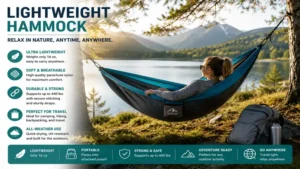
The Asymmetrical Angle: Unlocking Real-World Sleep Ergonomics
The single biggest error rookie campers make when upgrading to a lightweight hammock is sleeping in a direct straight line. If you position your spine perfectly parallel to the tree straps, the fabric will inevitably wrap around your shoulders like a tight cocoon, forcing your neck upward and hyperextending your knees.
[Tree] ========\========================/======== [Tree]
                \  [Incorrect: Straight] /
                 \------(======)--------/
                  \                    /
                   \ [Correct: Diagonal]/
                    \    o            /
                     \    \          /
                      \    o        /
                       \-----------/
To achieve a perfectly flat, restful sleep surface, you must position your body at a 30-to-45-degree diagonal angle relative to the center line. This offset orientation leverages the excess lateral fabric, flattening the structural sag and allowing your head and feet to drop into a natural, ergonomic alignment. Advanced asymmetrical models are pre-tailored to accommodate this specific stance, but even a basic minimalist shell can be transformed by executing a disciplined diagonal lay.
The Anti-Recommendation: When Ultra-Light Fails
While dropping pack weight is an addictive pursuit, there are distinct scenarios where an ultra-lightweight hammock is an actively poor choice for an adventurer. If your primary travel route takes you above the alpine tree line—such as the high-altitude passes of the Colorado Trail or the rocky expanses of the desert Southwest—a hammock becomes a useless liability. Without sturdy, living timber spaced between 11 and 15 feet apart, you are forced to configure your system as a makeshift ground bivy, a scenario where delicate 20D monofilament fabrics will quickly puncture on gravel.
Furthermore, if you are a restless side-sleeper who actively tosses and turns throughout the night, the narrow dimensions of standard lightweight models will cause persistent frustration. Technical light models cut fabric width to save ounces, meaning every violent turn risks shifting your sleeping pad out from underneath you, plunging you into immediate cold spots. If you cannot sleep without curling into a tight fetal position, a wider, heavier double-model or a traditional ultra-light freestanding tent will serve your biology far better.
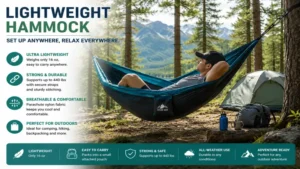
Advanced Setup Optimization: The Year One Roadmap
To ensure your technical shelter survives its first twelve months of active trail deployment without catastrophic failure, you must adhere to a strict environmental and structural protocol.
Phase 1: The First 30 Days (Calibration)
Your primary focus during the initial break-in period is mastering the 30-degree hang angle. Never pull your hammock completely taut like a tightrope. A guitar-string tight hang generates immense kinetic force on the anchor points, multiplying your body weight exponentially and risking structural failure of the tree straps.
Always aim for a gentle, natural sag that resembles a deep banana curve before you climb inside.
Phase 2: Month 6 (Abrasion Audit)
After half a year of hard trail exposure, your suspension loops and tree straps will bear the brunt of frictional wear. Inspect the structural knots and loops for micro-fraying caused by bark contact. If you notice any fuzzing or broken structural filaments on your Amsteel loops, replace them immediately. Clean the main fabric shell by hand-washing it in a tub of cold water with a mild, residue-free tech wash; never use traditional household detergents, which strip away the factory-applied durable water repellent (DWR) coatings.
Phase 3: Month 12 (UV and Stress Evaluation)
By the end of year one, sustained exposure to solar ultraviolet radiation will naturally begin to degrade synthetic monofilaments. Inspect the high-stress areas directly beneath your hips for color fading or thinning textures. Store your kit loose in a cool, dry closet rather than permanently compressed inside its technical stuff sack, as prolonged compression weakens the internal crystalline structure of nylon yarns over time.
Technical Performance vs. Traditional Shelters
Structural Efficiency Analysis
When comparing a modern lightweight hammock system to a traditional ultra-light backpacking tent, the core advantage centers entirely on terrain independence. A tent requires flat, dry, rock-free earth; a hammock allows you to suspend your camp safely over steep mud inclines, rocky boulder fields, or saturated wetlands without altering your sleep comfort.
The Thermal Efficiency Gap
However, buyers must prepare for the “Cold Butt Syndrome” caused by ambient air movement beneath the suspended fabric. A traditional tent creates a static pocket of air that retains radiant body heat. A hammock, conversely, is highly vulnerable to convective cooling. Even in mild 60°F weather, an unprotected nylon underside will strip away your body heat. To match the thermal efficiency of a tent, you must factor the weight and cost of an insulated underquilt into your long-term gear configuration.
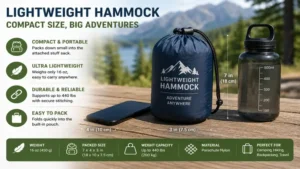
Price vs. Value: Calculating the Total Cost of Ownership
When building a reliable backcountry suspension camp, focusing entirely on the retail price of the hammock body is a massive financial trap. A bare-bones nylon shell is functionally useless in the wilderness without a complete, integrated protection matrix.
[Total System Investment]
  ├── Base Hammock Body ($55 - $110)
  ├── Non-Stretch Tree Straps ($25 - $40)
  ├── Sil-Nylon Rain Tarp ($70 - $130)
  ├── Micro-Mesh Insect Net ($45 - $65)
  └── Insulated Underquilt ($100 - $200)
To calculate the true value proposition, look at the cost-per-night over a multi-year cycle. A premium integrated system like the ENO SubLink or Warbonnet Blackbird may demand a larger initial investment, but by bundling high-performance tarps and advanced suspension into a unified system, they eliminate the costly trial-and-error process of matching mismatched aftermarket components.
🔍 Ready to Upgrade Your Backcountry Setup?
Tired of waking up with sore hips from rocky tent floors and carrying heavy, bulky gear packs up steep mountain trails? Upgrading to a technical ultralight suspension system preserves your physical recovery and streamlines your packing efficiency.
Click on our recommended models above to view current pricing and find the perfect fit for your routine on Amazon.
Frequently Asked Questions
❓ Do lightweight hammock options rip easily on the trail?
✅ High-quality models utilizing 30-denier or 40-denier ripstop nylon are exceptionally tough under normal vertical loads. However, they are highly vulnerable to lateral puncture damage from stray pocket knives, sharp twigs, or coarse sand grit…
❓ Can a side sleeper comfortably use a backpacking hammock?
✅ Yes, provided you select a model with an asymmetrical cut or a wide fabric bed. This extra width allows you to position your body at a sharp diagonal angle, flattening the surface entirely…
❓ Do I need to buy separate straps for my lightweight hammock?
✅ Most technical ultra-light variants omit tree straps from the base package to allow users to select their preferred suspension system. Always verify the listing details and ensure you purchase non-stretch polyester or UHMWPE straps…
❓ What is the weight limit for an ultra-lightweight hammock?
✅ Most single technical models safely support between 250 to 300 pounds. Premium models utilizing advanced diamond ripstop weaves can hold up to 500 pounds, though your anchor point stability remains the ultimate safety metric…
❓ How do I protect myself from mosquitoes through the hammock fabric?
✅ Aggressive insects can bite directly through thin 20D or 30D monofilament nylon. You must either deploy an integrated bug net that wraps completely around the shell or treat the exterior fabric with a specialized permethrin fabric spray…
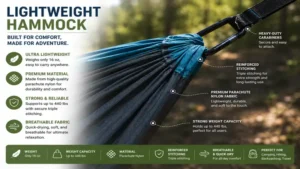
Conclusion: Securing Your Backcountry Haven
Navigating the technical landscape of modern backcountry gear ultimately requires recognizing that your shelter is your primary tool for physical recovery on the trail. You are not simply purchasing a piece of casual recreational nylon; you are selecting an engineered system designed to protect your spine and preserve your body heat in unpredictable wilderness environments.
If your core objective is to drop your base pack weight down to absolute absolute minimalism for high-altitude trail running, the gossamer monofilament design of the Sea to Summit system remains an engineering marvel. However, if you require a rugged, dependable home base that can withstand unpredictable mountain storms and abrasive forest environments without requiring independent component sourcing, a complete integrated system like the ENO SubLink delivers an unmatched level of safety and convenience. Select the system that aligns with your specific geographical constraints, master the diagonal lay during your initial calibration runs, and enjoy the transformative comfort of a perfectly balanced backcountry hang.
Recommended for You
- Best Hammock Posts for Your Yard: 5 Expert Picks (2026)
- Best Large Hammock Picks for 2026: 5 Expert-Tested Models Compared
- How to Make a Hammock: 5 Expert DIY Methods for 2026
Disclaimer: This article contains affiliate links. As an Amazon Associate, I earn from qualifying purchases. If you purchase products through these links, we may earn a small commission at no additional cost to you.
✨ Found this helpful? Share it with your friends! 💬🤗